The Sands of Time: New Book Explores the Legacy of a Family’s Connection to Stone Harbor
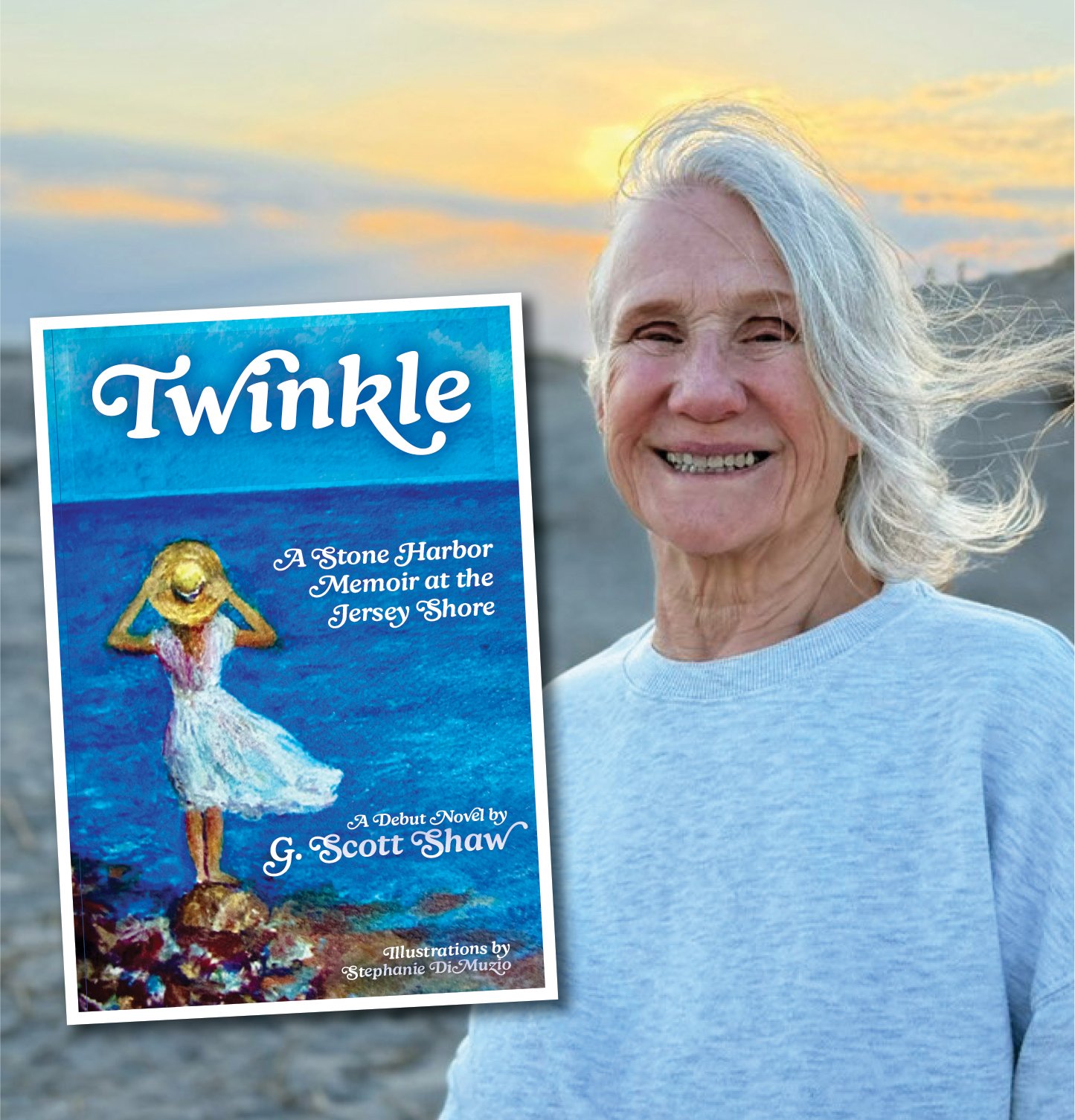
A recent photo of Mary “Twinkle” Shaw, with an inset of the book’s cover art by Stephanie DiMuzio.
By Mary Byrne Lamb
This is a story about love.
A young woman’s love for the ocean.
A family’s love for Stone Harbor.
A son’s love for his mother.
A love that’s inspiring a legacy.
This is the story of “Twinkle: A Stone Harbor Memoir at the Jersey Shore,” a new book by G. Scott Shaw that he describes as “a love letter to Stone Harbor told through my family and their connection.”
“I’ve been wanting to write a book about my mom since I was 14 years old,” says Shaw. “My mom was the first person in her family to see the ocean, in the summer of 1964. She grew up in Belle Vernon, Pa., outside of Pittsburgh. Stone Harbor is her happiest place.”
Shaw’s mother, Mary Shaw, known as “Twinkle” to family and friends since her childhood as an aspiring ballerina, describes her first encounter with the ocean this way:
“It was the early part of June, before the family I was staying with had their renters come in. I ran down and ran straight into the ocean. I just couldn’t believe. It just looked so beautiful.
“I couldn’t get over how flat it looked, that you could go right off the edge, that I was standing at the edge of the earth. Because I grew up in the mountains, this is very flat in comparison. How beautiful!
“I remember just running down the beach and I ran straight in, in my clothes, not a bathing suit.
“It was ice cold. But I just stayed in there. The coldness, it was really cold, but it didn’t bother me.
“I just stayed there and I just remember jumping in the waves and the waves knocking me down. It was just a wonderful feeling for me. Like, I am actually in an ocean.”
That initial, exhilarating encounter would be the catalyst for an enduring bond.
Stretching across generations, “Twinkle” captures the enduring connection between Shaw’s family, Stone Harbor, and the beloved home they rented. “Sixty-two years, three generations, one tiny beach bungalow,” Shaw summarizes.
“My mom found Stone Harbor during a difficult time in her childhood,” Shaw continues. “Then she introduced it to my dad, then my parents introduced it to me and my sister, and then we introduced it to our kids. My son is at the University of North Carolina Wilmington studying coastal engineering to preserve and restore historic waterfront homes, which are at risk of being lost to the sands, salt, wind, rain, oceans, and currents of time. All because my mother saw the ocean in Stone Harbor in 1964.”
In the beginning, Stone Harbor was a salvation for Mary “Twinkle” Shaw.
“One of the blessings of my mom is that she always sees the good,” explains Scott Shaw, the founder and managing partner of Everclear, a capital, growth and M&A advisory firm in Washington. “She’s a glass-half-full kind of person. And no matter how dark the world has been to her, she always sees the light. So, Twinkle never stops twinkling no matter how dark the night is, much like a stormy night in Stone Harbor.
“So, a real undercurrent and theme of the book is about resilience. It’s about surviving the storms in life and being able to weather that storm and not lose faith in humanity.”
While Scott Shaw, who graduated from the University of Maryland with a degree in journalism, had always wanted to write a book like this, recent “storms” propelled him into action.
“A couple of things happened this last year. My mom was diagnosed with cancer and that scared us,” he shares. “Now she’s in remission, she’s doing fine. But basically, God gave me a deadline. I realized I can’t wait forever to write this book. So, I decided I would write it by the time she turns 77 on September 21, 2026. I started writing and it just started flowing out of me.”
As the book chronicles the Shaw family’s connection to the region, a parallel story of Stone Harbor history also emerges.
“The neat thing about Stone Harbor is there are things that have been consistent across time periods. Springer’s has been there throughout those 62 years that my mom’s been connected to Stone Harbor,” Shaw says of the ice cream institution. “On the other hand, the Shelter Haven used to be on the corner of 96th Street. Then it was demoed and it was a flat lot where we watched movies looking at the harbor. Now it’s The Reeds. So, the buildings and certain stores change with the times.”
Even though Scott Shaw knew a lot of Stone Harbor history through his mother’s recollections and his own experiences, the history enthusiast also did research to ensure accuracy throughout the book: “I spent a lot of time with Graham Hueber and Katie Hinchey-Wise, the curator at the Stone Harbor Museum, getting access to some of the historical archives.” (Hueber, the vice president of the museum’s board of trustees, this summer gave a presentation on the history of Stone Harbor’s bungalow courts.)
For Shaw, a big part of his family’s personal Stone Harbor history is the little house they rented for decades.
“Every August, we would rent the same little yellow bungalow next to St. Paul’s Catholic Church,” he explains. “There’s a history of these bungalows, not just on the four courts, but throughout Stone Harbor. It’s a tiny little house. It’s got three bedrooms. We could have 20 people in it. We’d sleep in the hallway. I’d sleep on the porch. I’d sleep in the attic. We’d sleep on the couch. We’d sleep anywhere there was a horizontal space, and we’d just cram people in because we were at the beach.”
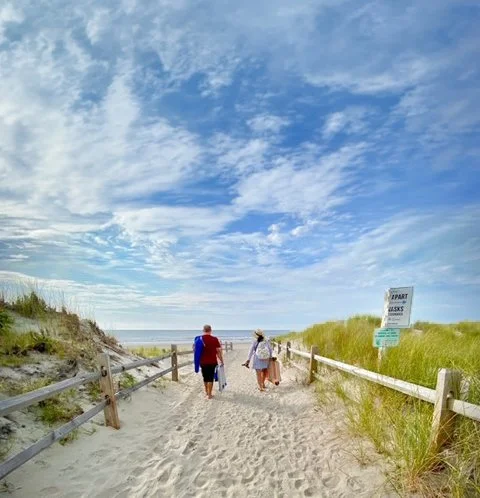
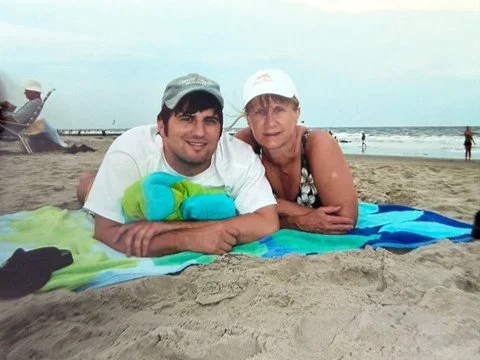
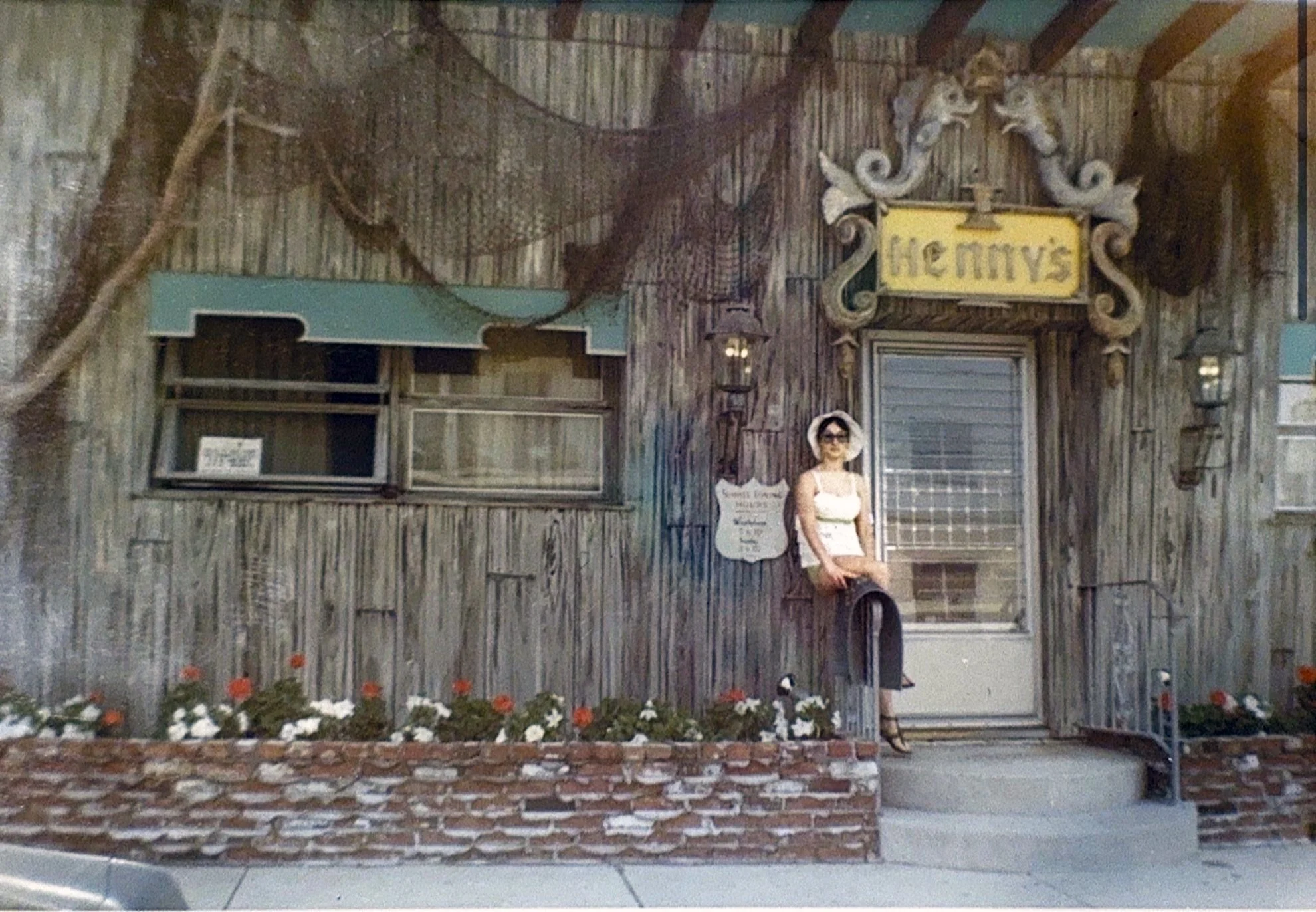
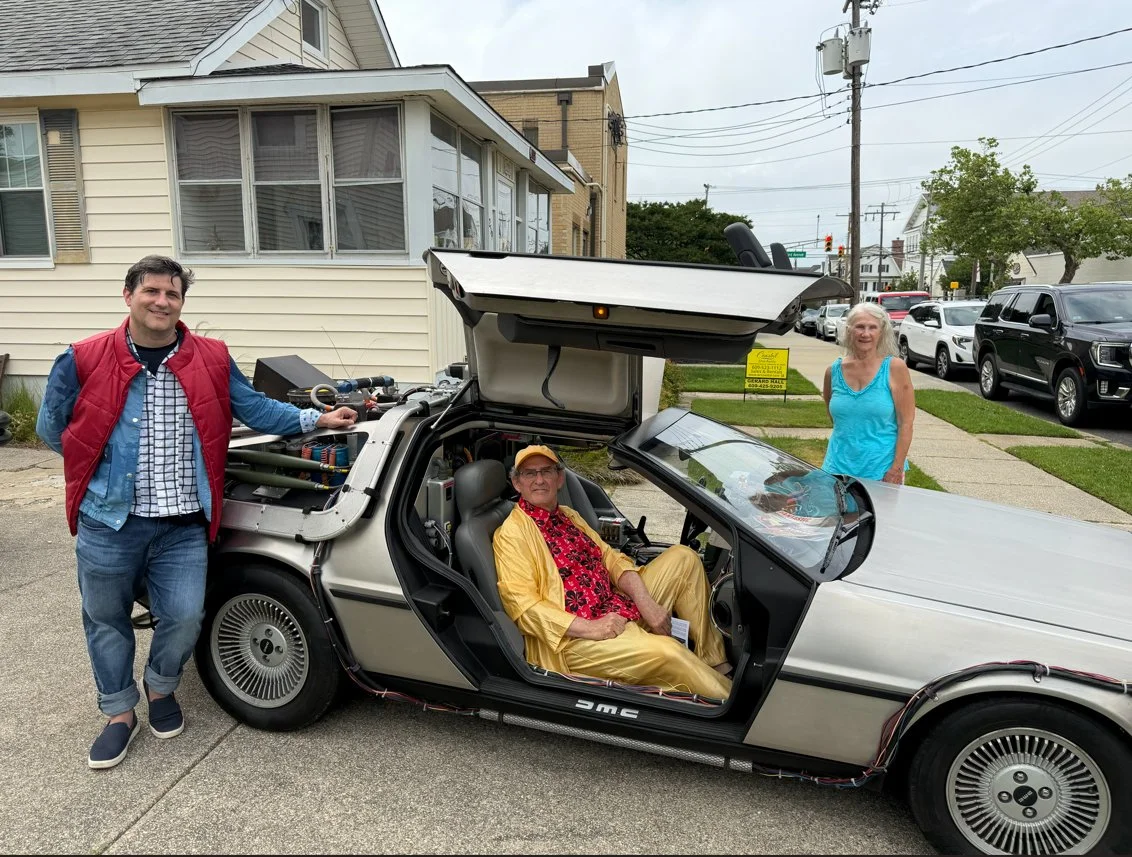
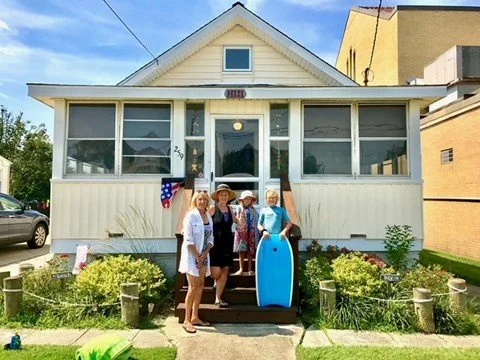
In fact, Shaw has been locked in an ongoing battle to save the little house from demolition. In July alone, his efforts included rallying a coalition of local preservationists, flying an airplane banner to garner public support, staging an authentic “Back to the Future” tribute experience complete with a DeLorean time machine, and making an impassioned plea at the July zoning board meeting.
And Shaw’s desire to save the house is more than simply nostalgia.
“My intention for the house was to turn it into a nonprofit,” he says. “Twinkle’s House is my vision to honor my mom, that will help children and families who are struggling with divorce, trauma, or abuse to see the ocean for the first time. I want to give other families who have no refuge, no shelter haven of their own, a place where they could apply for a week or weekend at the beach and we would cover the cost.”
To that end, all profits from the book will be going to the foundation. And while the quest to save the 99th Street bungalow continues, Shaw is determined to honor the spirit of that beloved home.
“If Twinkle’s House charity ends up being in a different location, it’ll be sad that it’s not in the yellow house,” he said, “but the vision of Twinkle’s House is something that I think is beyond one house, and I hope to have it enacted.”
Clearly, Twinkle … the woman, the book, and the nonprofit … share a core of heart, memory, and devotion, well-illustrated through an anecdote about a special private seaside pilgrimage his mother undertook every August.
Shaw explains, “My mom’s biggest regret is that her mother, my Nanny, never saw the ocean in Stone Harbor. She never made it there. She died in 1989.
“But one summer in the mid-2010s, my mom asked me to go with her to see the sunrise on the Saturday before we leave. That morning, we walked down to the beach, and I watched her walk to the ocean and dip her sleeve in the water. When she came back, I said, ‘Mom, what’d you do?’ And she said, ‘This is Nanny’s sweater. Nanny never made it to Stone Harbor. She never saw the ocean like I did. Every year since she died, I’ve been taking her sweater and dipping it in the ocean.’
“I didn’t know that all those years. Every time I think of it, I cry.”
Exploring stories like these and more, “Twinkle: A Stone Harbor Memoir at the Jersey Shore” captures the years, the joy and tears shared in Stone Harbor. In addition to family photos and historic photos, the book also features a striking painting on the cover by renowned artist Stephanie DiMuzio, the namesake of “Stephanie’s” gift and jewelry shop on 97th Street.
“Stephanie started teaching my kids to paint when they were 5 years old,” Shaw says. “My mom and I also know Stephanie’s mom. They’re lovely people.”
With connections across time and distance, Shaw’s new book is an homage to his mother, his family, this beloved little town, and the intersection of love and resilience.
“There is something rare about Stone Harbor,” he says. “When I dug into the history of the island, I learned that the sand is made of quartz that flowed down from the Appalachians, through the Delaware River and the bay to Seven Mile Island. Quartz is one of the hardest minerals. It resonates when it hits a vibration. It doesn’t shatter. And when that sand is dry, it’s like baby powder. It’ll blow like a little mist or fog.
“Stone Harbor has always been the highest bar I could set. Once you go, it changes you.”
“Twinkle: A Stone Harbor Memoir at the Jersey Shore” is available to order at Twinklebook.com and all proceeds will be donated to the Twinkle’s House foundation to benefit children and families in need.