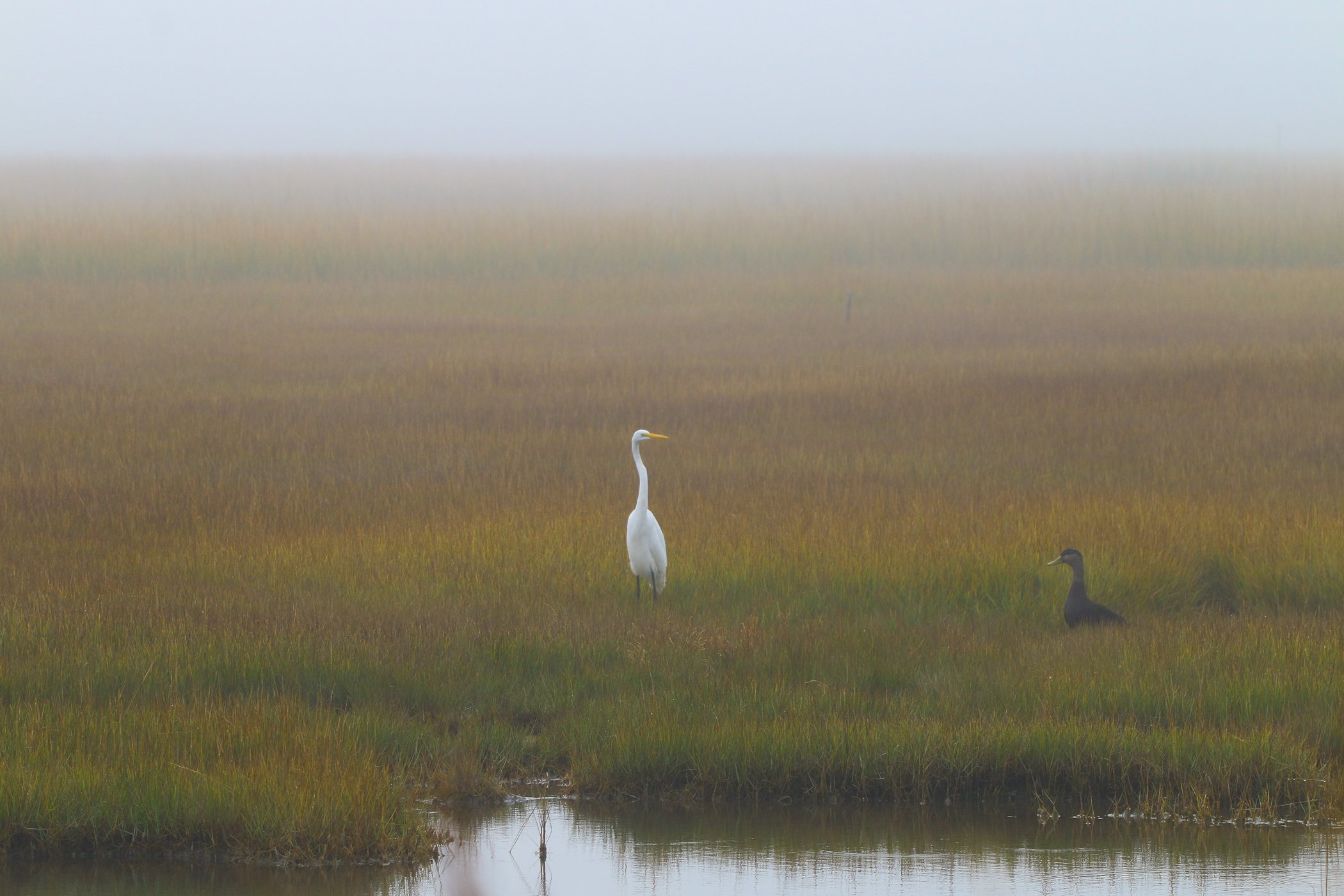
Stand at the edge of the marsh on a still winter morning, and it can look as though nothing is happening. The cordgrass has faded to tawny gold, the tide slips in and out of the creeks, and the wide sky seems empty. Look a little longer, and you might see a northern harrier glide low over the grass, tilting side to side as it hunts.
The marsh never stops moving. It shifts with every tide and season, and between late fall and spring it goes through some of its biggest transitions. Much of our work at The Wetlands Institute follows those same rhythms. Our research, conservation, and education programs are shaped by the marsh itself.
This year, The Wetlands Institute is on the move, too.
A Temporary Home
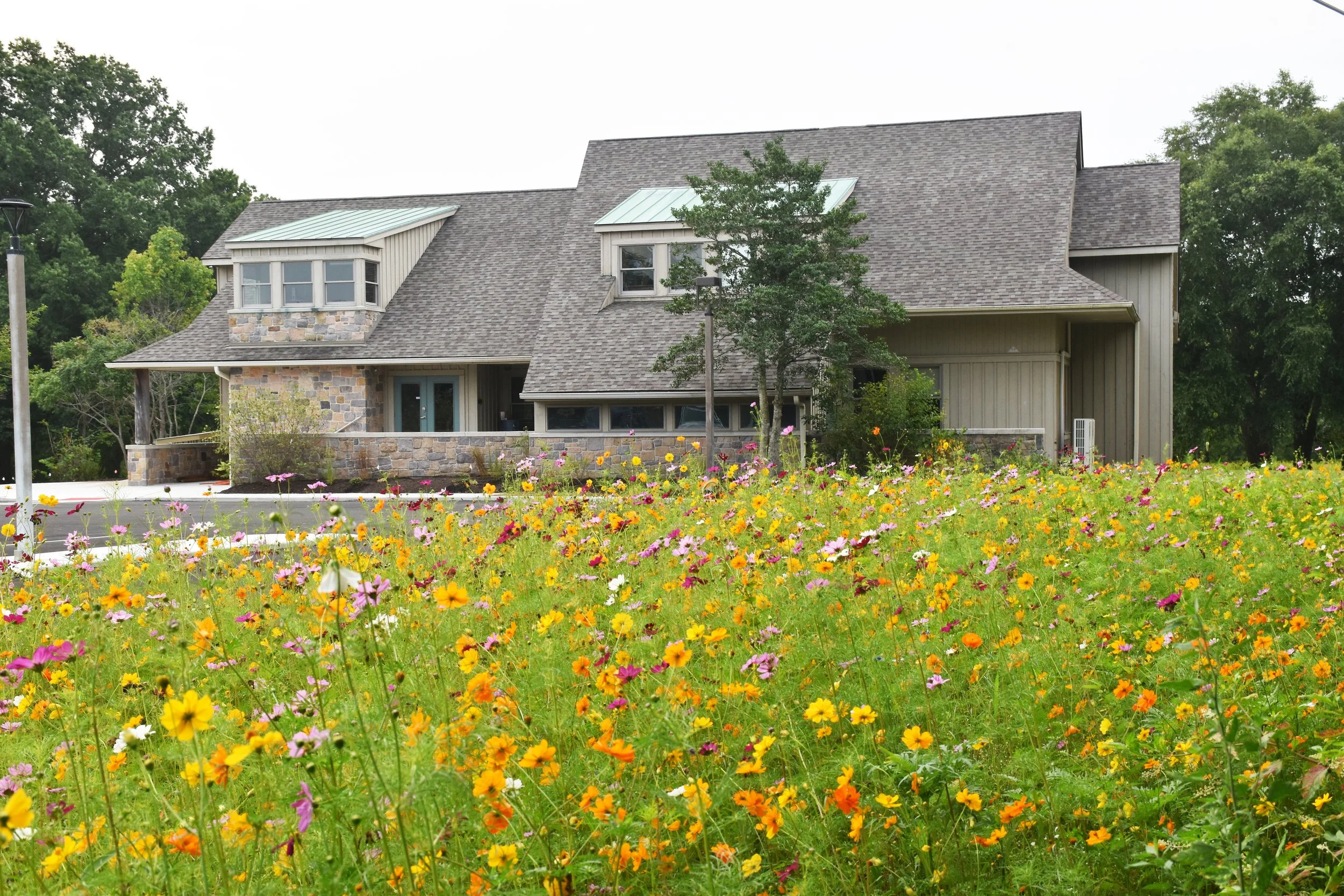
As we raise and revitalize our Salt Marsh Trail and plan for a reimagined marsh campus, our staff, programs, and Tidepool Shop have moved to a temporary home at the New Jersey Coastal Conservation Center (NJCCC), 600 N. Delsea Drive (Route 47) in Cape May Court House. The newly renovated center gives us office space, room for education programs, and trails and native plant gardens to explore. Bird activity at the NJCCC is excellent if you’re looking for a new place to explore and includes grassland, forest, and salt marsh habitats.
Weekends at the NJCCC bring a full lineup, including our Teaching and Touch Tank, Creature Feature and Craft, Seashell Sunday, and Science Features. Each month brings a new self-guided Seasonal Science Activity. Programs are free for members. Hours can change with the seasons, so please check wetlandsinstitute.org before you visit.
Our aquarium animals are in good hands at Rutgers University’s Aquaculture Innovation Center, whose circulating seawater systems are well suited to keeping them healthy until they rejoin us. Visitors can still meet some of our animal ambassadors at our Teaching and Touch Tank programs and science features. And our research and conservation teams are busy working on their usual programs.
Winter: Life in the Back Bays
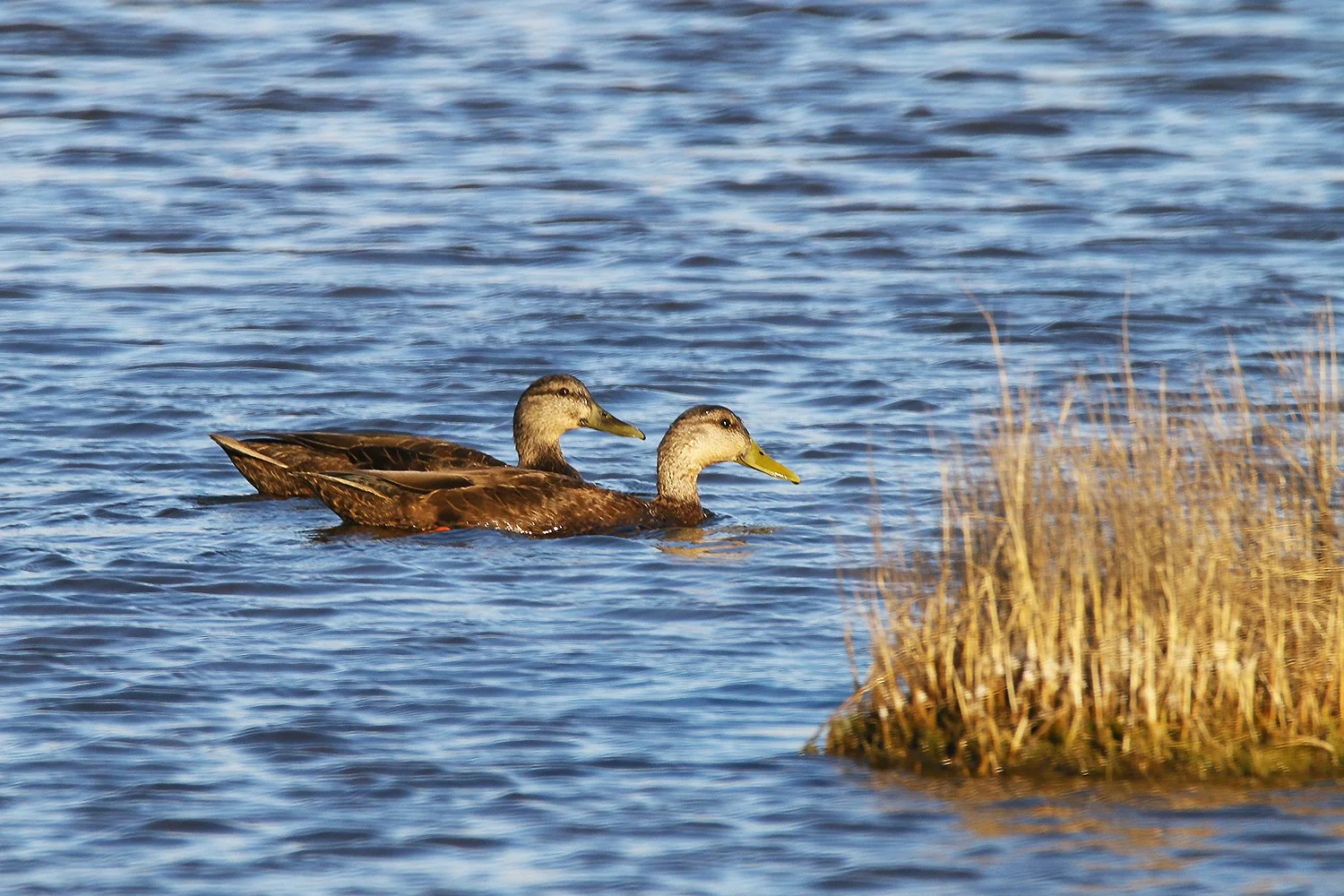
Winter on the marsh belongs to visitors from the north. Brant, small sea geese that nest in the high Arctic, gather in our back bays, and buffleheads, the smallest diving ducks in North America, bob and disappear in the channels. Black ducks arrive from their breeding grounds to winter in our marshes.
Other residents are resting. Diamondback terrapins spend the winter buried in the mud at the bottom of tidal creeks, where they will stay until the water warms. For our scientists, winter is time to analyze a full season of bird and terrapin data, share findings with partners, and plan the year ahead. It’s also an important season for marsh restoration. Through the Seven Mile Island Innovation Lab (SMIIL), our partnership with the U.S. Army Corps of Engineers and the New Jersey Department of Environmental Protection, we have helped restore more than 110 acres of drowning marsh using clean sediment dredged from local waterways. Work like this is timed for the colder months, after most wildlife has left the area. The next project of SMIIL is building a marsh edge protection feature to slow marsh loss along the southern margin of Gull Island. Gull Island is a marsh island behind Avalon just north of 80th Street. The research experiments are already set up and ready for the planned dredging and restoration project over the winter.
All winter long, our educators continue to welcome homeschool families and scout groups, our traveling programs bring the marsh to classrooms, libraries, and community groups across the region, and our field trip programs continue with only slight modification due to our new home.
Early Spring: The Return
By March, the marsh begins to stir. Ospreys return from their wintering grounds in South America to reclaim their nests along the bays. American oystercatchers, with their bright red-orange bills and piping calls, reappear on beaches and marsh islands to stake out territories. Herons, egrets, and ibis soon follow, settling into nesting colonies on Sturgeon and Gull Islands, two marsh islands just north of the institute that were restored through the Seven Mile Island Innovation Lab. Together, these islands host an estimated quarter or more of all the wading birds that nest in New Jersey, with other important rookeries in the area as well.
These arrivals kick off our coastal bird work. Our scientists monitor nesting colonies and band birds so we can follow them through their lives, and share what we learn with partners up and down the coast. Our research interns have helped answer questions that guide habitat protection, such as whether young oystercatchers return to the same kind of habitat where they hatched and where the best nesting habitat lies along the Delaware Bay.
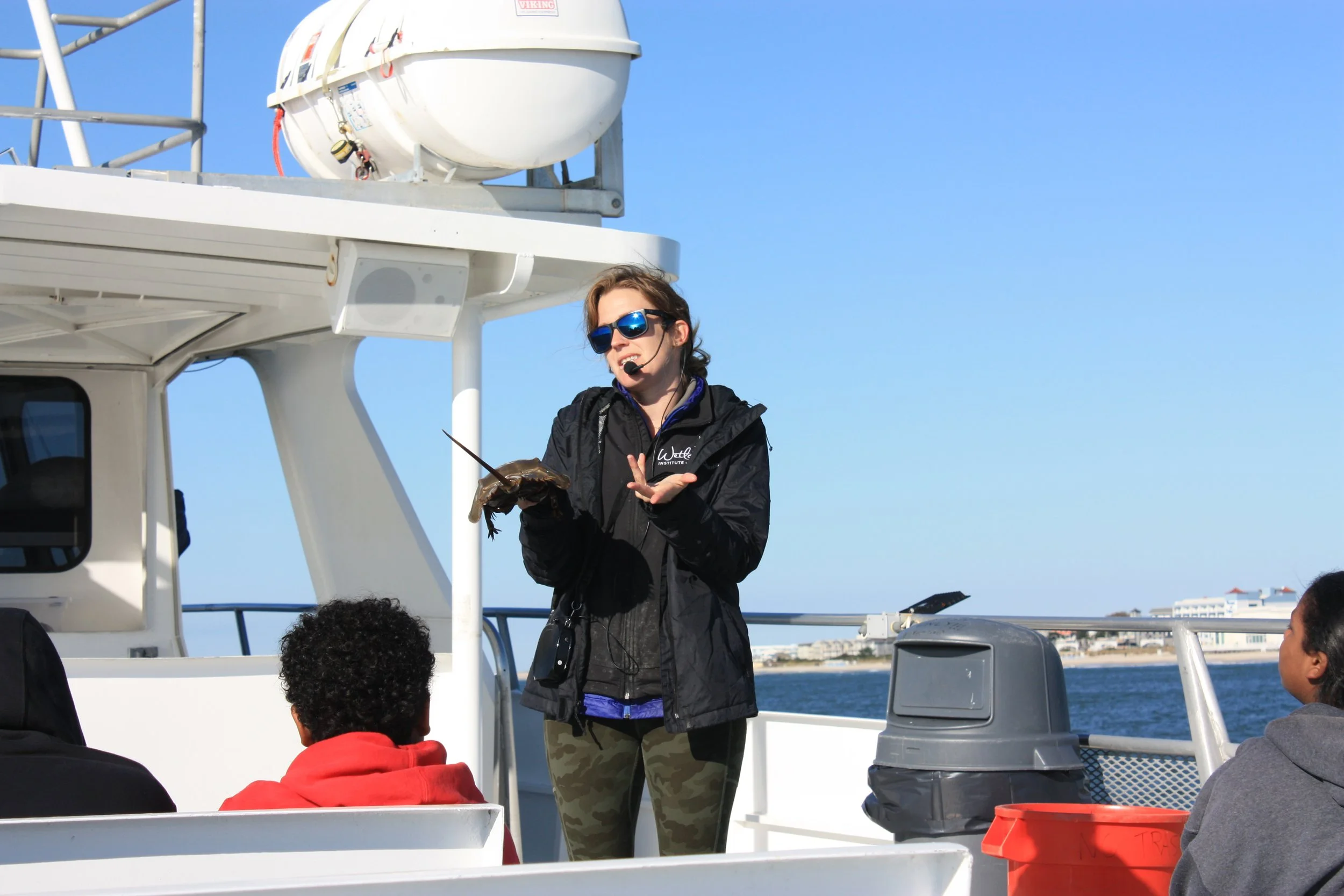
School groups from kindergarten through high school will come to explore, and for many children it is their first close look at a salt marsh and the animals that depend on it. Our beloved Science Education at Sea (SEAS) program takes place entirely on a boat, so the move won’t keep it from setting out as usual.
Late Spring: The Great Arrival
In May, horseshoe crabs come ashore on Delaware Bay beaches to spawn, as they have for hundreds of millions of years. Their eggs fuel one of the world’s great migrations, as red knots, ruddy turnstones, and other shorebirds stop over on their journey from South America to the Arctic.
Waves often flip spawning crabs onto their backs, leaving them stranded on the beach. Through our volunteer-driven reTURN the Favor program, community members walk the beaches and set them right, and together they have saved more than 1.4 million horseshoe crabs.
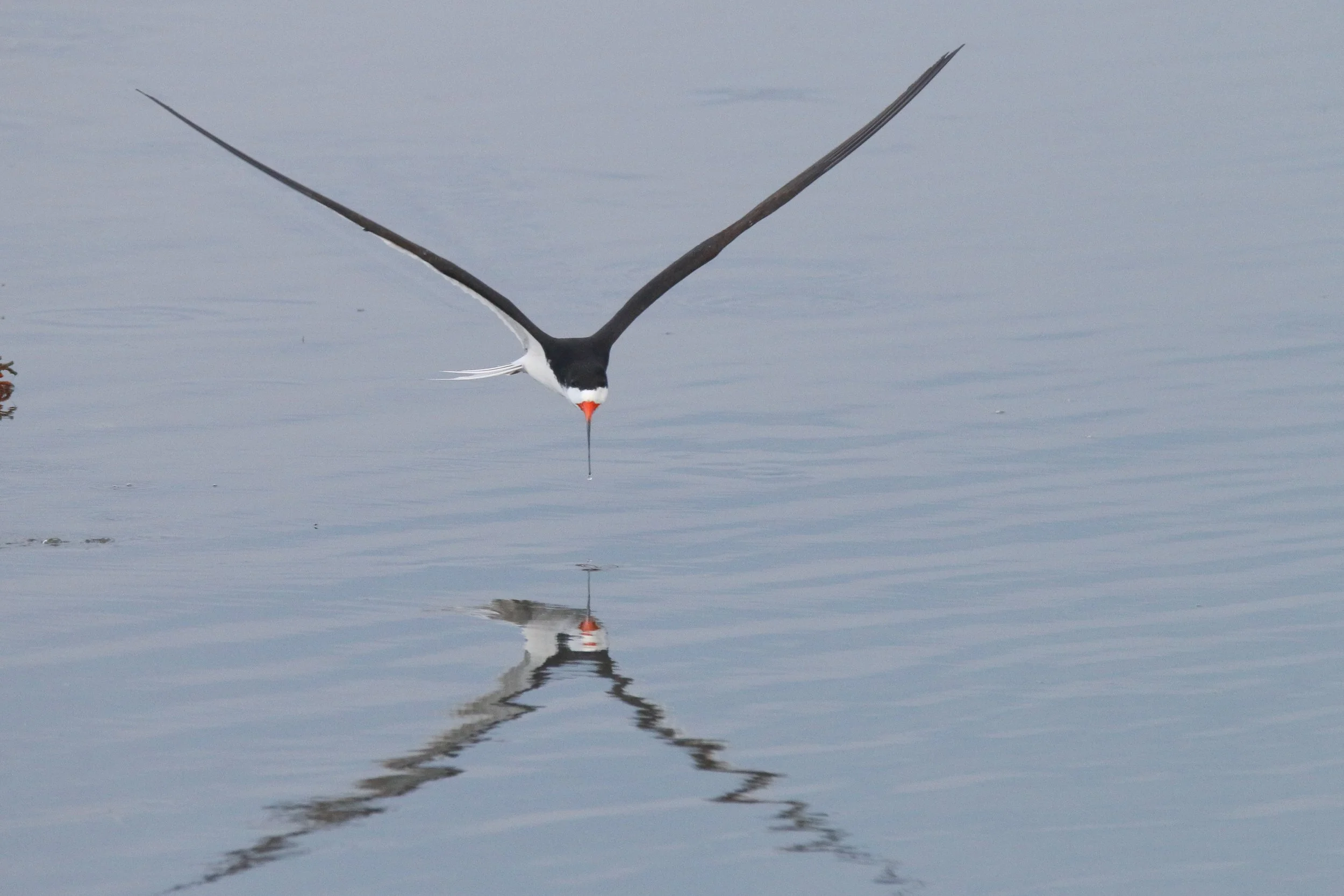
At Stone Harbor Point, black skimmers settle in at one of the few places in New Jersey where this state-endangered bird still nests. Our team has monitored and protected the colony since 2015, and banding and tracking are revealing where these birds feed, rest, and travel. And as the water warms, female terrapins leave the marsh in search of sandy nesting sites, starting another season of nest protection and road patrols. This past summer, our staff and volunteers saved 1,257 terrapins.
Rising to Meet Them
Every one of these animals depends on healthy marshes, and our own corner of the marsh is changing. Sunny-day high tides now flood the Salt Marsh Trail more than 70 times each year, killing mature trees and washing over terrapin and bird nesting areas. That’s why we are raising the trail 2 to 3 feet and widening it. The project will create new high marsh and upland habitat designed for nesting terrapins and coastal birds, replant the trail with native plants, restore more than 5 acres of drowning marsh, and provide a buffer against storm waves. Our scientists will monitor the area for several years to measure the results and share lessons that can help other coastal communities.
The trail is the first step in reimagining our marsh campus. Through our Reimagine campaign, we are working toward a new, elevated home built to fit the landscape, with three outdoor classrooms, more than double our current lab space, a larger aquarium, and spaces that are accessible to everyone. It is a home designed to serve the marsh, and the people who love it, for the next 50 years.
Come Along for the Journey
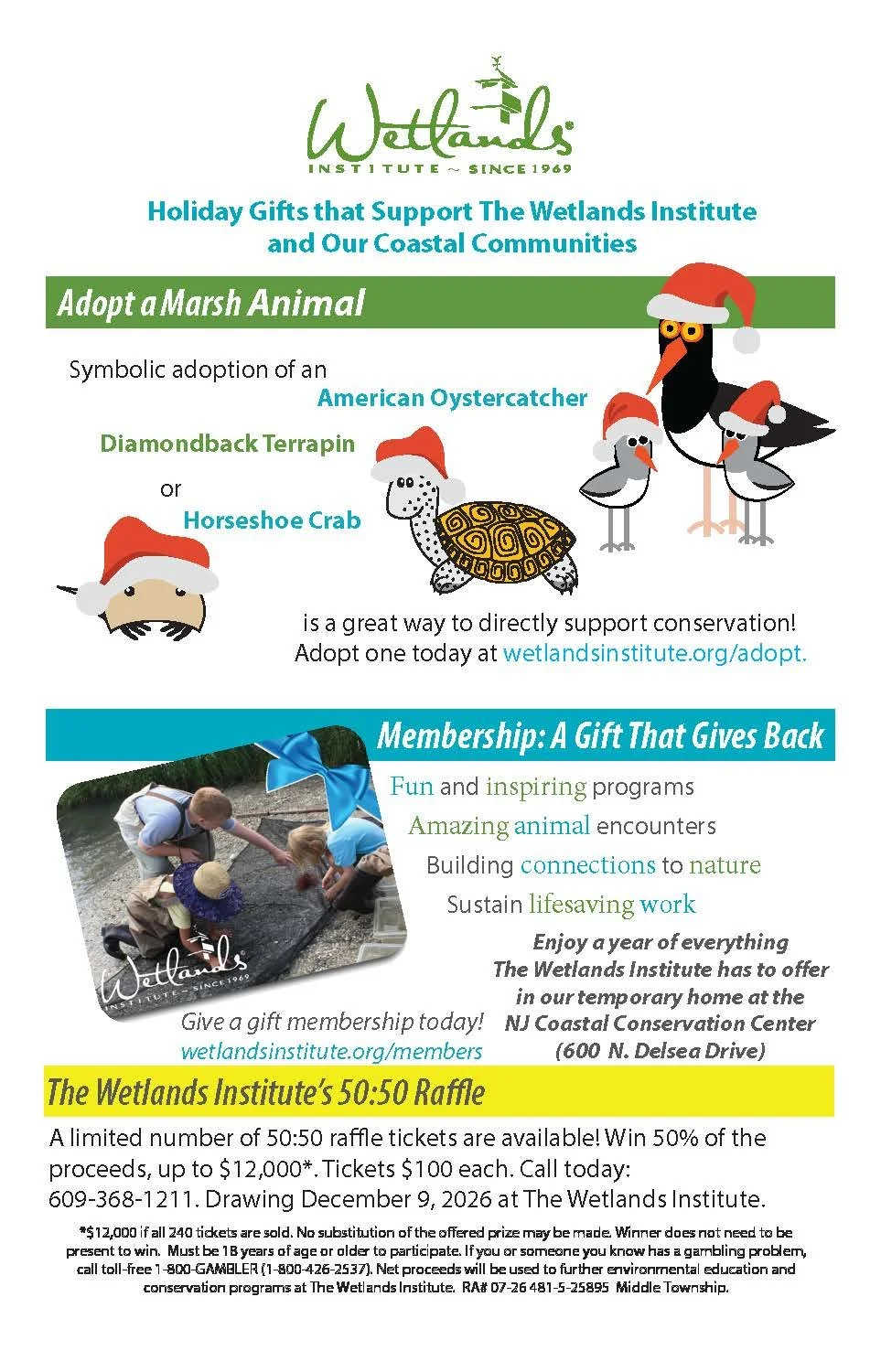
Whenever you read this, something on the marsh is arriving or getting ready to leave. We hope you’ll follow along with us. Visit us at the NJCCC, become a member, or make a symbolic adoption of a terrapin, horseshoe crab, or American oystercatcher, a meaningful gift any time of year. Join our reTURN the Favor volunteers on the beach in spring or support the Reimagine campaign as we build a more resilient future for this place we all love.
The Wetlands Institute is more than a building; it is a gateway to the marsh, the wildlife that depend on it, and the community that shows up for both. The marsh doesn’t pause, and neither do we.
Visit reimagine.wetlandsinstitute.org to learn more.