
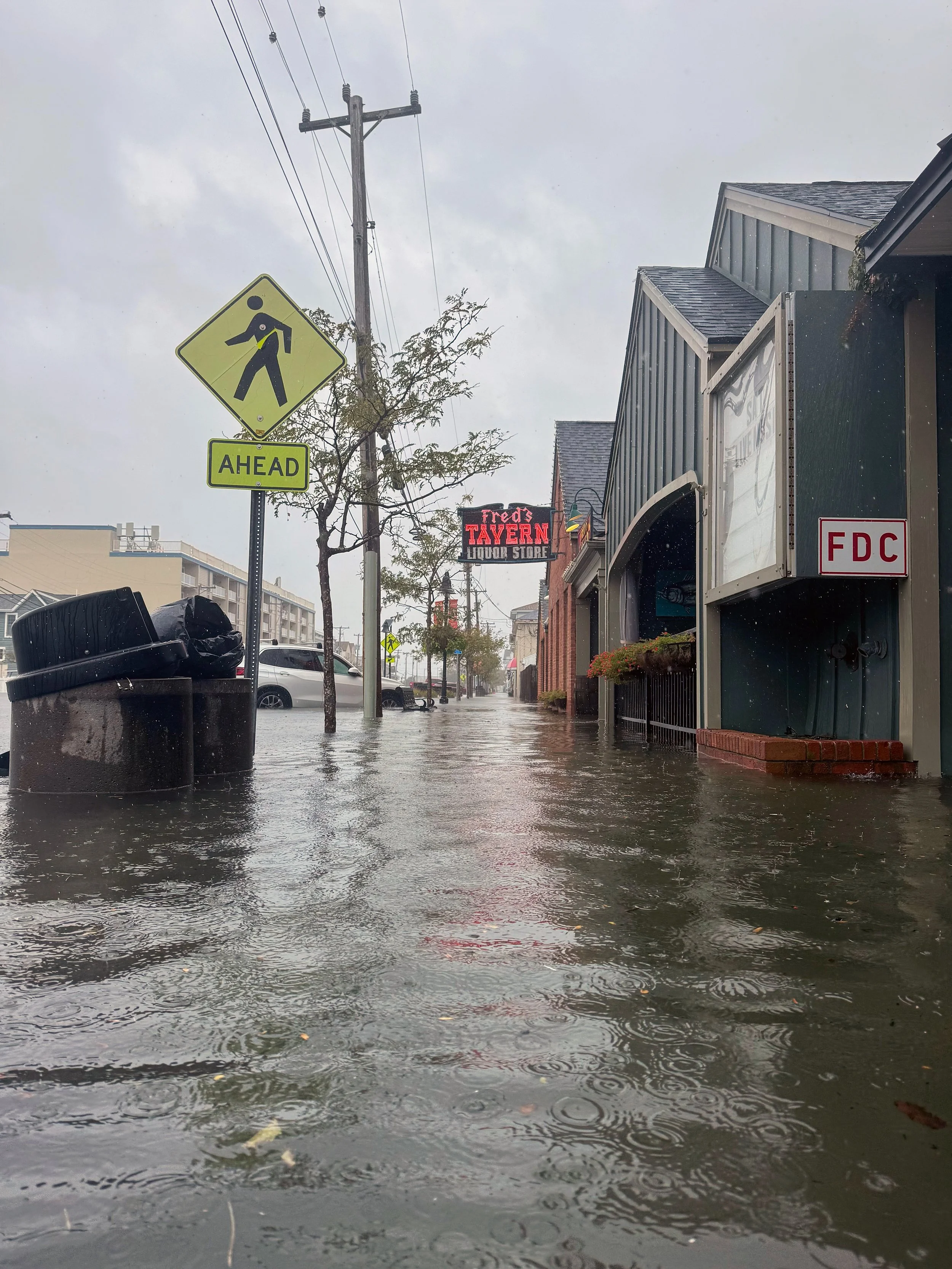
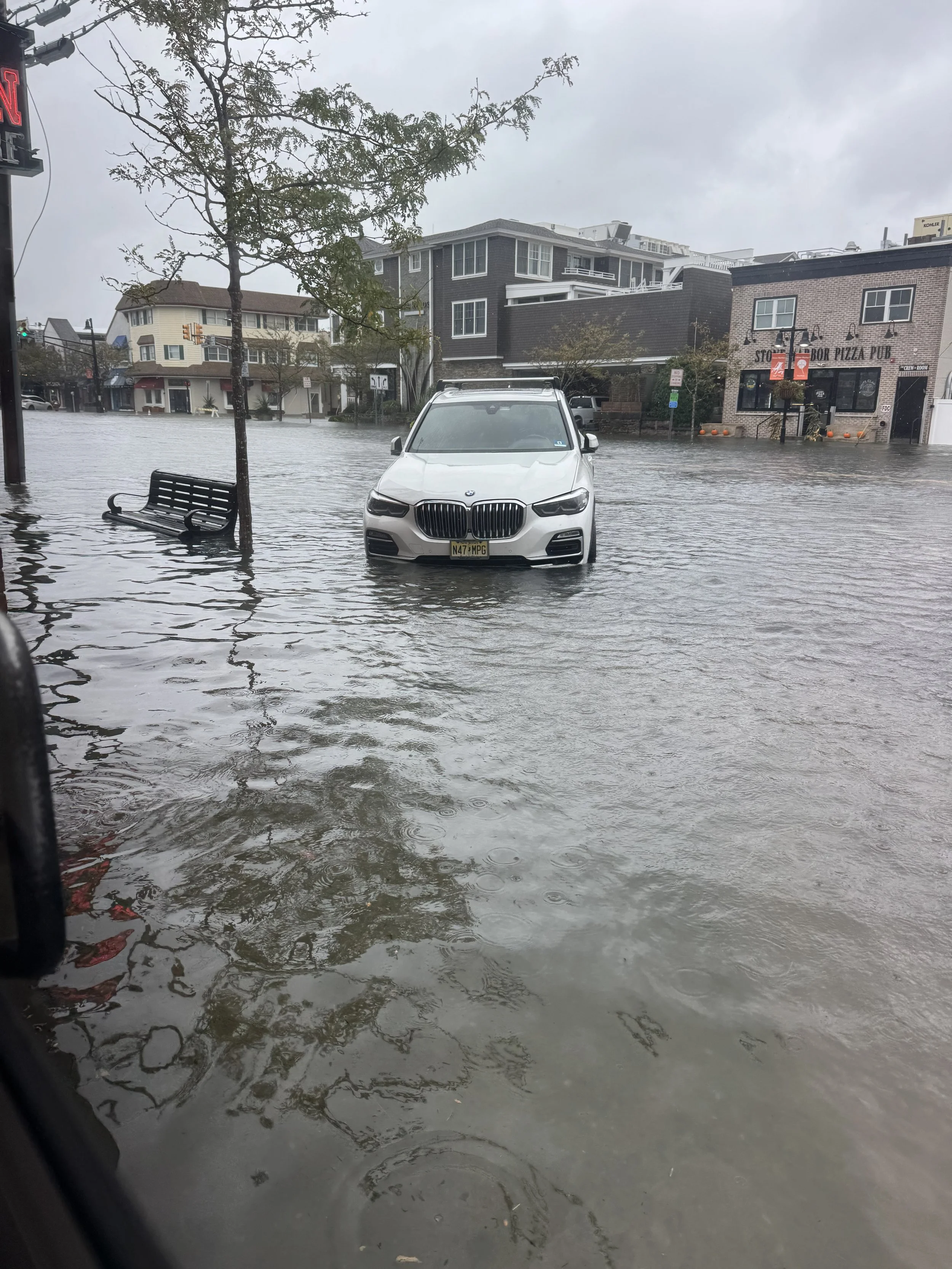
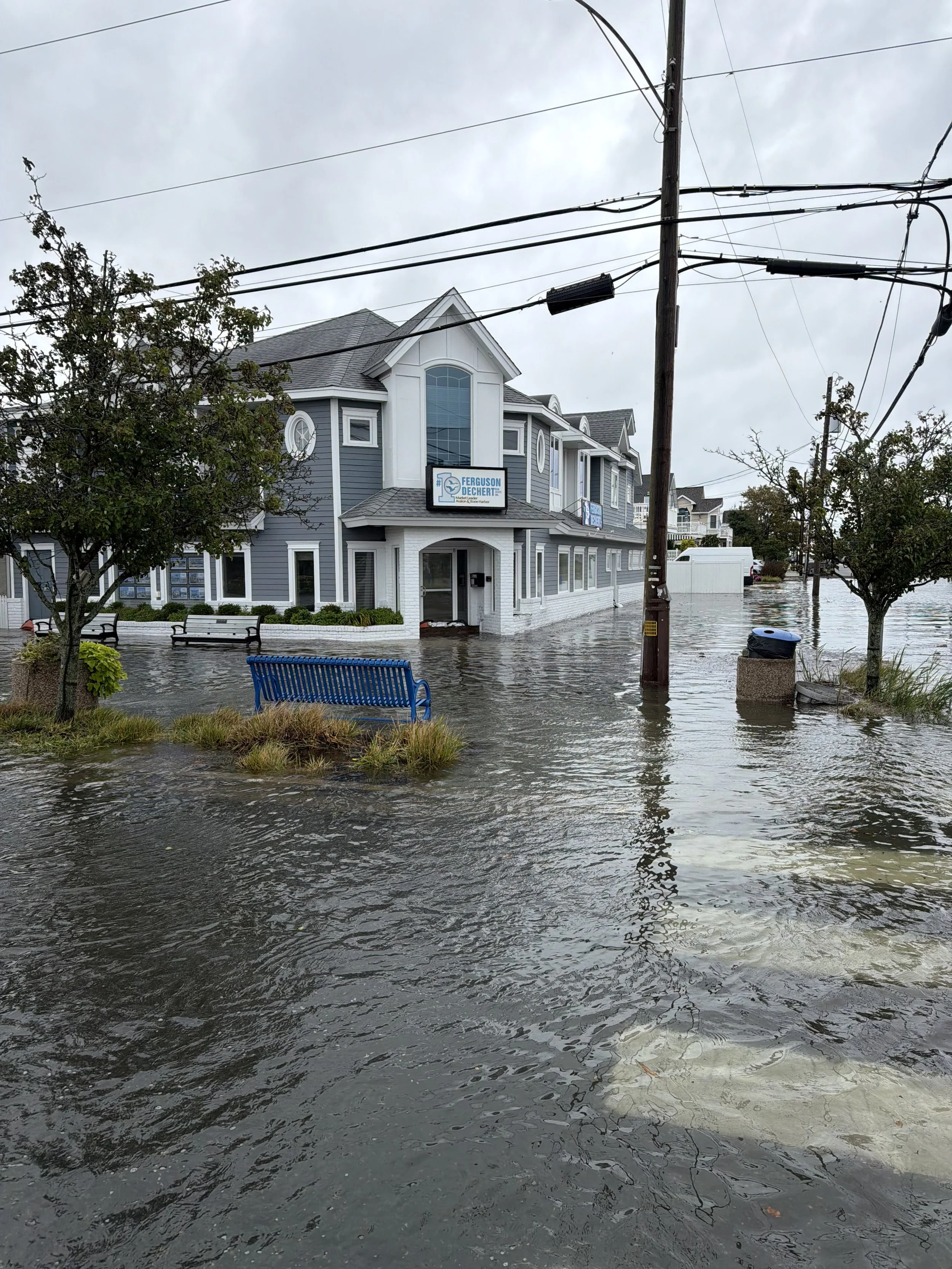
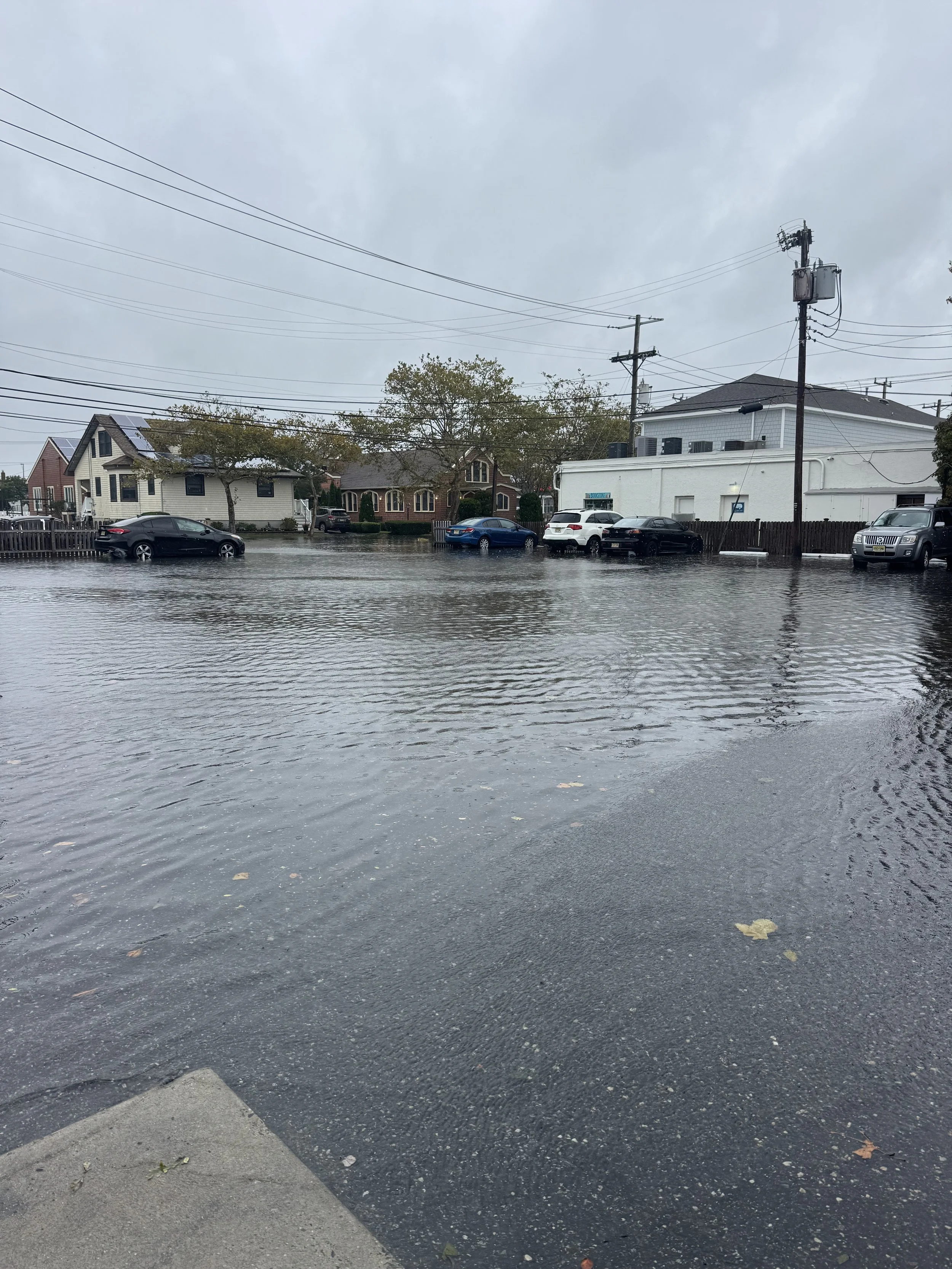
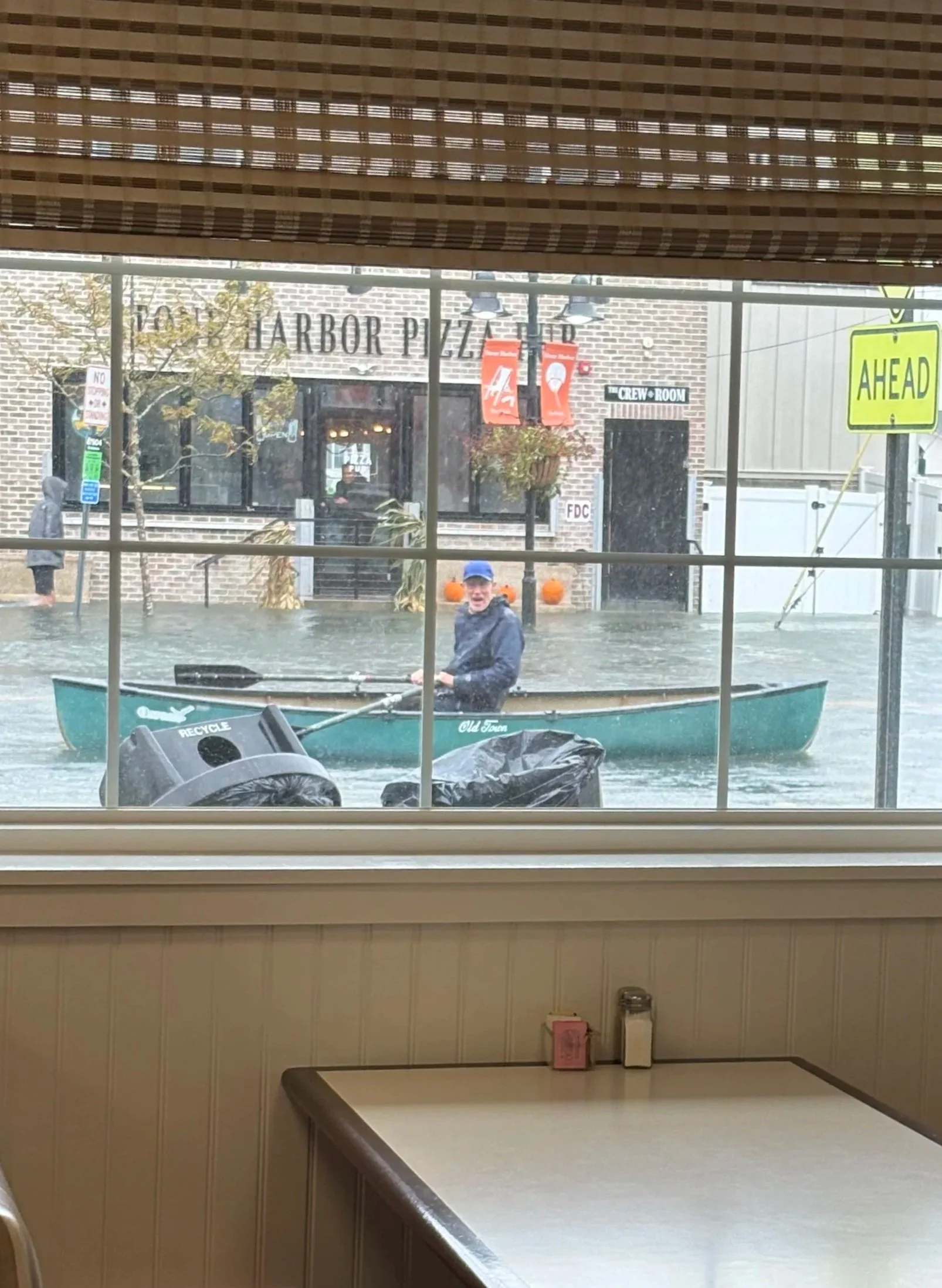
When the September nor’easter brought flooding to Avalon and Stone Harbor, it created a familiar but unwelcome scene for many local business owners: water in the streets, water at storefronts, and a long cleanup ahead.
For those who live and work on the island, flooding is one of the realities of being close to the water. It is frustrating, disruptive, and never easy to deal with. But it also brings out something special in these towns. Employees show up. Neighbors stop by to help. Business owners do what they can to protect their spaces and get back open quickly.
At Fred’s Tavern & Liquor Store in Stone Harbor, owner Jim Hand says the flooding was already well underway when they arrived.
“When we first arrived, the streets were completely flooded, and water was already making its way into the store,” he says. “One of our biggest problems was cars continuing to drive through the flooded streets, creating wakes that pushed even more water through our front door.”
The team was standing at the front entrance on 96th Street with a shop vacuum, trying to keep up with the water coming in.
“It was frustrating because we were doing everything we could to prevent more water from getting inside, but so much of it was out of our control,” Hand says. “At that point, we were trying to stay on top of it and minimize the damage as much as possible.”
For Hand and many other business owners, the physical cleanup is difficult enough. But seeing water come into a business you have worked hard to build is discouraging no matter how many times it happens.
“Physically, we had water come into the store and tavern, which is never something you want to deal with,” he says. “It creates a lot of extra work with cleanup and making sure everything is back to normal. Emotionally, it’s frustrating because no matter how many times you deal with flooding, it never gets easier.”
Still, experience has helped island businesses learn how to prepare.
“Flooding is nothing new to us on the island,” Hand notes. “After dealing with it so many times over the years, you kind of learn what to expect and how to prepare. We keep an eye on the weather and tides, and when we know flooding is coming, we do what we can to get ahead of it.”
What stood out most after the storm, he says, was the support from the community: “Our staff stepped up, and we even had locals who don’t work here come by to help with the cleanup. It meant a lot to have people take time out of their day to help us out. That’s one of the best things about being part of a small community.”
Getting reopened quickly matters for many reasons. It means employees can get back to work, customers have the places they depend on, and business owners can start moving forward after a setback.
“After something like this, our main goal is to get everything cleaned up and get back to business as usual,” Hand says. “We have employees who depend on being able to work and customers who count on us being open.”
At Uncle Bill’s Pancake House, owner Casey O’Hara was dealing with conditions at both the Avalon and Stone Harbor locations.
“We actually were open at both Stone Harbor and Avalon,” he says. “When we arrived, the water wasn’t even in the street yet. This was around 6 a.m.”
O’Hara says the Avalon location was largely unaffected, but the Stone Harbor location was not as lucky: “Stone Harbor ended up with about 2 inches in the store. Physically, it’s just having to clean up. Emotionally, it is just the anxiety of not knowing how high it is going to come and also waiting for it to recede.”
Like many local businesses, Uncle Bill’s has made changes over the years to better handle flooding. O’Hara said both restaurants were updated with materials that can better withstand water in the wake of Hurricane Sandy in 2012.
“Uncle Bill’s Avalon and Stone Harbor have all been rebuilt with waterproof materials, including all tables and chairs,” he says. “We have AZEK up to 3 feet, and also our booths are made out of marine wood. Thank you, Sandy!”
The Stone Harbor restaurant was able to reopen the next day, a quick turnaround O’Hara attributed to the restaurant employees: “It never happens that fast without the dedication of my staff. We are lucky.”
When asked what it says about a team willing to come in and help after a flood, O’Hara did not hesitate: “Dedicated and loyal. They care very much.”
Even in September, there are still visitors coming to the island and plenty of people looking for breakfast. “It’s September; people still target the beach for pancakes,” O’Hara notes. “Plus, my employees rely on this business to pay their bills.”
At Ferguson Dechert Real Estate in Avalon, the team began preparing before the water reached the office. Broker Dutch Dechert says that after dealing with flooding in the past, the response is now more organized and immediate: “Because we have experienced floods in the past, we were already here to get prepared.”
The office takes steps ahead of a storm, he says. “Our office prepares by lifting items off the floor, clearing areas in our office, so that when the cleaning crew and employees return, we can get right to damage control.”
Dechert notes that he and his son, Eric, were on-site while the water was rising and beginning to enter the office.
Thanks to the work of agents, employees and cleaners, the office was closed for only two days. Reopening quickly was important not only for the business, but also for the property owners who count on the team for help.
“They really care,” Dechert says of the staff. “They not only want to help clean up and get back to work, but we also want to reopen and be here to help our owners with their properties, answer any questions they might have, or coordinate getting contractors to their properties, since most of them are out of the area.”
While local businesses worked through their individual cleanup efforts, Avalon’s infrastructure was also put to work. Borough Administrator Scott Wahl said the borough continues to focus on protecting lives and property through stormwater improvements, flood-insurance savings, and shoreline projects.
Avalon has 13 stormwater pump stations, Wahl notes, and its living shoreline and new seawall at Bay Park Marina performed as intended during the storm.
“We continually focus on the big picture: protect lives and property, and so far, the formula has performed well,” he says.
Avalon’s Class 3 flood rating also has a meaningful impact on property owners. Wahl notes that the borough saves approximately $2 million annually in flood-insurance premiums because of the rating. Avalon is one of only 12 towns in the country with a Class 3 rating, which produces an annual 35% savings on flood-insurance policies.
No one wants to see a storm coming or deal with the cleanup that follows. But this latest flooding showed, once again, how quickly people in Avalon and Stone Harbor step up for each other.
“We love where we live,” O’Hara says. “It’s a beautiful place, so it’s easy to put it back together.”
