Gray & Green Solutions: Strengthening Our Coastal Resilience in Concert with Nature
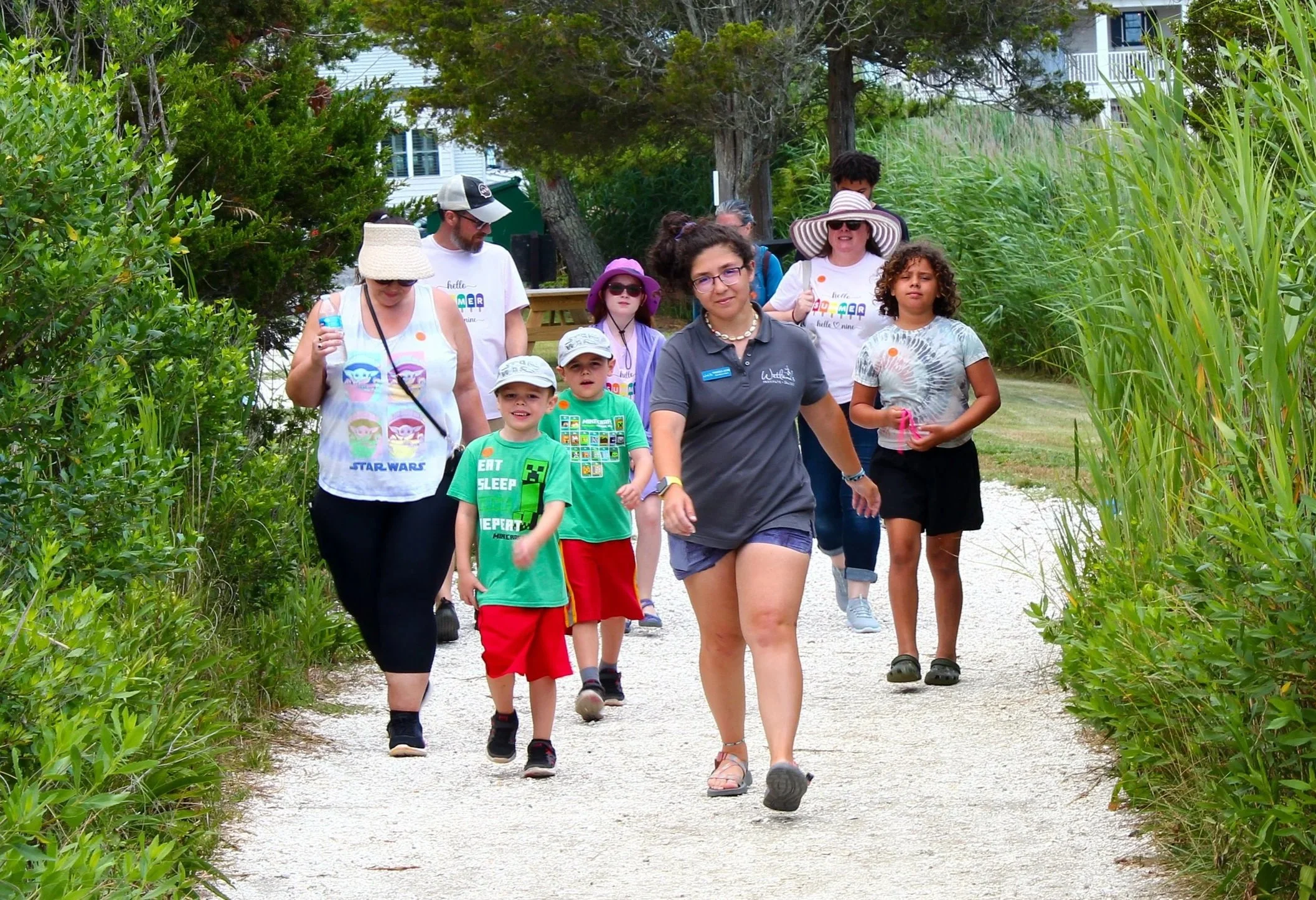
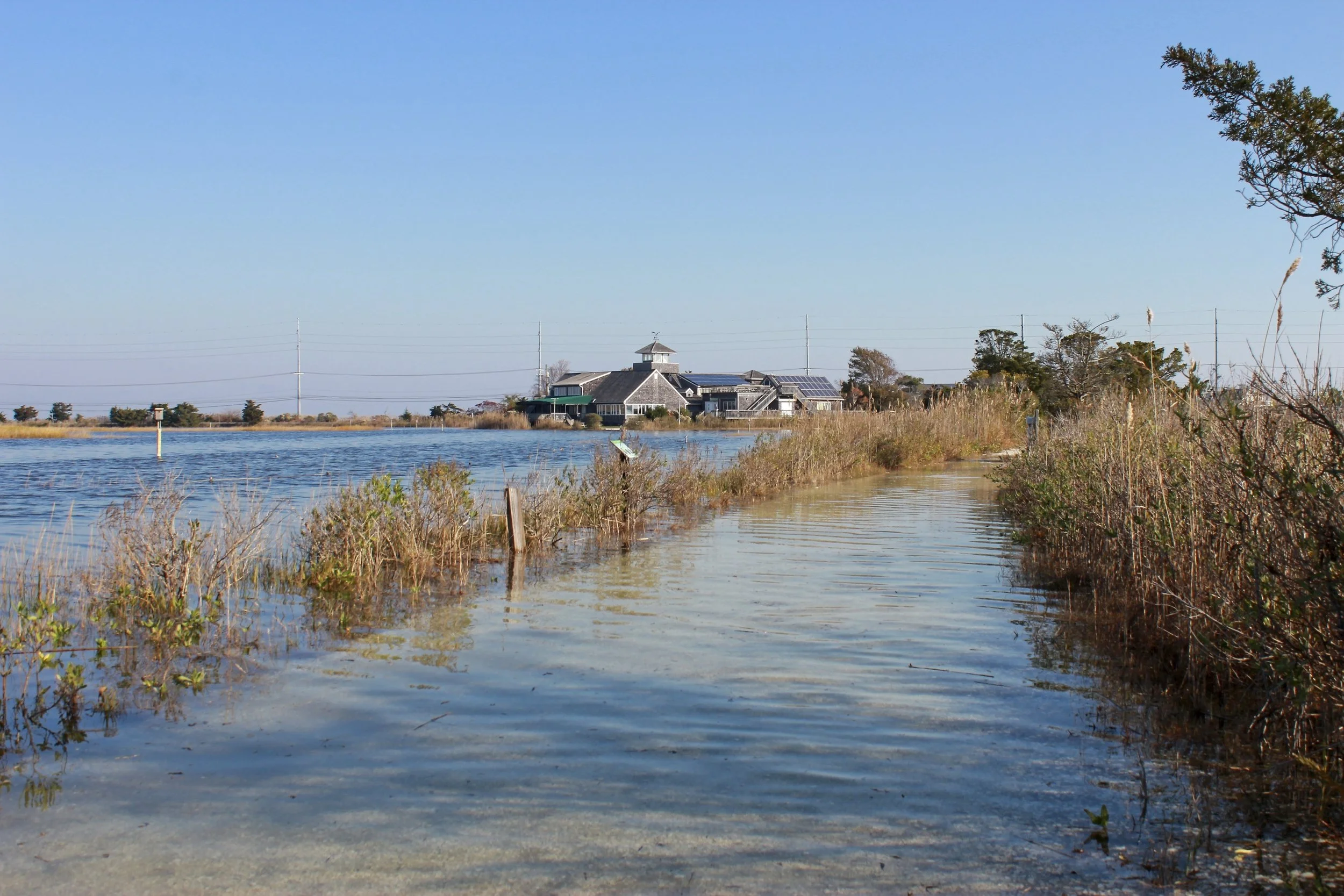
The Salt Marsh Trail is a key point for visitor access to explore the marsh.
By Lenore Tedesco, Executive Director, The Wetlands Institute
We have all seen the changing weather patterns and how, when combined with sea-level rise, they are exacerbating the risks of coastal erosion and flooding. We are all aware of the continual challenges associated with beach erosion, flooding, and marsh loss. Our island communities are densely built and provide a high quality of life. To protect this quality of life and investment, our communities are continually evaluating measures that strengthen resilience and help safeguard our shoreline and neighborhoods for future generations.
Approaches to increasing resilience often rely on gray infrastructure projects that are hard, conventional engineered structures like seawalls, bulkheads, and rock revetments. They are static and designed to absorb wave energy and prevent flooding but often deflect wave energy and floodwaters elsewhere, causing localized erosion. They disrupt natural habitats and impact the wildlife that relies on them. Over time, adjacent habitats are lost, weakening the resilience and environmental benefits these natural habitats provide.
Over the past decade, there has been increasing focus on the introduction of more green-infrastructure interventions and hybrid approaches that mix gray and green infrastructure projects for better outcomes. These nature-based solutions incorporate considerations of the environment and wildlife in ways that can better serve our communities. They use natural processes to simultaneously address issues like disaster risk and biodiversity loss, while benefiting human well-being and providing lasting environmental benefits.
Nature-based solutions are ecosystem focused and rely on creating and/or preserving healthy, functioning ecosystems rather than purely man-made infrastructure. They intentionally use natural and nature-based habitats, such as marshes or oyster reefs, and natural processes such as tides and currents to reduce coastal hazard risks. Well-designed systems are resilient and can adapt over time, unlike rigid concrete structures. They deliver a host of added advantages and co-benefits that can incorporate water-quality improvements, recreation, and wildlife habitats into their design and intention while delivering multiple economic, social, and environmental benefits.
There are two projects that utilize hybrid nature-based solutions in our community that are designed to increase resilience and reduce coastal risk, while enhancing wildlife habitats and incorporating recreation and education for co-benefits. They are Avalon’s Bay Park Marina Project and The Wetlands Institute’s Salt Marsh Trail Revitalization Project.
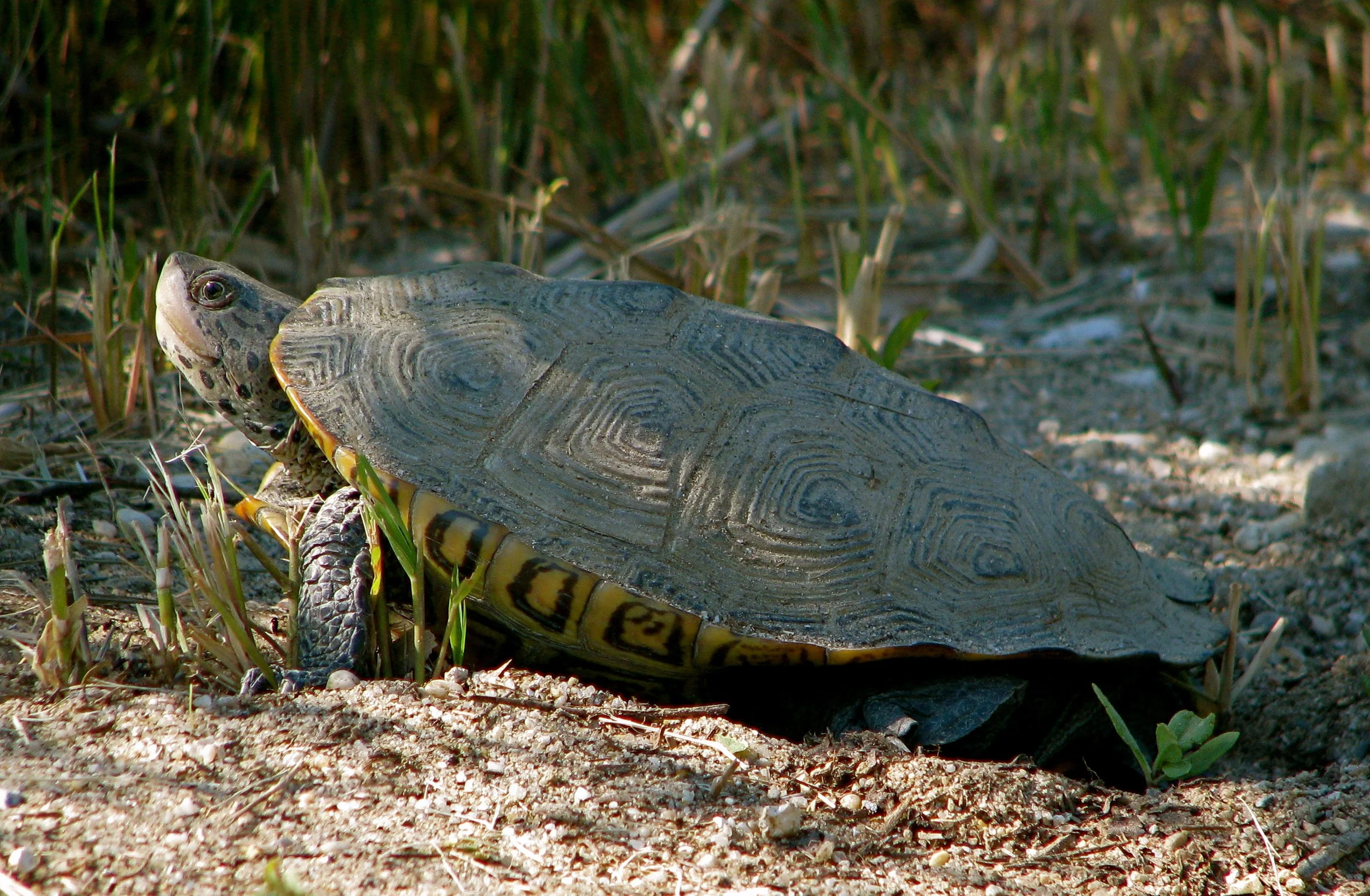
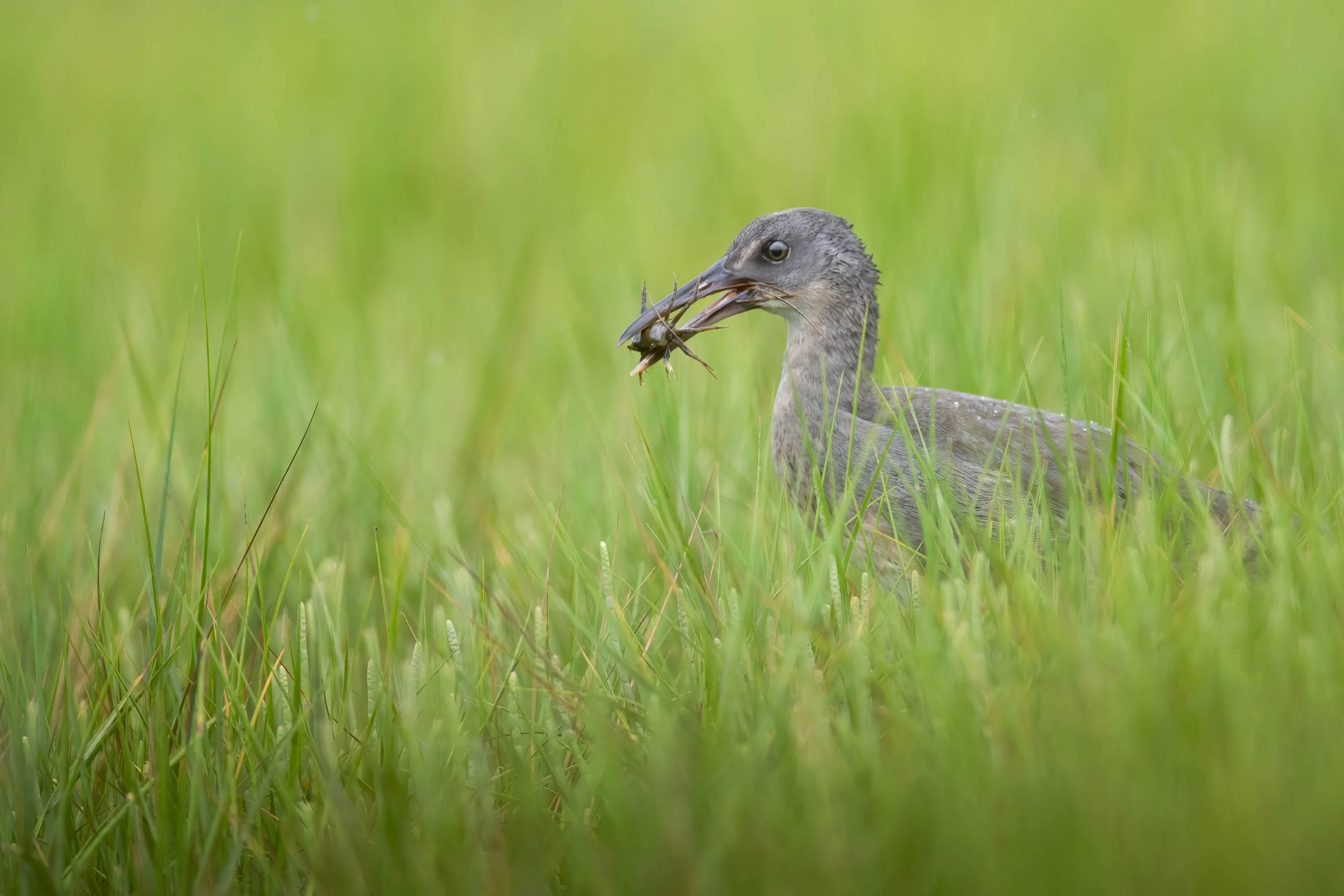
Avalon’s Bay Park Marina Project worked to address chronic flooding along the bay shore and an eroding shoreline that was reducing recreational access and negatively impacting wildlife. The enhancements elevated the site and incorporated flood resiliency with habitat enhancements. The 3.7-acre multipurpose park between 53rd and 57th Streets along Ocean Drive provides access to the bay for boating, fishing, and kayaking, and added a Waterfront Promenade and Sunset Overlook Pavilion. The project design incorporated diamondback terrapin nesting habitat and pollinator and songbird meadow enhancements. Rain gardens are designed to capture roadway runoff and are planted with salt-tolerant plants suitable for pollinators and work to improve water quality in the adjacent bay. The design includes a wave-form turtle curb that is an excellent example of hybrid infrastructure. The concrete curb height is set at 7.1 feet and provides flood protection. The wave form helps deflect wave energy in multiple directions, dampening erosive effects and prevents diamondback terrapins from accessing adjacent roadways. Importantly, the terrapin nesting area is accessible to terrapins so that they can find a suitable nesting area behind the barrier, helping to keep them out of harm’s way.
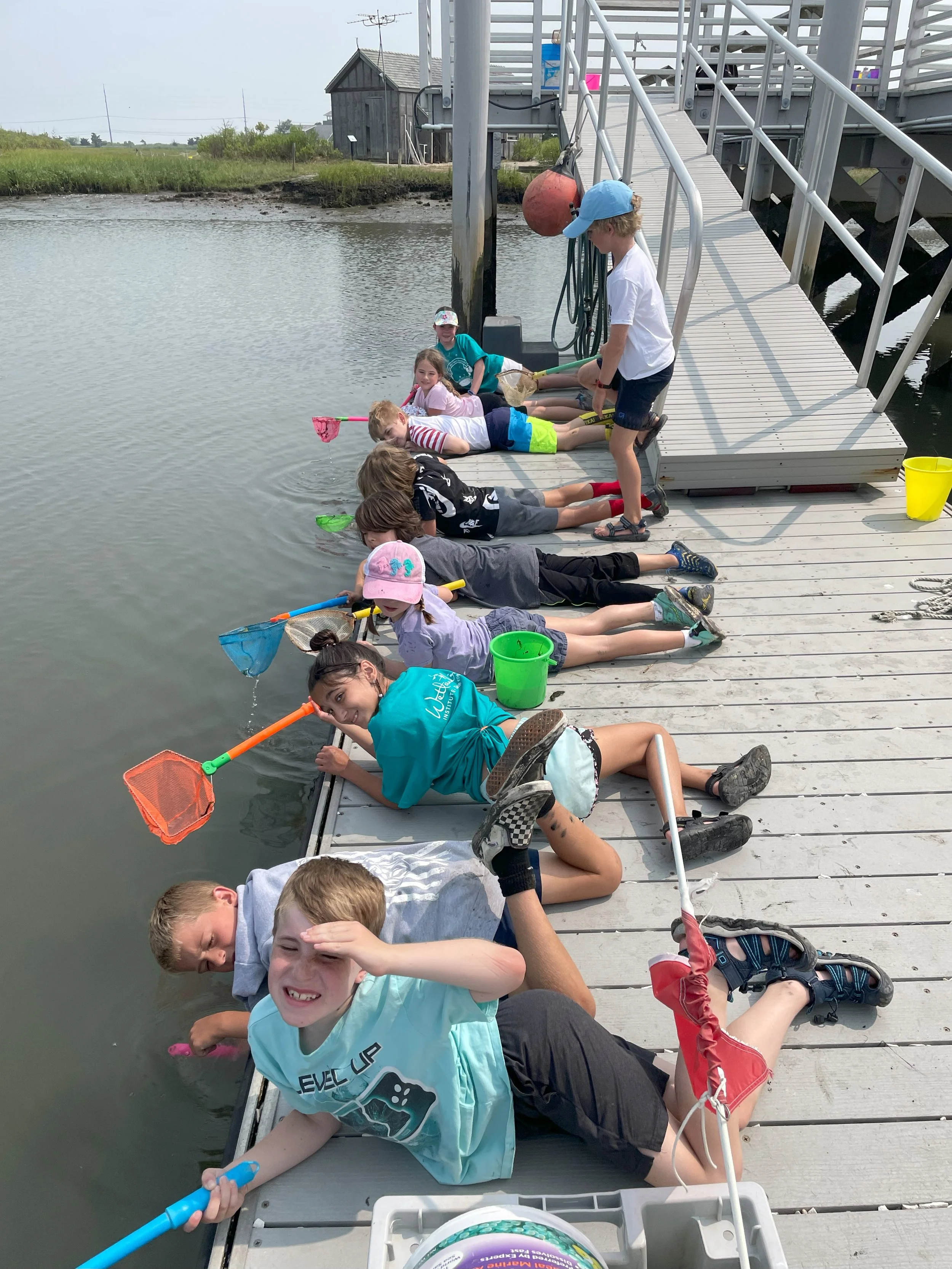
The next phase of the project is adding a living shoreline enhancement along Long Reach, the tidal waterway that flows past and behind the marina. This feature is designed to reduce wave energy along the shoreline using a human-made structure that is designed to attract mussels and oysters that will further cement the structure together, improve water quality through their filtering capacity, and create habitat. The quieter water area behind the shoreline will be restored to marsh and planted with marsh grasses, healing the eroding shoreline.
The Wetlands Institute’s Salt Marsh Trail Ecosystem Revitalization Initiative is a nature-based resilience project designed to restore tidal marsh habitat, enhance carbon sequestration, and protect a critical education and research asset at The Wetlands Institute. Chronic sea-level rise and increasingly frequent tidal flooding have degraded portions of the salt marsh complex at The Wetlands Institute and the Salt Marsh Trail. The Salt Marsh Trail is a hub of activity for visitors and a focal point for educational programs. It provides access to Scotch Bonnet Creek, the institute’s dock, and elevated walkway. In 2000, the Salt Marsh Trail flooded on average twice per year. In the past five years, the trail has flooded roughly 70 times per year. This flooding kills mature trees, floods terrapin and bird nesting areas, and limits access and education programs.
The Salt Marsh Trail Ecosystem Revitalization Initiative will elevate the Salt Marsh Trail using tools and techniques pioneered in the Seven Mile Island Innovation Lab. The research underpinning the project design in partnership with UPenn’s Environmental Monitoring Lab has won numerous national and international awards. The project design calls for raising the elevation of the Salt Marsh Trail by 2 to 3 feet (up to a total height of 6 feet), widening the trail to better accommodate programs; replacing the boathouse with a modest structure, and creating new high marsh and habitat specifically designed for diamondback terrapin nesting and coastal birds. Raising the road will involve roughly 10,000 cubic yards of fill coming from the Borough of Avalon and will return sediment that was dredged in 2017 to the coastal zone where it belongs.
The grade from the newly elevated trail to the surrounding marsh is being designed in a way that will restore 5 acres of marsh habitat that has been lost to flooding in the past 20 years. The trail will be replanted with native trees, shrubs and plants, intentionally selected and using planting palettes that will maximize the benefit to the marsh ecosystem and wildlife. The grasses and shrubs will be spaced at a density favored by nesting terrapins to provide shade and cover for hatchling terrapins. High marsh grasses will provide cover for nesting coastal birds, and when mature will provide foraging habitat. Seaside goldenrod is a fall bloomer that provides critical fuel for migrating monarch butterflies. Together the marsh restoration and plantings will create resilient habitat that serves many functions for the plants and animals of the marsh and associated environments.
The elevated trail systems also create an important barrier to storm waves and buffer against storm surge. Restoring the salt marsh helps buffer against flooding by acting as natural sponges for flood management, conferring additional resilience to the institute campus. Restoring the ecosystem replaces lost habitat for wildlife while also providing multiple benefits for enhanced human well-being.
These projects show that resilience doesn’t have to come at the expense of the natural environment that defines our coastal communities. By blending natural features with thoughtful traditional engineering and incorporating benefits for wildlife and people, we can reduce flooding risks while also improving recreation, water quality, and the health of our bays and wetlands. As more communities look for long-term solutions to rising water and changing conditions, these hybrid approaches offer a practical path forward that works with nature, not against it.