
Hotcakes & Wetsuits: How a Pancake Dynasty Heir Branched Out to High-End Surfwear
By Ben Niewoehner
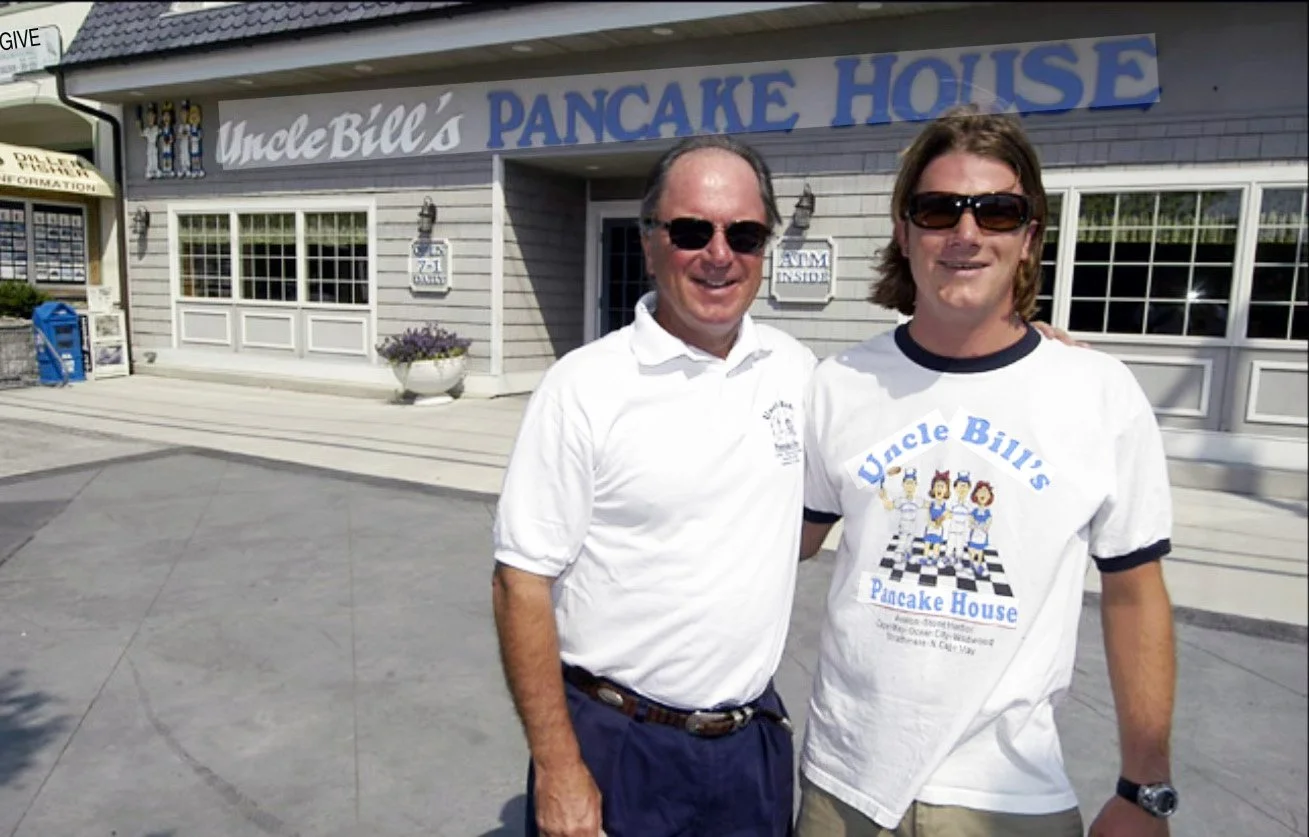
Casey O’Hara might be best-known across South Jersey for work that has him getting up at the crack of dawn to run Uncle Bill’s Pancake Houses. But right now, he’s also working around the clock to get a global wetsuit empire – Bewet America – off the ground in the United States.
Of course, Casey O’Hara’s grandparents founded Uncle Bill’s, the restaurant dynasty that has been going strong across the Jersey Shore for 64 years. O’Hara has been part of the business since he was a teen and currently serves as a third-generation owner.
While he’s dedicated to Uncle Bill’s, O’Hara had an encounter a few years ago that redirected some of his attention toward a new business opportunity.
“Kolohe Andino was here visiting, and he had on this wetsuit,” O’Hara says. “I said, ‘Where did you get that wetsuit?’”
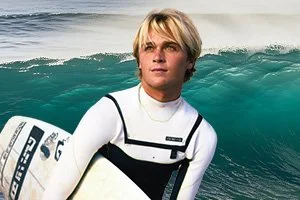
Now a close friend of O’Hara, Andino is also the first American surfer to qualify for the Olympics, competing in the games in Tokyo in 2021. Clearly, Andino’s choice of wetsuit is well curated. It turns out Andino was wearing a Bewet Wetsuit, known for its high-performance and ability to maintain warmth in the water.
O’Hara was intrigued.
Andino quickly introduced O’Hara to Sara Kohrogi, a professional surfer who was already starting to work with Bewet Japan, the wetsuit manufacturer. Once Andino and O’Hara connected in September 2024, the business dominos fell into place pretty quickly.
“She reached out to me, actually came out here to Avalon and met my family,” O’Hara says. “Last year in May, I signed a contract to be a licensing partner for the East Coast of the United States for Bewet Wetsuits.”
It was a rapid chain of events for a man who had spent decades consumed by the food business. But, for O’Hara, a love affair with surfing has stood the test of time, dating back to his youngest years on the coast in Stone Harbor.
“I really started falling in love with the water around 5 or 6 years old,” he explains.
In his adolescent years, O’Hara began to surf seriously, and ultimately followed his passion for the sport around the world. In his early 20s, he competed in a series of professional circuits, from Hawaii to Barbados. He was good, but the competition was steep.
“I wasn’t consistent enough with it,” he says. “I wasn’t at the super-high level of some of these guys who do it and make a lot of money off of it.”
O’Hara eventually returned home to join the family business, working under his father, Bill. “I came home, really grinded under my dad. It was challenging,” he says.
He acknowledges how much his father taught him as a business owner: “I like to say if I retain half of what my dad has learned in his life – half – I’ll be successful.”
Part of what O’Hara absorbed through his father was discipline and a work ethic that informs his involvement with Bewet America, where he does it all. As the East Coast partner, he is responsible for distributing Bewet’s wetsuits directly to customers.
“It’s like, ‘Hey Casey, you’ve gotta go to LA and meet with people here and there,’ and then you gotta fly home,” he says. “All of a sudden, somebody’s in Virginia Beach. ‘Hey, you gotta be down there. They want to meet with you.’”
Bewet Japan was founded in 1960 and has been headquartered in Tokyo for decades. All of the company’s wetsuits are produced along the coast in a surf factory in Shibu, Japan.
But Bewet America is brand-new; O’Hara is co-leading the American side of the business. It’s why he has been such a jet-setter, traveling all over the American coast, to Japan, and back again.
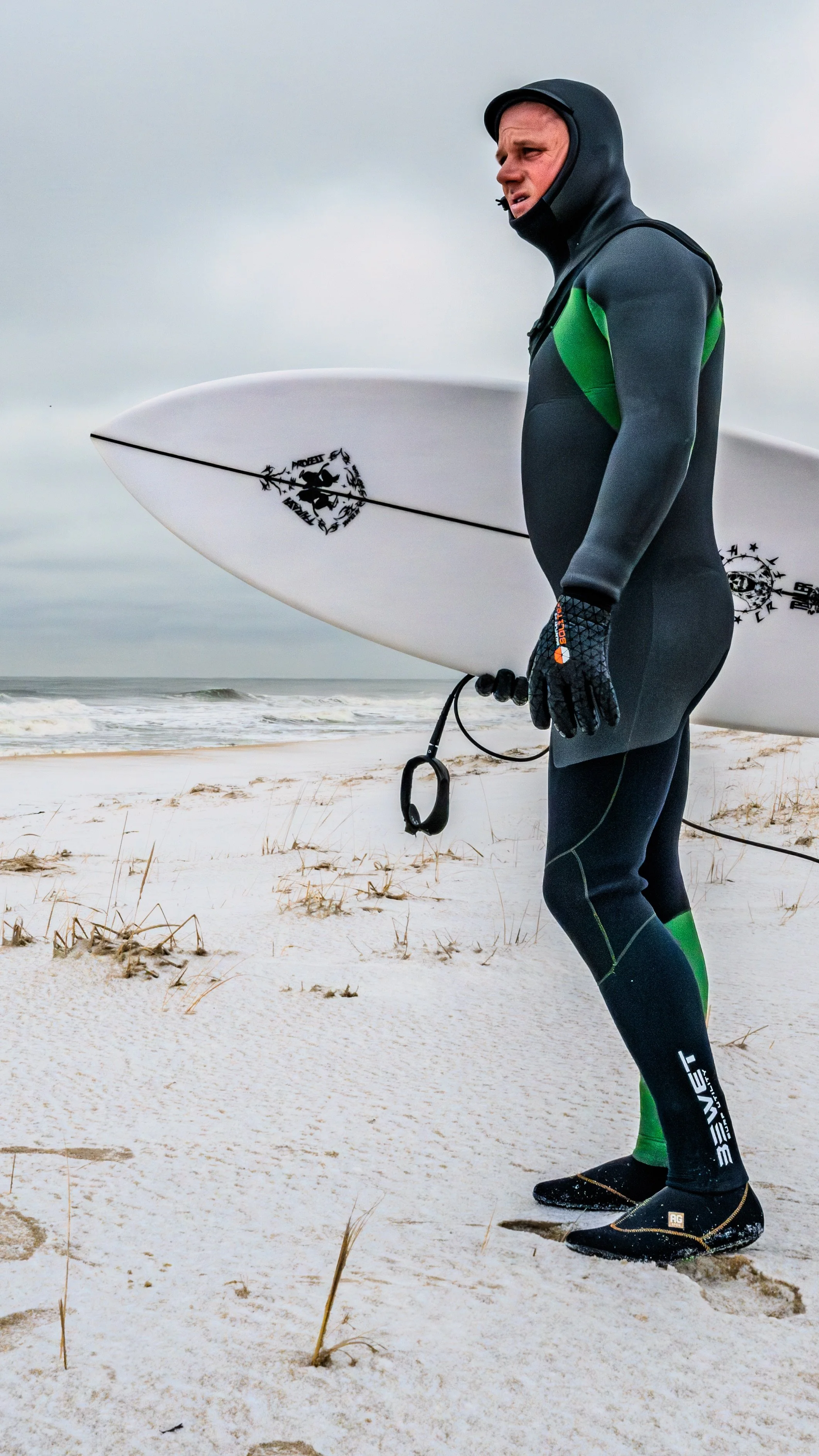
“You’re growing a company, so you really don’t want to slack,” he says. “You’re sacrificing your time, but you’re going, ‘This needs to be done so eventually you’ll have people that can do it for you.’”
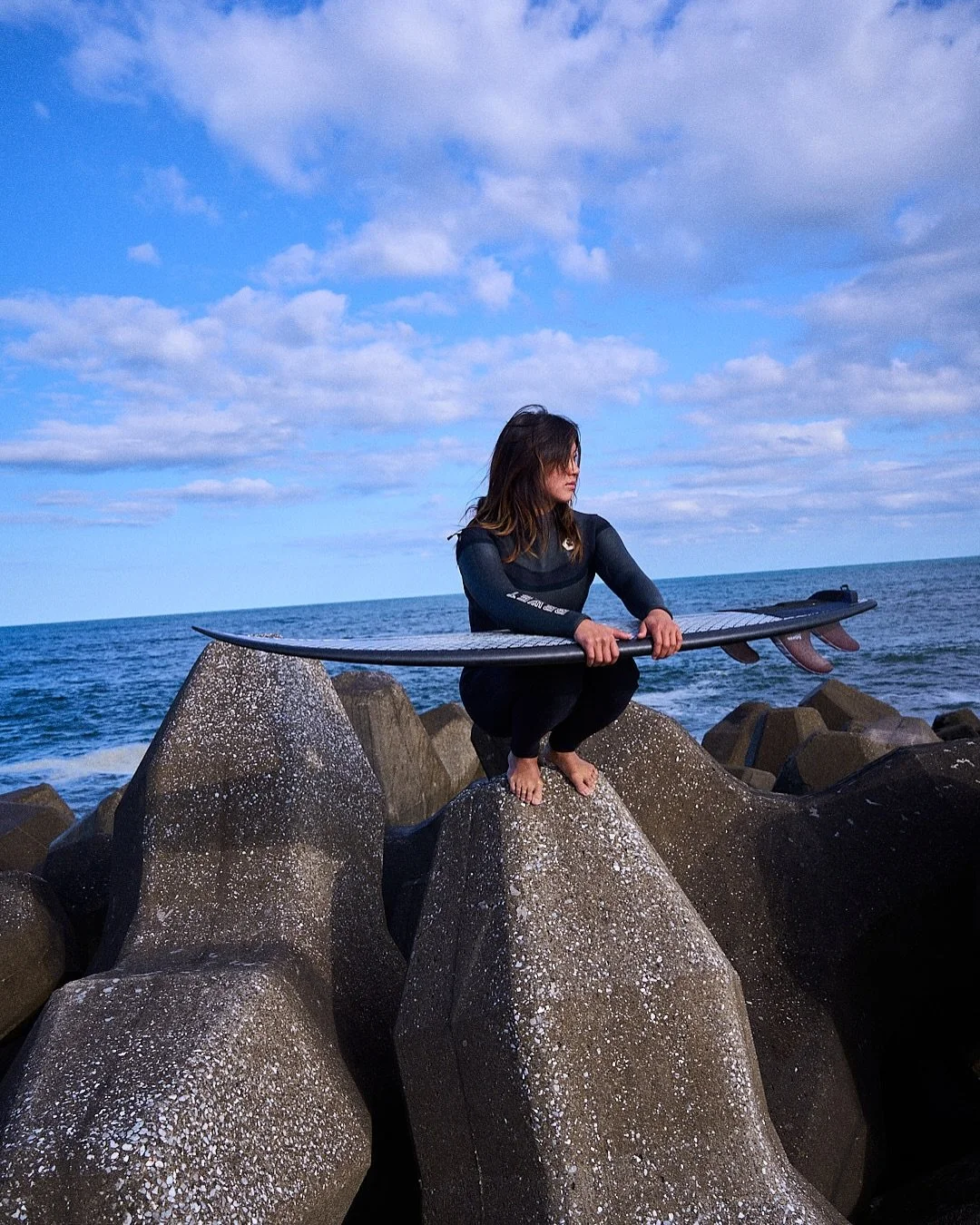
The company’s high-end wetsuits are designed for surfers, divers, and swimmers. In the U.S., all sales are online, although there are plans to establish a satellite store in the San Francisco area. Each wetsuit is made out of a “high-performance limestone neoprene” on the outside, while the inside contains a silver titanium called “AGT210” that keeps bodies warm in the water.
One of the challenges in marketing the product is the price tag. “You can go into a local surf shop and buy a suit for $400, and then you can come to me and get a suit for $1,000 – well, that’s a big difference,” O’Hara says.
Customers tend to understand the investment once they’ve tried the wetsuits, according to O’Hara: “What makes the difference? A lot of people, once they realize the warmth, the comfort, and the flexibility, they’re like, ‘Now we see why.’”
Another benefit to buying from Bewet? The ability to customize.
“I just literally delivered a suit for a guy who wanted a red, white, and blue one for the 250th anniversary of the U.S., and he’s like, ‘I’m gonna surf under the fireworks with the 250-year suit on.’ I’m like, ‘All right, cool, whatever you want,’” O’Hara said. “That’s what separates us.”
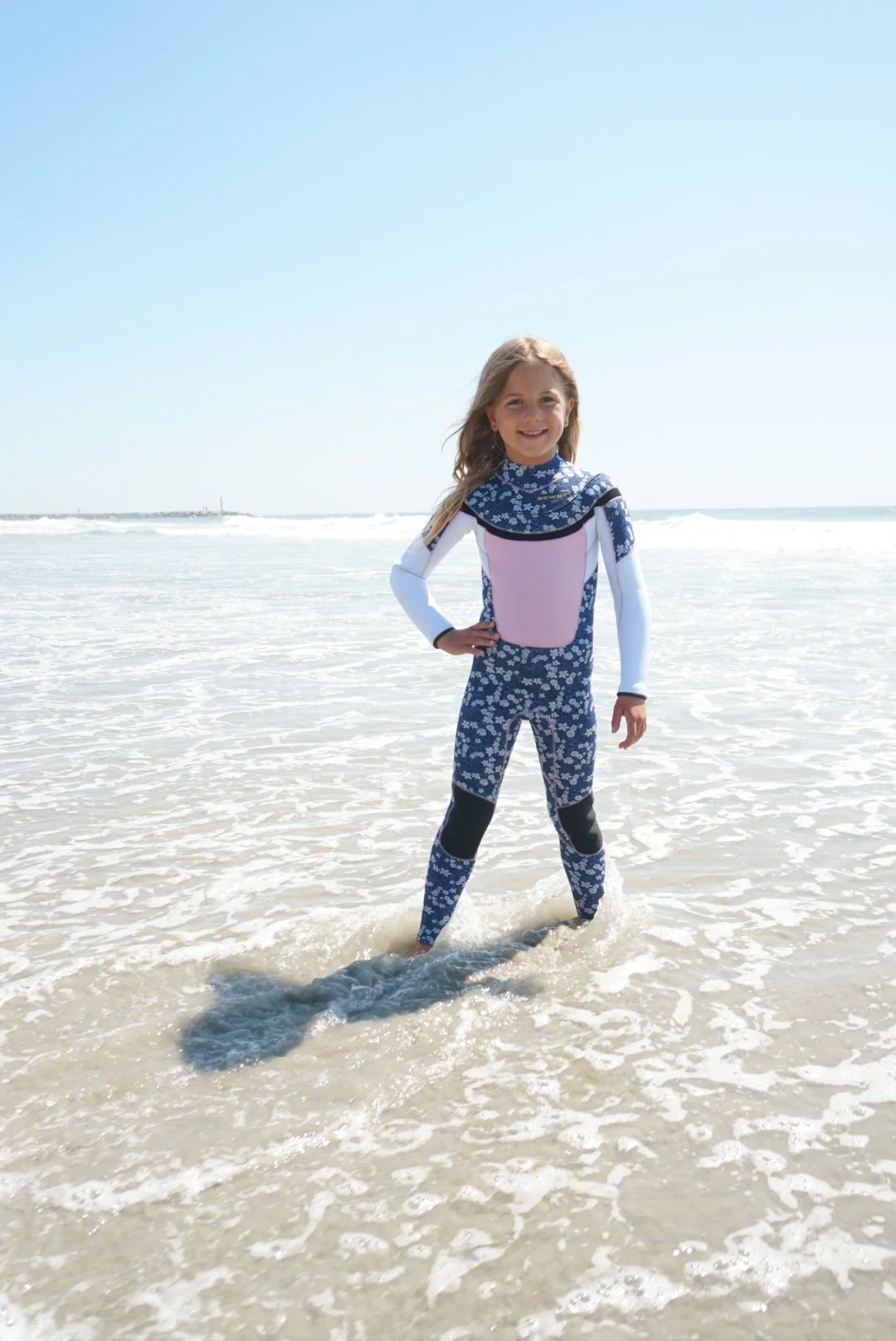
Even O’Hara’s family has gotten in on the customized-suit action. His two youngest daughters, 5 and 7, have dipped their toes into the sport recently. “They’ll have their wetsuits on this summer,” he says. “You’ll see these colorful wetsuits, you’ll know where they came from.”
More broadly, Bewet’s clientele crisscrosses generations and ability levels, from professional surfers to 50-year-old “gear-heads” to teenagers. “Parents that have expendable income are starting to buy kids the suits, because they’re cool and they can be custom,” O’Hara explains.
The local community has also demonstrated its excitement with O’Hara’s surfing venture. “Some of my closest friends got involved early on,” he says. “They got suits, they were excited about it. Now I’ve got some guys from Cape May. I’ve got some Ocean City guys in them, and the other day I saw three guys in them in Avalon.”
Bewet America has even attracted some unexpectedly high-profile non-surfers.
“Christian McCaffrey has our wetsuit,” O’Hara says of the star NFL running back. “He got it for the pool at San Francisco’s facility. It’s got a 23 on it. It’s dope, it’s red-and-black for the 49ers.”
Another surprising Bewet client is Baltimore Ravens offensive lineman Ronnie Stanley, who goes 6-foot-6, 310 pounds. “He surfs in the offseason in Hawaii, so we built one for him,” O’Hara says. “That was probably one of the biggest humans we’ve built a wetsuit for. That’s what’s different about us – he could never go into a store and find a wetsuit that would fit him.”
Armed with this growing customer base, O’Hara hopes next to expand Bewet America’s global footprint. Ireland, England, Portugal, Brazil, and Australia are all potential markets he views with optimism. He acknowledges the work it will take for his company to get there.
During this time-intensive process, has he stepped back at all from Uncle Bill’s?
“No,” he says. “I’ve just had to learn how to balance more.”
The tricky balancing act is worthwhile for Casey O’Hara because surfing is when he’s most at home.
“I’ve always been in love with the ocean,” he says. “Surfing makes me step back into reality for how fortunate I am for friendships, love, and all those things that I’ve been able to do and see.”