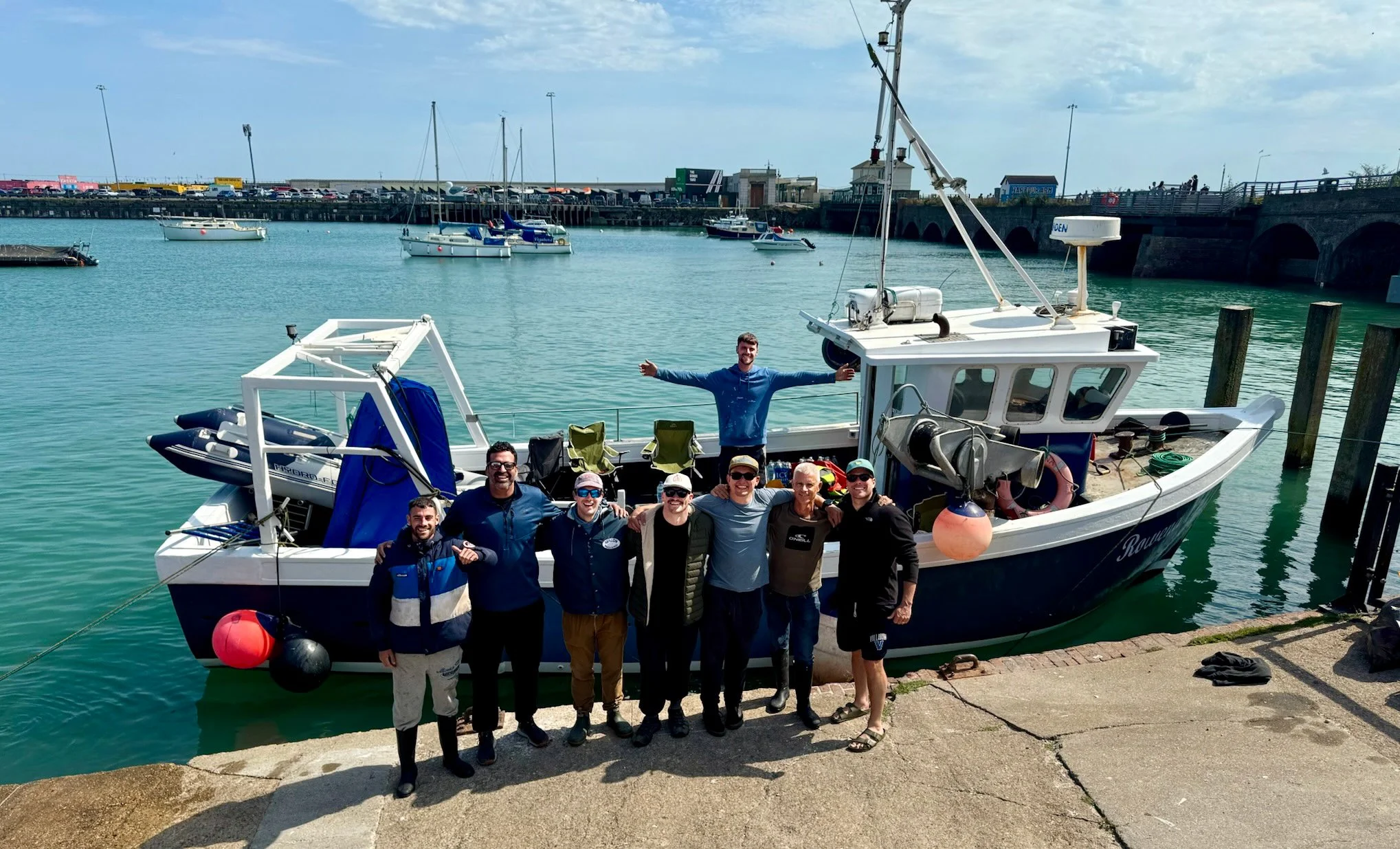
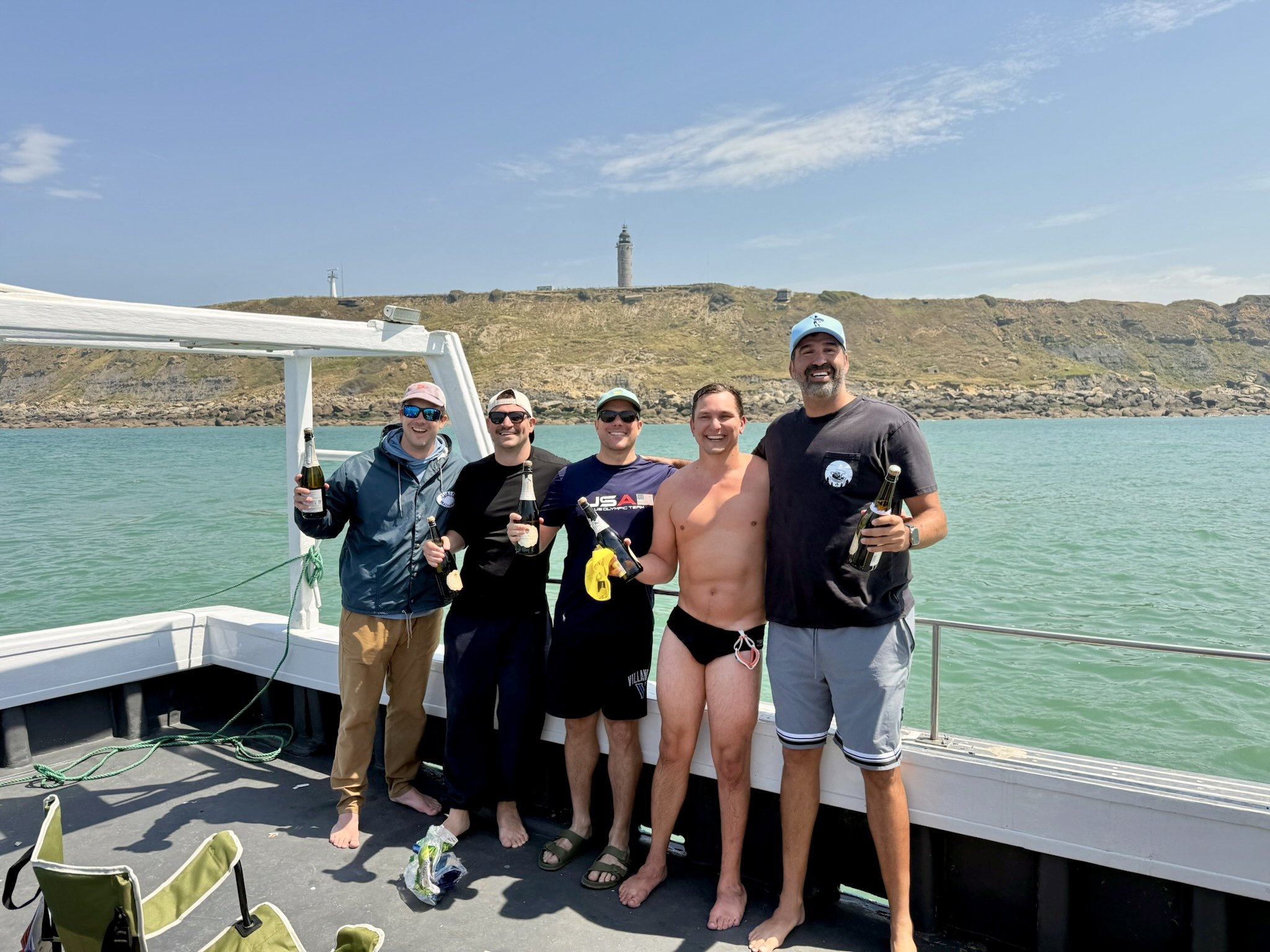
The “Rowena” in the harbor with (from left): Leon Reed (crew), Frank Quesada, Mike Gillin, John McGinley, Brady Mosk, Captain Peter “The Crab” Reed, Joe Chiarantona; background: John Reed (crew).
By Dave Bontempo
Local lifeguards have seemingly done it all. Protected millions of beach visitors, competed in the heralded South Jersey Lifeguard Racing circuit, swam for college teams, become parents, swam the English Channel …
Whoa! What?
Yes, three local beach-patrol alumni helped form a five-member relay team that finished the famed English Channel swim on June 19.
Joe Chiarantona (Stone Harbor), John McGinley (Sea Isle City), and Michael Gillin (Avalon), who cut their teeth on local beach patrols and later swam for college teams, joined Brady Mosk (San Clemente, Calif.) and Frank Quesada (Miami) to reach this pinnacle. They crossed THE English Channel, an aura-filled endurance struggle sporting fewer completed journeys than Mount Everest, the highest peak on earth.
According to the Channel Swimming Association, the governing body that certifies results, there have been 3,197 completions of the 21-mile (or greater) English Channel swim. Mount Everest, standing 29,031 feet above sea level, totals nearly 5,000 scales.
The Challenge
This group, named by Channel officials as the U.S. National Open Water Team, made it from the Strait of Dover in England to just south of Calais, France in 11 hours, 28 minutes. That’s the fastest time recorded of 37 successful missions this year and looks even more impressive because currents extended the route to 34 miles. They essentially swam the Channel one-and-a-half times.
Each team member completed a one-hour leg before being replaced by another.
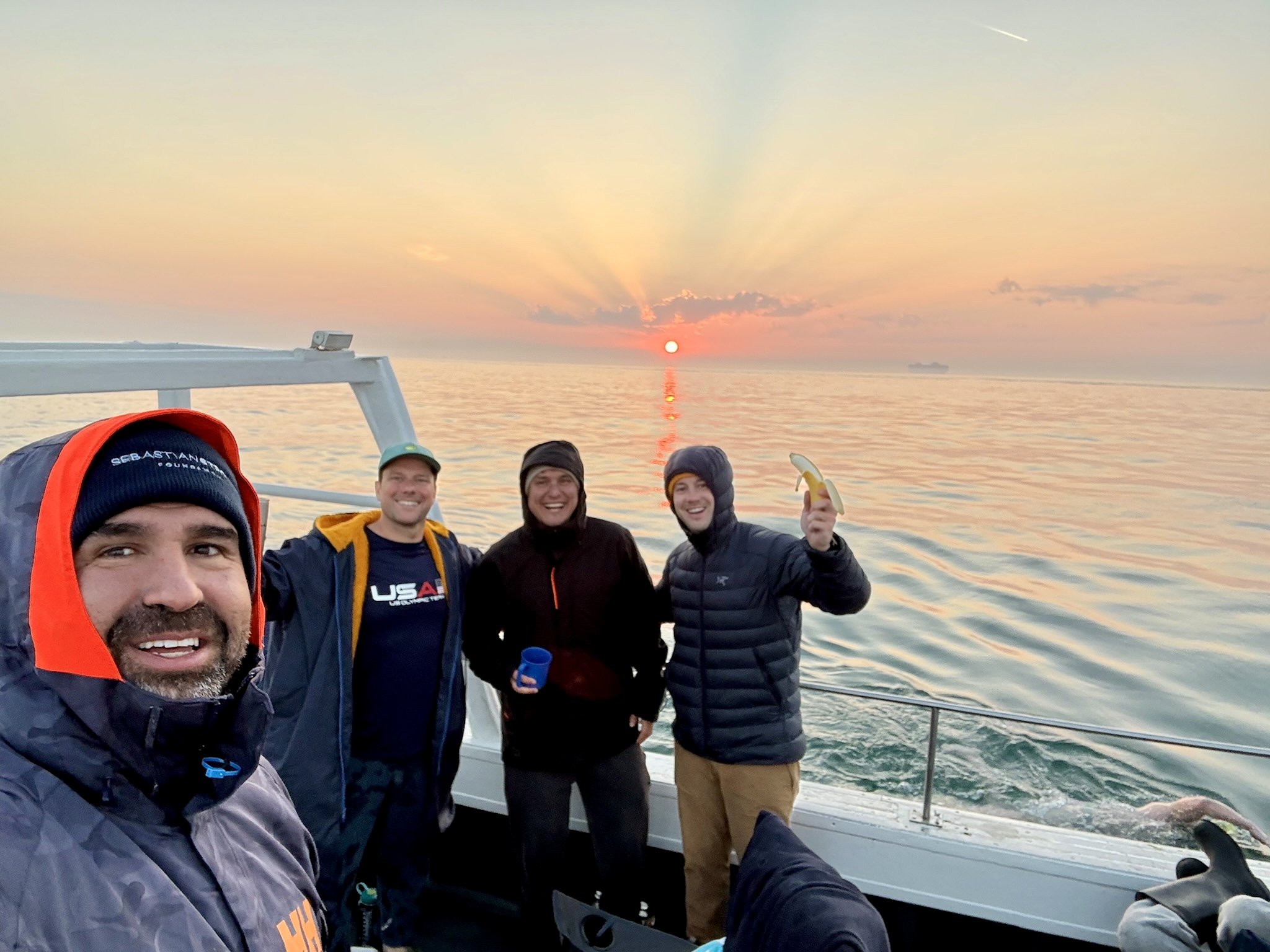
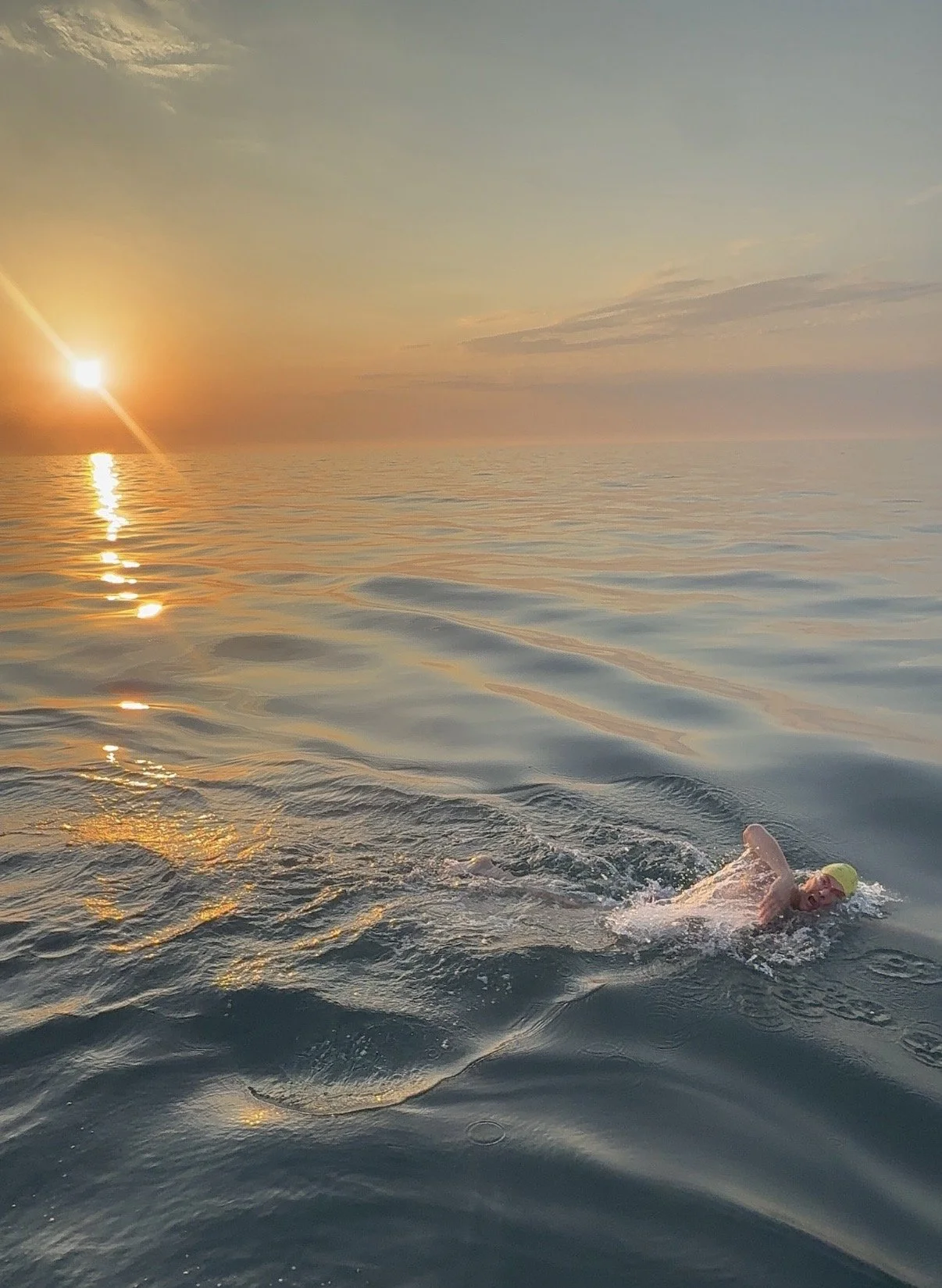
The group swam from roughly midnight until noon. Members braved the dead of night, painful jellyfish stings, brutal water temperatures, floating debris from nearby container ships, and smothering fog. They followed strict rules like no wet suits that would allow thermal protection. Channel mystique apparently outweighs potential hypothermia.
This once-in-a-lifetime experience spawned several vantage points.
The Connection
McGinley and Gillin grew up near each other in Pennsylvania and participated on youth swim teams there. They gravitated here during summers and their beach patrols competed against each other in lifeguard competitions.
They knew of Chiarantona via lifeguard connections. Chiarantona and Quesada, meanwhile, were roommates and swim-team members at Villanova some 25 years ago. Mosk went to West Point with Gillin. They were friends and swimmers on the team.
Chiarantona's Vision
Chiarantona was selected as the representative volunteer for the NCAA at the 2004 Athens Olympics in Greece. There, he spoke with Olympians about their English Channel experiences. The seed was planted.
“That’s when I got this thought of trying the big open Channel swim,” says the 46-year-old from Newtown Square, Pa. “This is one of the best. I had done the Escape From Alcatraz swim in California, solo, years ago. That’s a great prep for the Channel with its cold water and strong currents. So, I wanted to put a team together.
“Well, before you know it, people got married, people had children [he has a 3-month old] and the [2012] London Olympics threw a monkey wrench into it. People also had injuries, etc. So, it’s delay, delay, delay. Finally, we all just decided to organize and do it. We were lucky to get the spot with the captain, and that was two years ahead of time.”
What followed was two years of independent workouts for colleagues living everywhere from Avalon to Pennsylvania, California, and Florida. There were Zoom meetings, paperwork, logistics and final preparation. There were plunges and even some cryotherapy (exposing the body to extreme cold for short periods of time) to mimic English Channel conditions.
And, finally, an incorporation from their real world.
Chiarantona is in the mid-tech industry. Among the products he sells is an implantable device that stops seizures in epilepsy patients. “It’s like a pacemaker for epilepsy,” he says.
That compassion launched the group’s additional goal. It raised more than $50,000 for the Sebastian Strong Charity, which funds research for childhood cancer. It is based in Miami and Quesada is connected with it. Additionally, this swim group spent about $10,000 of its own money for flights, lodging, boat rentals, equipment, food, etc.
At the center of it all was the quest to conquer the Mount Everest of open water. Chiarantona, who served on the Stone Harbor Beach Patrol from 1999-2002, was more than prepared.
The Mighty English Channel
This is not for the faint of heart. Water temperatures usually run 50-60 degrees. It taxes stamina, the resilience of one’s arms, legs, and psychological strength.
Timing is also crucial. Miss a marker ahead of a key change in current and suffer the penalty of swimming against the tide, adding miles to the journey. Chiarantona says it’s not uncommon for an individual, or group, to get pulled off its course just a couple miles from shore and miss the completion.
Captain Matthew Webb first conquered the challenge in 1875, needing nearly 21 hours because of strong tides between Dover and Calais. That made him go 39 miles.
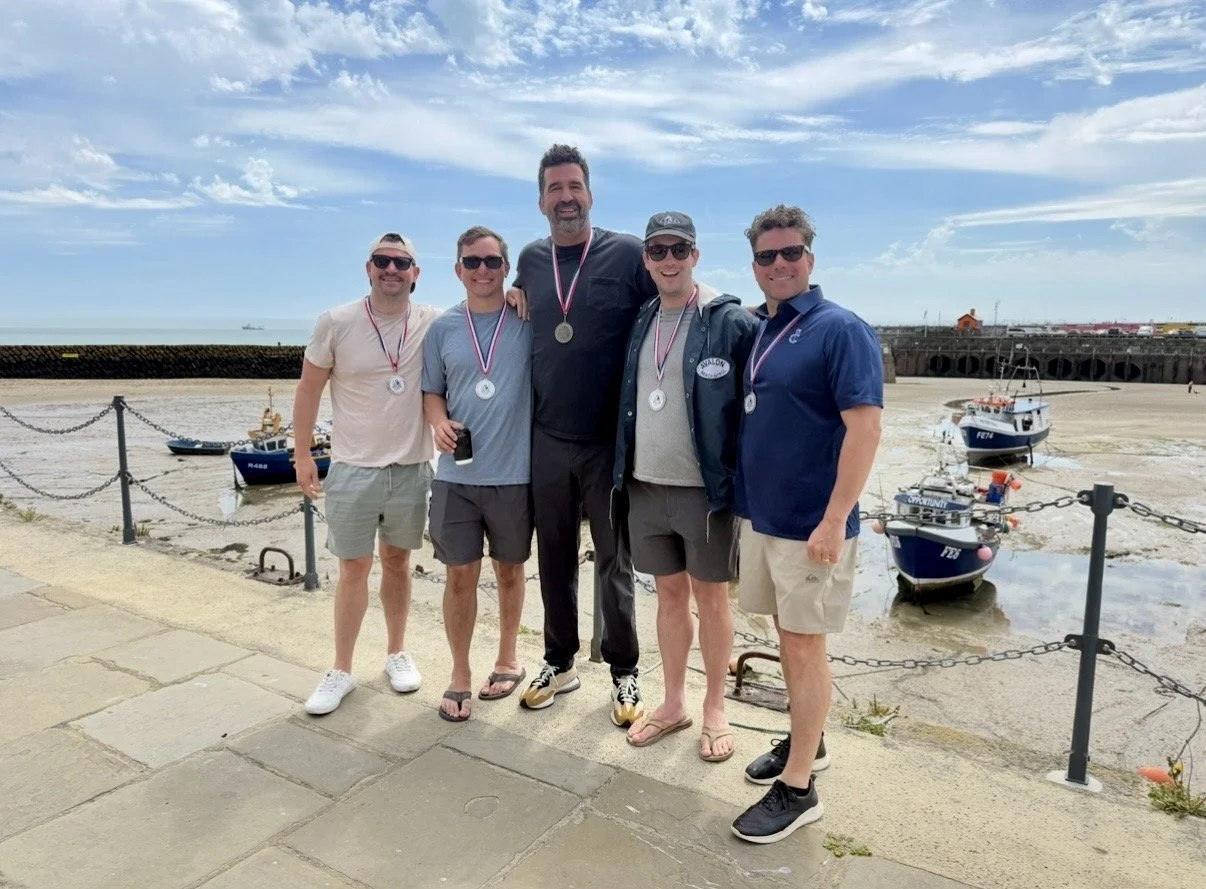
We are at the 100-year anniversary of the first woman to do it. That was Gertrude Ederle on Aug. 6, 1926. A 19-year-old Olympian, she was able to keep the distance at 21 miles and prevailed in 14 hours, 31 minutes. She was also resilient. Ederle had been disqualified one year earlier for merely touching the guide boat. An inscription honoring Ederle is on the medals now worn by Chiarantona, McGinley and Gillin.
After planning this event in 2024, the group enlisted a captain to guide the boat and determine when tides allowed the journey.
“We left on a Wednesday night and arrived Thursday morning in [London’s] Heathrow Airport,” Chiarantona recalls. “We rented a car, and as we get to our destination the captain messages us and says conditions looked good for midnight that night.
“We were thinking, ‘Can we get a nap?’
“We were told that one team had been stationed there for several days, waiting to be cleared to go.”
So around midnight, the Mighty Five began their pilgrimage. Each swimmer went for one hour and could not touch the boat, which served as a navigation tool, potential rescue device, and a certification vehicle.
Although one hour is much easier than the marathon demands of solo performers, the stakes are higher. One has the hopes of the entire team riding on each stroke. If one swimmer is unable to continue, the entire team fails its mission.
As each hour passes, the next team member must jump in behind the previous swimmer and start the next leg. Everybody did two legs; a couple did three.
Swimmers had to put strobe flashlights on their goggles and bathing suits so they could be seen in the water. Flashing lights also attract fish and sharks. The jellyfish did sting them. There were no sharks, thankfully, but Chiarantona observed a sea lion and dolphins. He recalled asking the captain to refrain from wildlife stories, especially those involving sharks.
Slowly, the time passed. Each swimmer occasionally balanced the question of what he’d gotten into with the imminent sense of accomplishment.
“As the sun comes up, we were seven miles out and could see the shoreline after the fog lifted,” Chiarantona recalls. “We had to finish as quickly as possible. We had to get past a certain point that juts out before the tide could pull us out. The captain told us to get the lead out. As you get closer to the shoreline, the current gets stronger.
“What an unbelievable feeling it was to finish.”
Chiarantona credits the Stone Harbor Beach Patrol as laying a strong foundation for him.
Gillin Relishes Achievement
Gillin served on the Avalon Beach Patrol from 2007-13, primarily guarding the 35th Street beach. He competed in all the lifeguard races his rookie year and shorter ones thereafter.
He has an eerie recollection of swimming in pitch darkness.
“My first hour swimming in the dark was tough,” he says. “It felt colder without the sun out keeping my back warm and it took longer than I expected to loosen up, so my stroke felt a little off.
“I checked my watch with about 18 minutes left and I wish I hadn’t because time felt like it slowed down. I would swim for what felt like 10 minutes, but only a minute would go by and it started to get in my head. I managed to get my focus back and get into a rhythm for the last 10 minutes.”
Gillin tried to savor a moment that was both surreal and potentially unnerving.
“The cold can make you lose your breath and make your heart rate spike, which was the last thing I wanted,” he says. “It’s not the most fun feeling even if it’s short-lived, so I focused on staying as calm as possible when I jumped in. The cold was a big shock, but my adrenaline was pumping and I spent the next 10 minutes warming up as I swam and getting my bearings.
“The boat was really lit up and easy to see, but it was a little awkward figuring out how to keep the right distance from it while trying to swim straight. I really tried to take in the experience and remind myself how unique swimming at night was.
“By 4am, you could see pretty well. I remember being totally shocked as I started treading water for a few seconds to take a look around and saw two or three massive cargo ships surrounding me. It was surreal.”
The English Channel demand was one for an individual’s permanent scrapbook.
“It’s monumental simply getting to the start line and only then do you get your chance to battle the sea,” Gillin asserts. “There’s no greater test for a swimmer. It’s necessary to challenge yourself, physically and mentally, as being uncomfortable is a good thing, and it’s in those moments when you learn the most about yourself. Swimming the Channel reminded me what I’m made of and I’m just really proud to have done it with these four guys because I couldn’t have done it without them.”
Gillin salutes the individuals who make this effort without the help of teammates. He also felt a patriotic surge known to Olympic medalists.
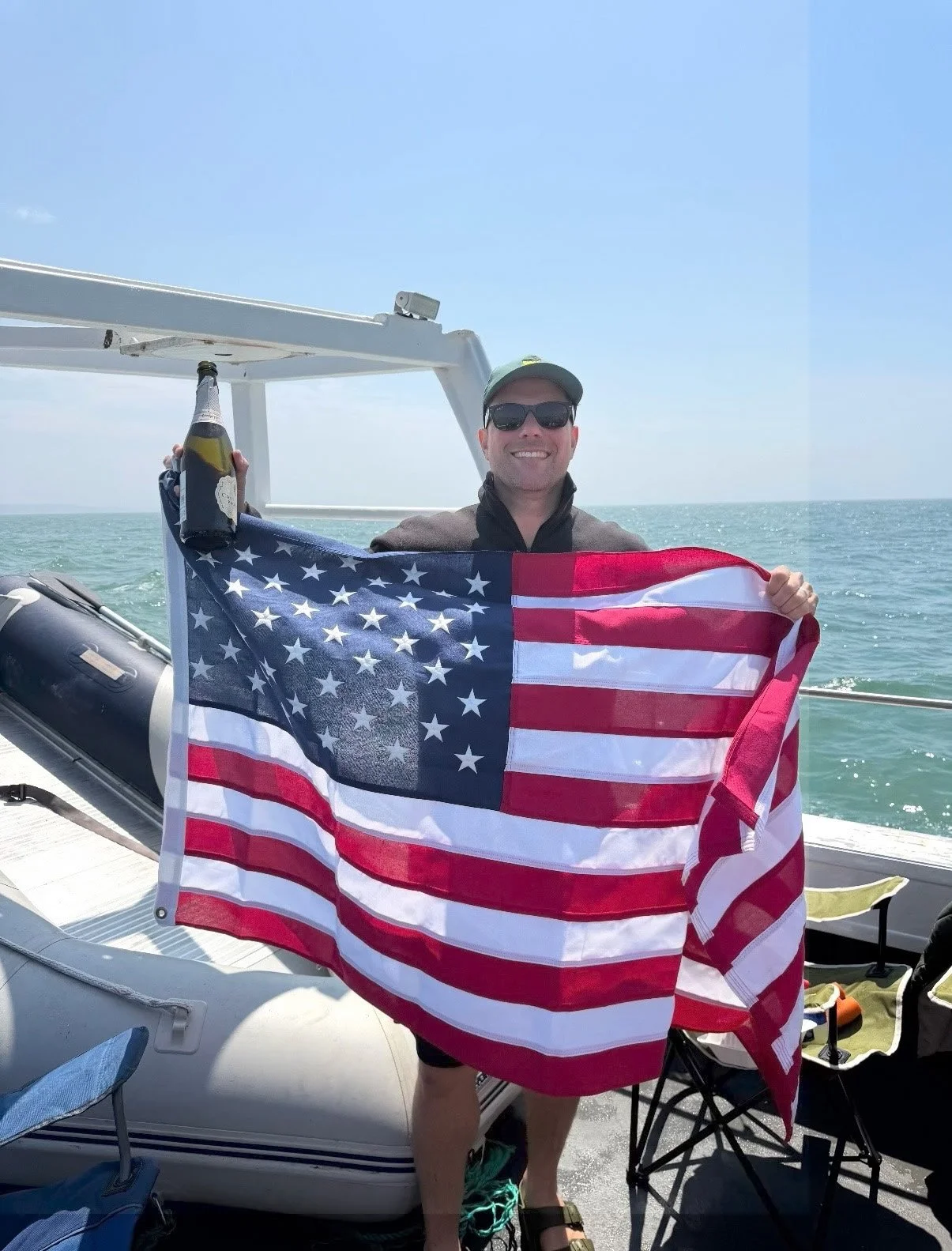
“I was really proud to be an American,” he says, “because in that moment holding up our flag after we finished, when our swim gets ratified and put in the official record, it’ll have our five names followed by ‘Country: United States,’ and that’s special.”
Gillin further recognized the impact of the Avalon Beach Patrol in shaping his life and developing him for West Point and later the Army.
McGinley Savors the Camaraderie
McGinley lifeguarded in Sea Isle City in 2007, 2009, and 2010, mostly on the 75th Street beach. He swam for the SICBP in 2007 and competed in run/swim competitions in 2009 and 2010. He met Gillin in middle school at Malvern Prep. They became fast friends and even friendly beach patrol rivals with Gillin on the Avalon squad and McGinley competing for Sea Isle City.
He heard about Chiarantona’s vision. Little did McGinley know he would help it become real.
“Swimming the English Channel was a special experience, but even more so given I was able to do it as part of a relay alongside Mike, Joe, Frank, and Brady,” he says. “We have a great group of fellas who don’t take themselves too seriously, and so the journey to France was a blast.
“Swimming as the sun came up, with container ships navigating the channel nearby, is something I’ll never forget,” he continues. “I’ll be honest, it was cold. The 60-degree water temp was harder to deal with than anything else. The current was pretty wild, too. I definitely have a lot of respect for the people who make the journey solo.”
The 35-year-old Philadelphia-based McGinley, who considered finishing this event “pure elation,” credits beach-patrol life for building technical skills to navigate open-water currents as well as the soft skills like perseverance.
He went on to swim and become co-captain at Notre Dame and now works in the finance world, investing in middle-market businesses to help founders and entrepreneurs achieve their goals.
McGinley’s father John and his younger brother Mikey lifeguarded in both the Avalon and Sea Isle patrols.
The aftermath has been gratifying for the group. They received congratulatory calls and will share their stories with their old patrols during their scheduled August visits here.
“This went from being a goal to a vendetta,” Chiarantona says with a laugh. “I kept saying we were going to do it and not let age, time, or other things get in the way.
“We had to get this done. We are extremely happy.”
So is the beach patrol world that helped shape their character.