
‘Sea to Shining Sea’: Buddies’ Bike Trip Raises $13,000 for Johnnie’s Place, Adds Lifetime of Memories
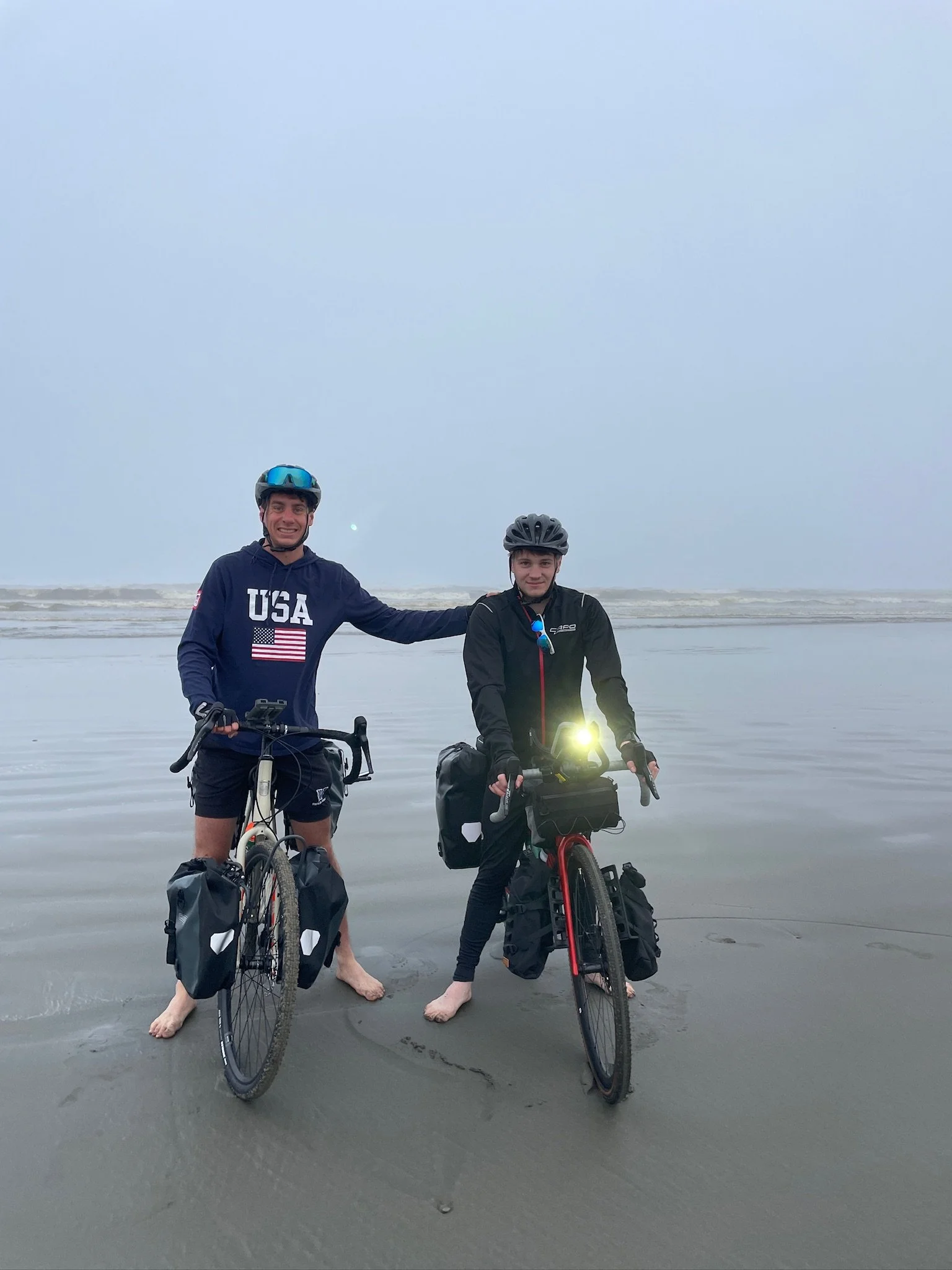
Patrick Casey (in blue tops) and Wil Cosgrove’s journey took them from the Pacific Ocean to Avalon via Chicago.
By Ben Niewoehner
Last December, Patrick Casey and Wil Cosgrove met in a Lancaster Starbucks and decided to bike across the country.
“We just started picking points on a map,” says Cosgrove. “It became real.”
The dream that had actually begun five years earlier as an innocuous text message from Casey to Cosgrove, inspired by a high school English teacher’s cross-country biking experience, turned into a plan that day.
The plan was completed in Avalon on the Fourth of July, when Cosgrove and Casey set down their bikes on the beach and plunged into the Atlantic Ocean.
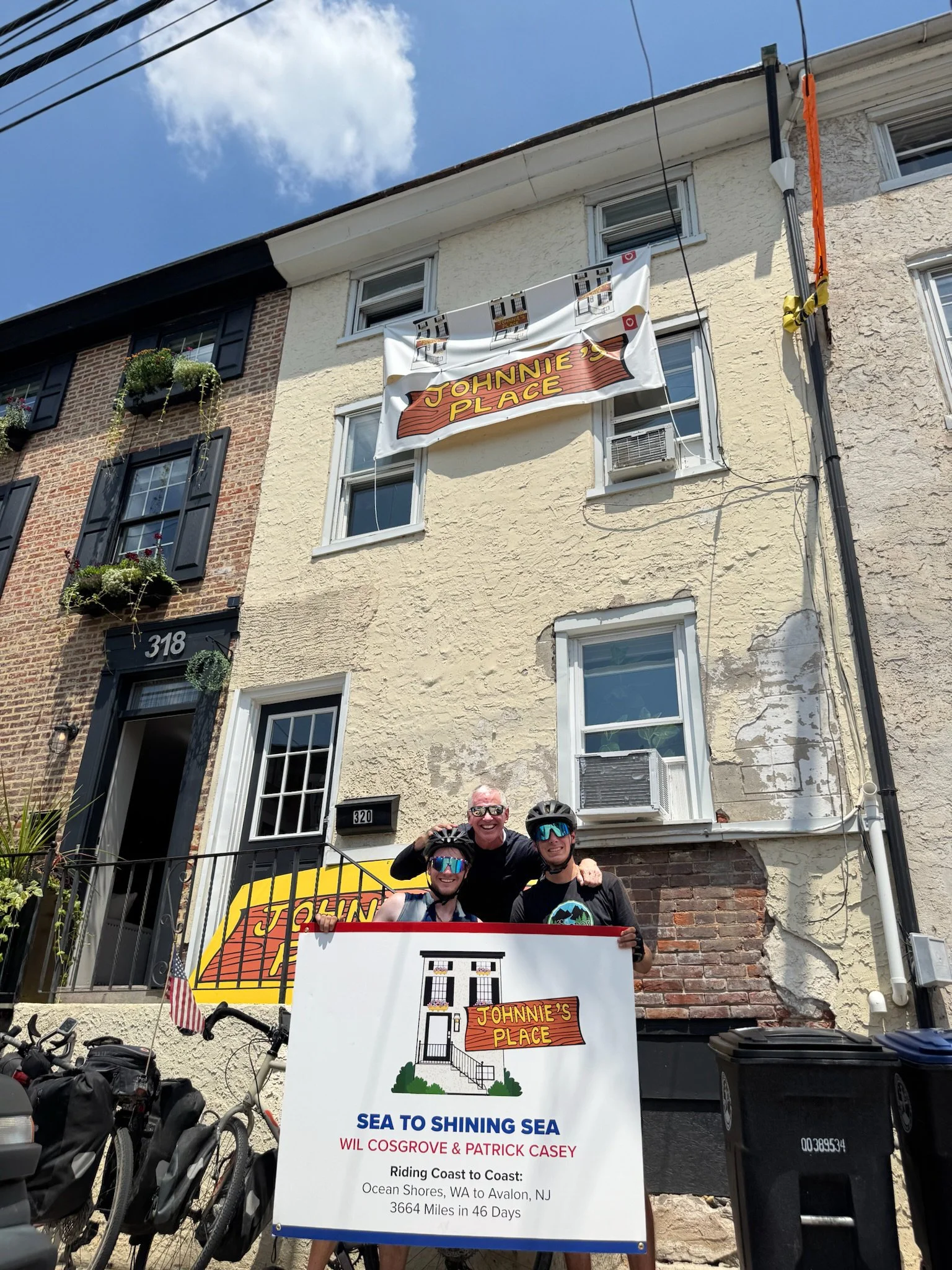
Beginning on April 20 in Ocean Shores, Wash., the pair from Radnor Township, Pa., traveled more than 3,600 miles on their “Sea to Shining Sea” trip. Together, they crossed through 13 states, and raised more than $13,000 for Johnnie’s Place, a Delaware County (Pa.) nonprofit that is working to provide safe and accessible housing for adults living with autism.
Another impressive part of the trip? Neither Cosgrove nor Casey is an experienced cyclist. But they are old pals, dating back to their early years swimming for Radnor Aquatic Club.
Casey, who turns 23 in August, is two years younger than Cosgrove. He swam in Cosgrove’s club group in grade school, which formed the connection. “Ever since we got into the same group, we pretty much were just friends,” Cosgrove says. “It was a lot focused on grit and working hard, so our attitudes kind of shaped our relationship as well.”
It helped that Cosgrove’s younger brother, Rhett, was the same age as Casey. Although the Cosgroves and Casey didn’t go to the same schools, their time together on the club swim team forged a friendship that stuck, even as Wil went to swim at American University and Casey at Villanova.
“We never really lost touch,” Cosgrove says. “And even if we didn’t text for a couple months, we’d just pick it right back up whenever we saw each other.”
They were also both at a perfect life transition point this spring. Cosgrove had just earned his master’s degree in education from George Washington University, while Casey had graduated from Villanova with a degree in economics.
Says Cosgrove: “We figured this would be the perfect time to kind of go out and do an adventure like this because we probably wouldn’t have 45 days free for the rest of our lives.”
Johnnie’s Place, founded by Michael Dinda, was an easy choice for the two to partner with on their journey.
“We were looking for a cause to do it for,” Cosgrove says. “This nonprofit that was getting started up right in our backyard essentially, was a perfect embodiment of that community aspect that we really strive for.”
Dinda is a longtime friend of the Cosgroves. He founded Johnnie’s Place last year in honor of his son John, who was on the autism spectrum and required daily assistance. John died due to complications from pneumonia in 2024.
The mission of Johnnie’s Place’s is to provide safe housing and a structured community for adults living with autism. Dinda serves as its director. The organization is still in the early stages of its operations, which made it an ideal candidate for donations, Cosgrove said.
Cosgrove was already involved with Johnnie’s Place before the bike trip, as he helped set up the organization last year.
“He’s been a godsend to me,” Dinda says.
Ahead of the Sea to Shining Sea trip, Cosgrove also created a trip-specific website and Instagram account. Through these platforms, supporters could make “per mile” donations directly to Johnnie’s Place.
Cosgrove and Casey also kept their followers updated on the details of the trip, with daily posts and website entries. Each day on the website, the pair tracked their exact route, mileage traveled, and elevation gained.
They were humbled by the amount of donations they received.
“There were a lot of distant people that we hadn’t talked to in a while,” Cosgrove says. “It was really great to see them participate in this, like people from my grade school, some of Patrick’s grade-school teachers, people we haven’t seen or heard from in years.”
The pair embarked on their ride with a goal of raising $12,000 and hit that mark on the next-to-last day of the journey. As this is written, they’ve raised $13,258. “It was extremely exciting for us,” Cosgrove says.
Dinda was equally moved. “They saw my mission,” he says. “They brought their community to my community.”
Prior to the trip, Dinda also made one of the biggest unsung contributions to the effort: He gave Cosgrove his old bike.
“I didn’t feel comfortable with the bike he was using,” Dinda says. “I had a great bike for this type of trip that I wasn’t really using, and I just gave it to him. We outfitted it with all the stuff he needed.”
As for the bike ride itself, Cosgrove and Casey flew out to the Pacific Coast with their bikes and several bags of gear in mid-April.
“I was a little nervous about how hard it was going to be physically,” Cosgrove says.
The pair’s goal was always to finish in Avalon on the Fourth of July.
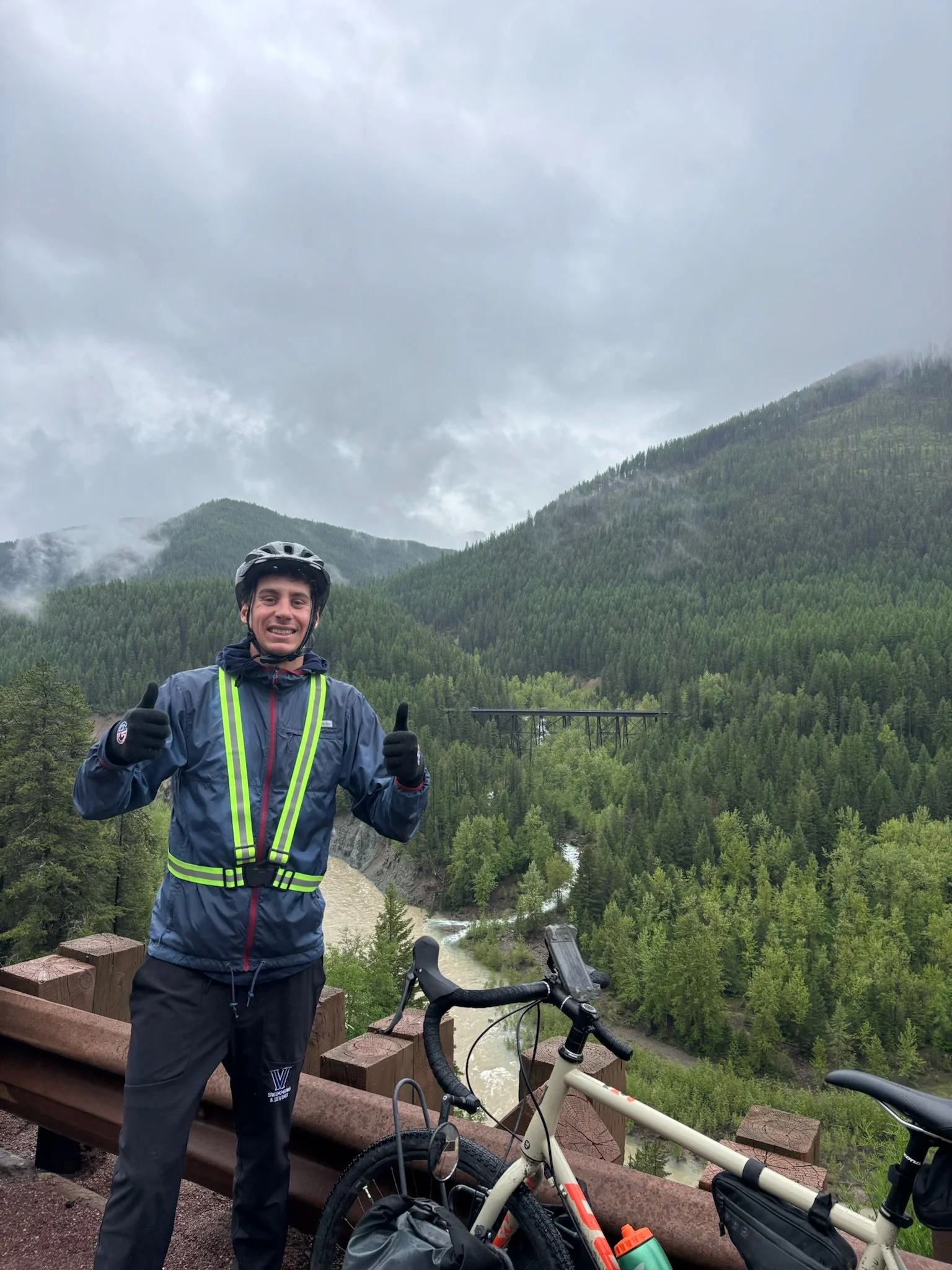
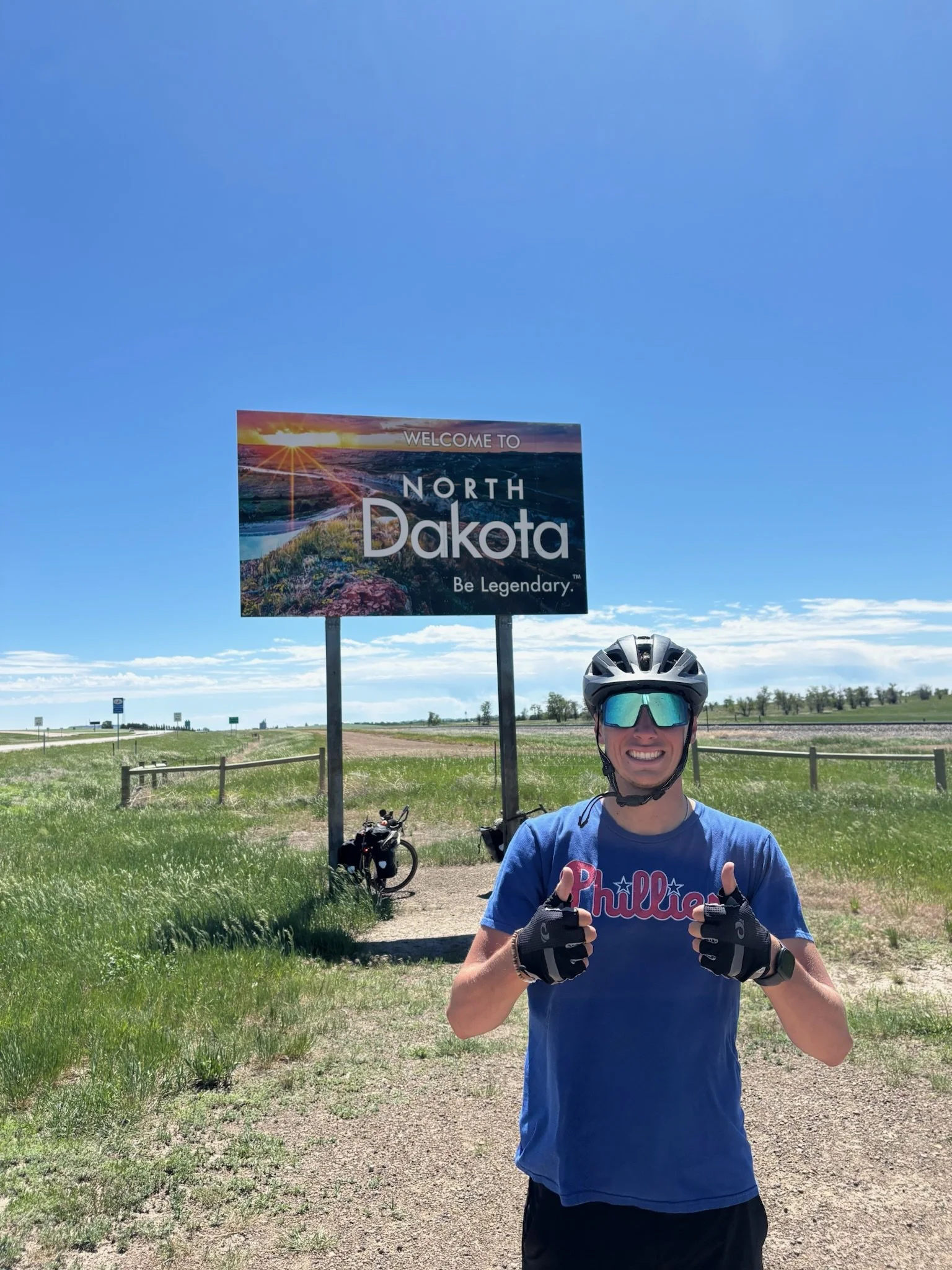
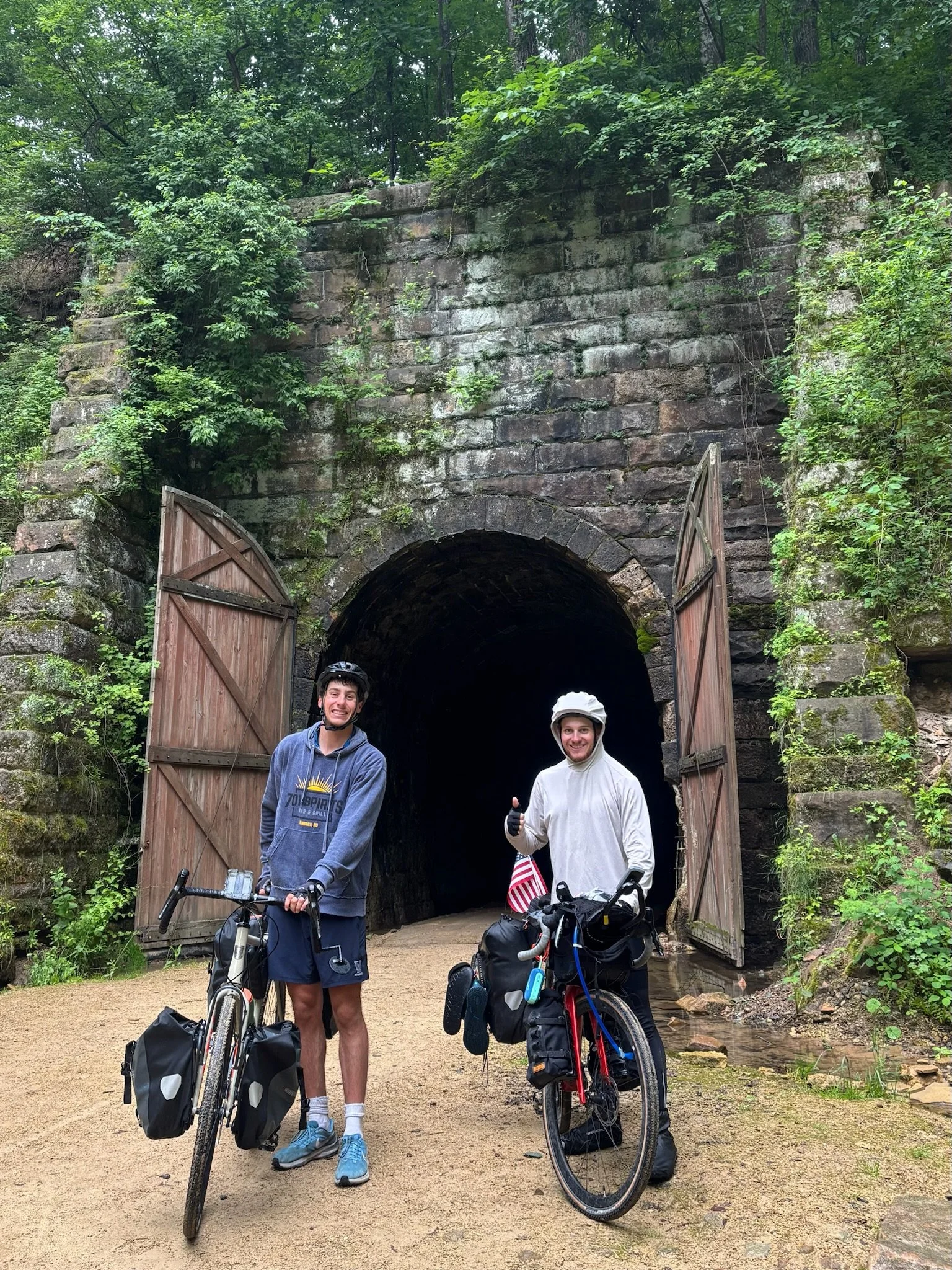
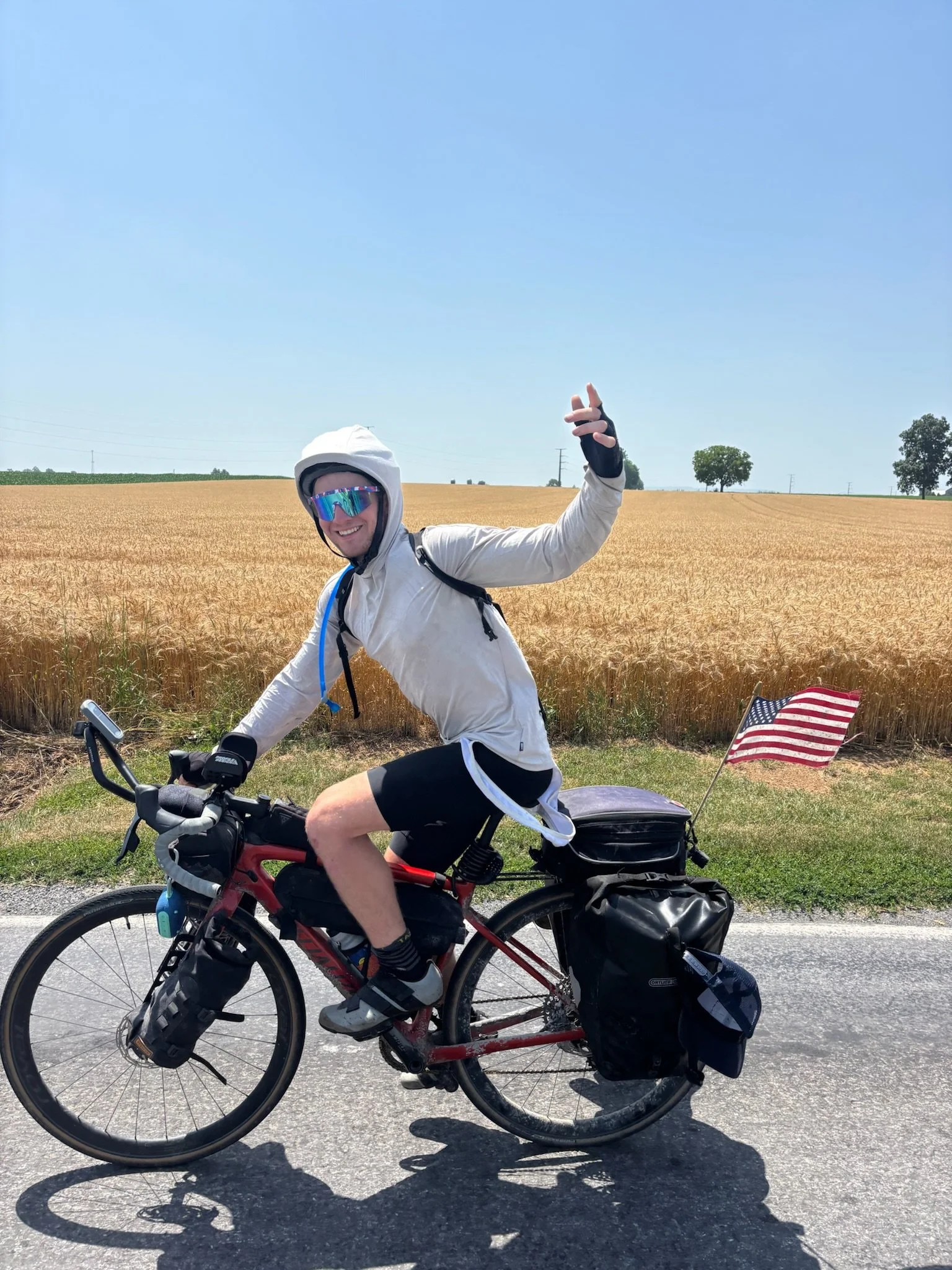
Cosgrove had never biked for more than 25 miles at a time, and on April 20, he and Casey spent 103 miles biking. The next day, they rode for 100 miles. On the third day, 94. And on the fourth, they spent 78 miles on the roads … all while traversing the Cascade mountain range and thousands of feet of elevation changes.
That fourth day is described by Cosgrove as the “epitome of physical difficulty.”
“I remember seeing the 1-mile mark [on the fourth day] and I knew that McDonald’s was 1 mile away,” Cosgrove says. “And then I look and there’s just this massive hill, and you can see the golden arches at the top, and I’m just pushing as hard as I can because all I want to do is eat some McDonald’s.”
Day 4 was an early turning point in the trip, Cosgrove says, after which he and Casey’s bodies began feeling better.
“Once you get past a certain point, I mean, you don’t even feel like you’re on the bike anymore,” he says. “It becomes routine.”
Perhaps part of the cure had something to do with their accommodations that fourth night. With nowhere to stay, Casey and Cosgrove ran into a man named “Pastor John” outside a Walmart in the eastern Washington town of Othello.
The gregarious pastor offered to put the bikers up in his mother’s backyard.
“We were probably up till, like, 1 or 2 in the morning just talking to this guy about everything,” Cosgrove says. “About philosophy, about religion, about science.”
After sleeping in that backyard, Casey and Cosgrove spent a few more days in Washington, which featured Casey’s favorite scenery of the trip, Cosgrove says.
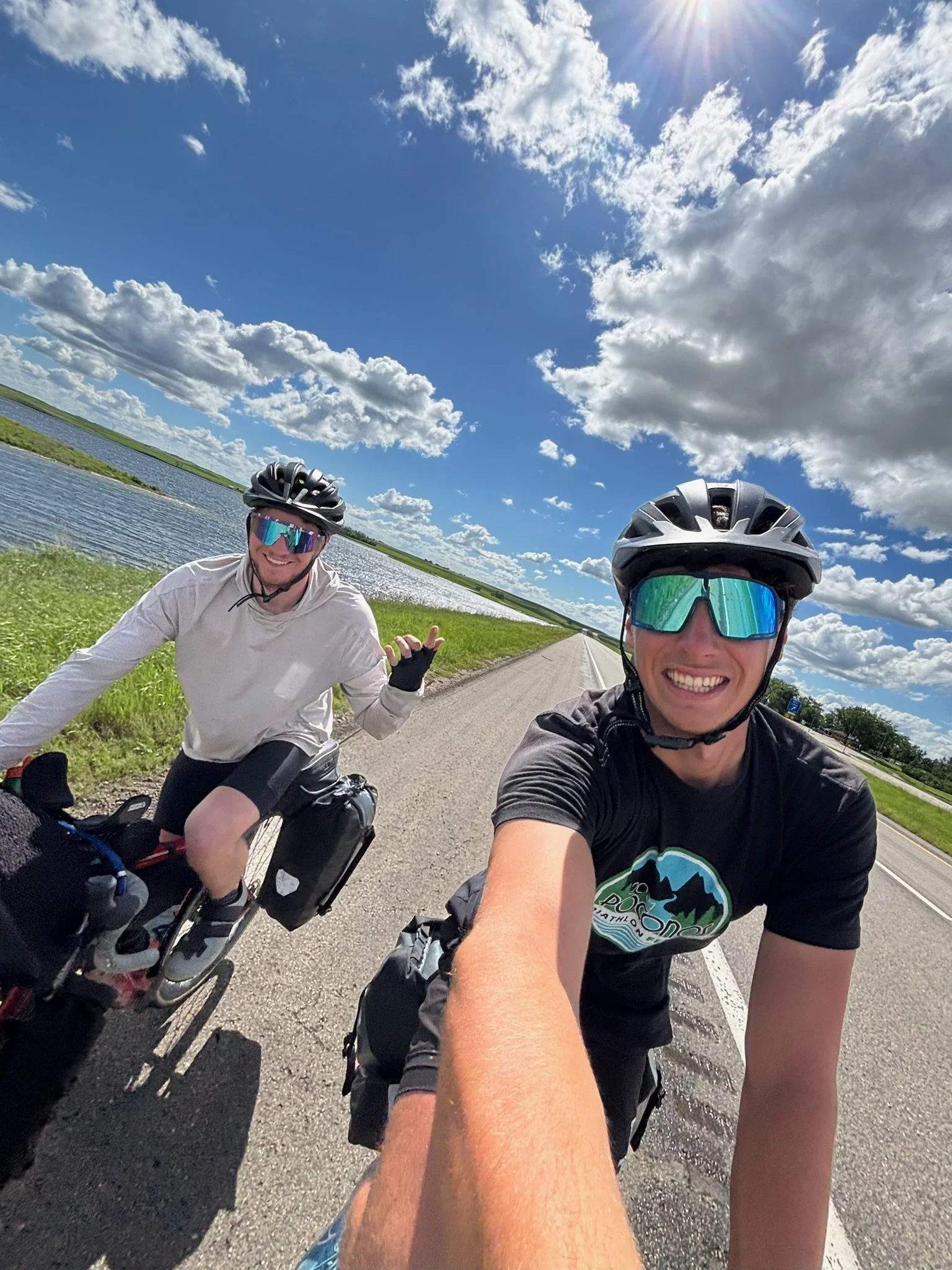
The pair then rode for nearly two weeks in Montana – Cosgrove’s favorite state on the trip – and another several days in North Dakota, touring the remotest sections of the United States. All along the way, they made unexpected friends.
“Having people there that were, that legitimately cared about us, was incredible,” Cosgrove says. “People we had never met and will never meet again.”
Most of their first 20 days featured stunning scenery. Prior to getting to Minnesota, Casey and Cosgrove spent time in a series of mountain ranges, from the Cascades to the Cabinet Mountains to the Rockies. They passed through several national parks, and rode the Continental Divide. They also experienced the Great Plains of eastern Montana and North Dakota.
“You’re constantly stimulated,” Cosgrove says. “It’s all new.”
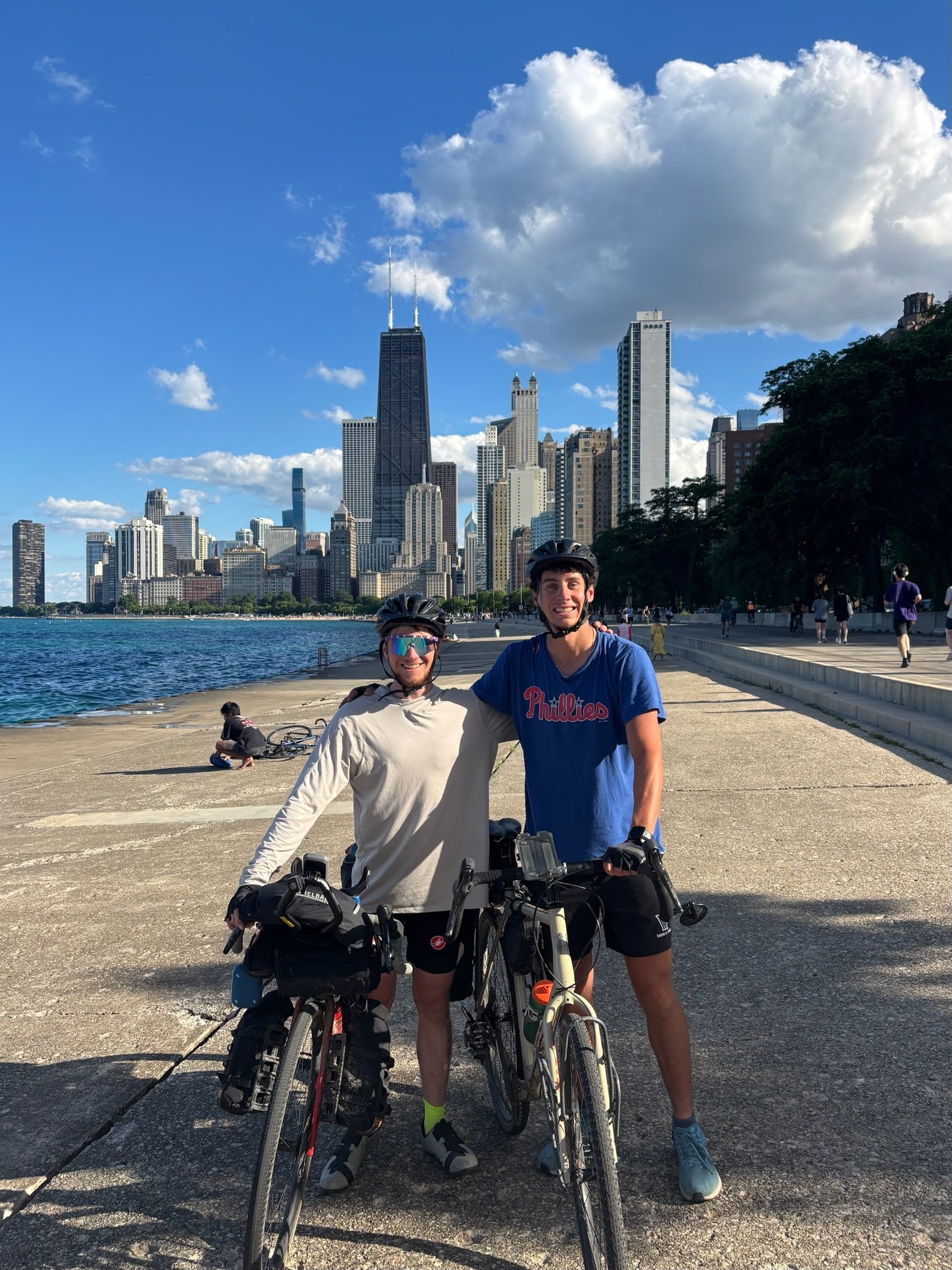
Once the pair arrived in Minnesota, the environment began to feel more familiar, Cosgrove says. In just over one week, they made their way down along the Mississippi River, through Wisconsin, and to Chicago.
In Minnesota and Wisconsin, the weary bikers spent time with Cosgrove’s family, savoring some upgraded accommodations. They’d slept most nights either in cheap motels or on campsites to keep the trip affordable. “My parents got us hotels in Minnesota,” Cosgrove says.
Once past Chicago, Cosgrove and Casey cruised through Indiana, with a brief 5-mile stint in Michigan on Day 34. Then came a few days in Ohio, and finally, by Day 38, they had made it to Pennsylvania. From there on out, Cosgrove said, the trip felt like an “epilogue,” as they got closer and closer to the finish line.
Crossing through Ohio and Pennsylvania as the Fourth of July approached, Cosgrove and Casey witnessed frequent celebrations of America’s 250th birthday. “Regardless of how you feel about politics, it was great to see everybody come together under the flag that represents everything,” Cosgrove says. “It represents what the government can’t.”
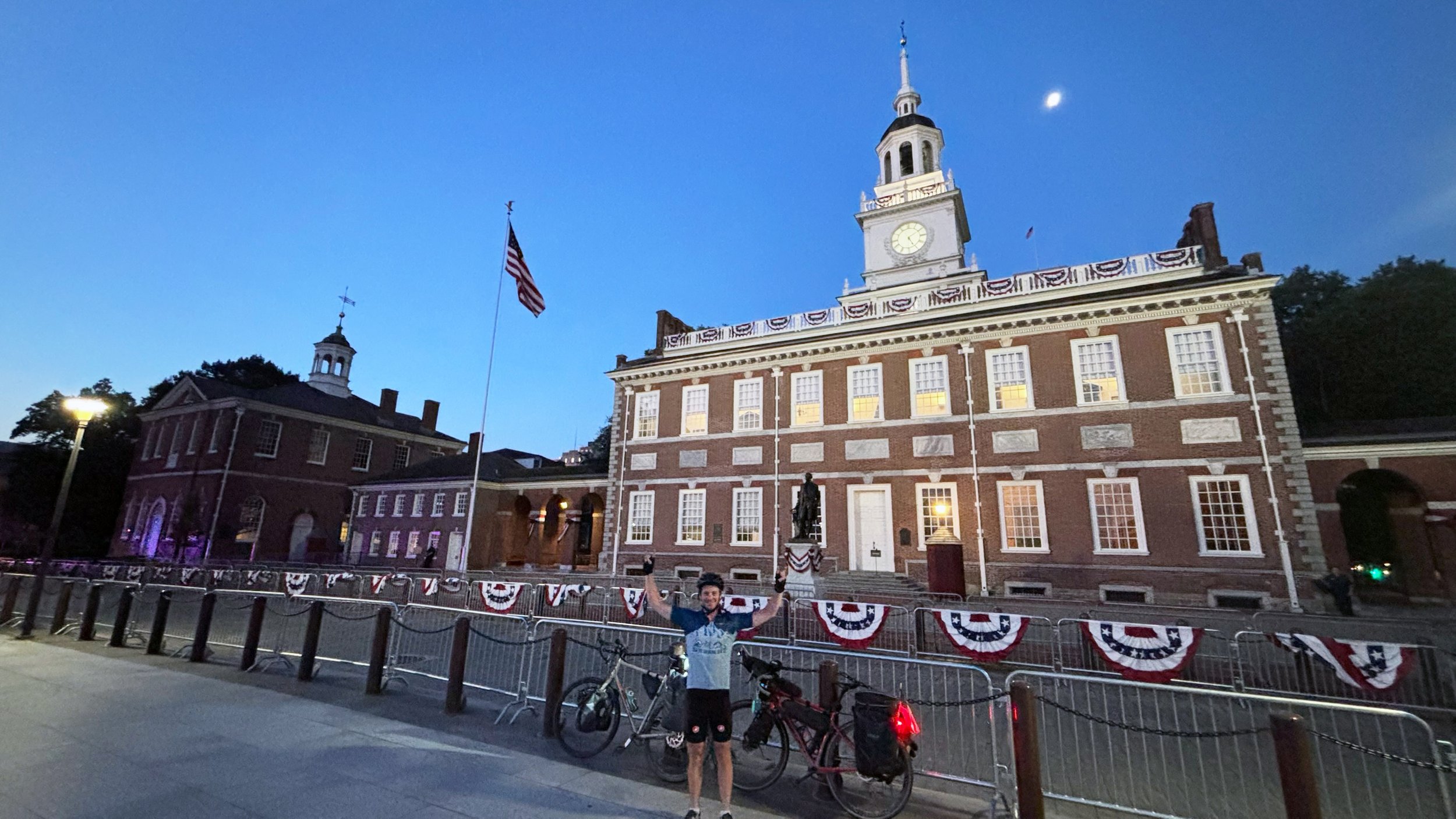
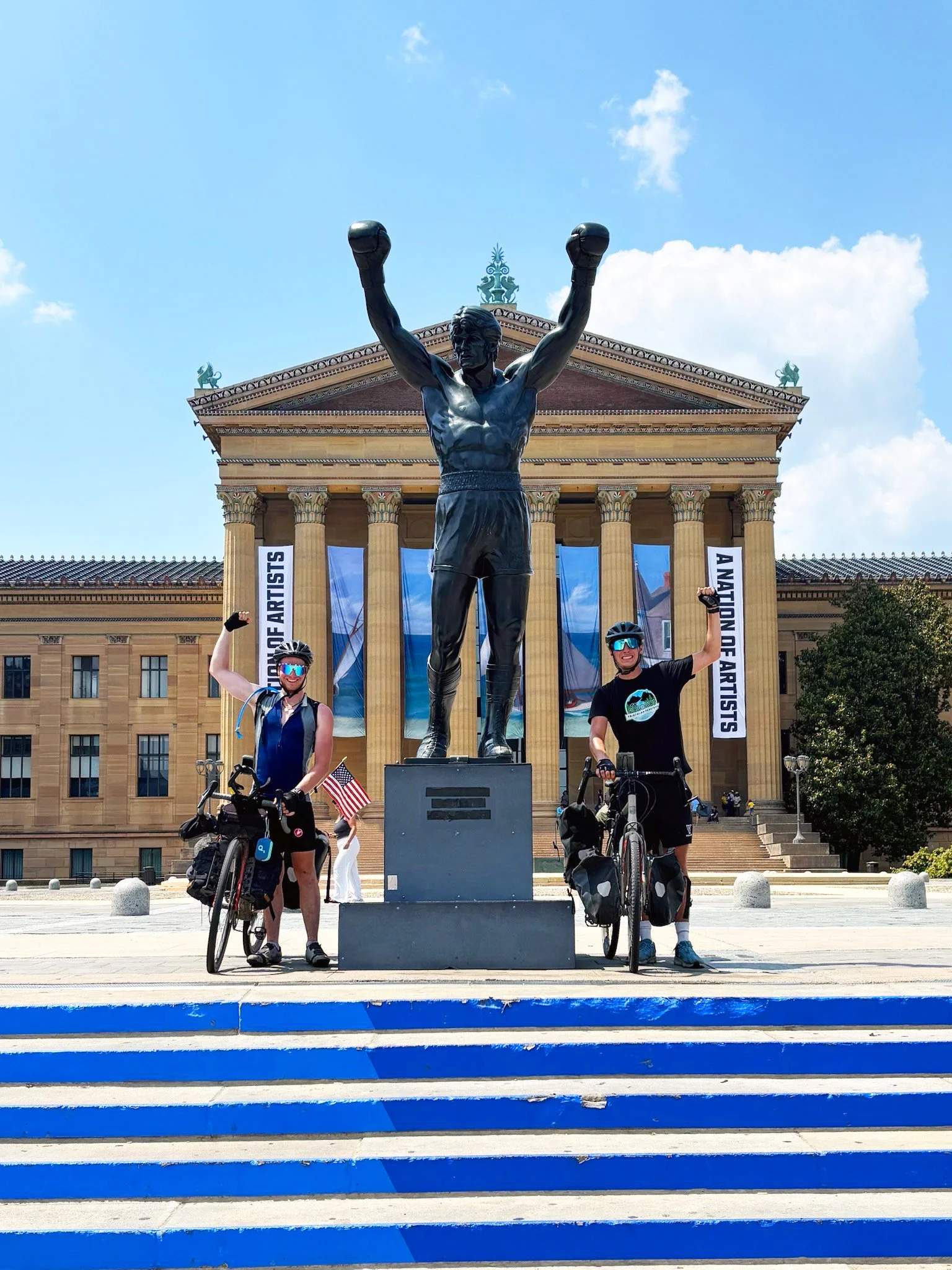
Then came the trip’s conclusion. On the actual Fourth of July, Day 45 of their journey, the pair woke up at 4:30am in Philadelphia. They took photos to commemorate the occasion outside of Independence Hall, and then they set off for the 8th Street Beach in Avalon.
Why was Avalon the final destination? Because it functioned as “the epicenter of everything,” Cosgrove says.
Casey’s family has long owned a home by the water, and many of Cosgrove’s and Casey’s childhood memories come from the beach that they biked toward that morning. Dinda also had a home in Avalon that his son enjoyed visiting growing up. “Avalon had a lot of great connections all the way around,” he says.
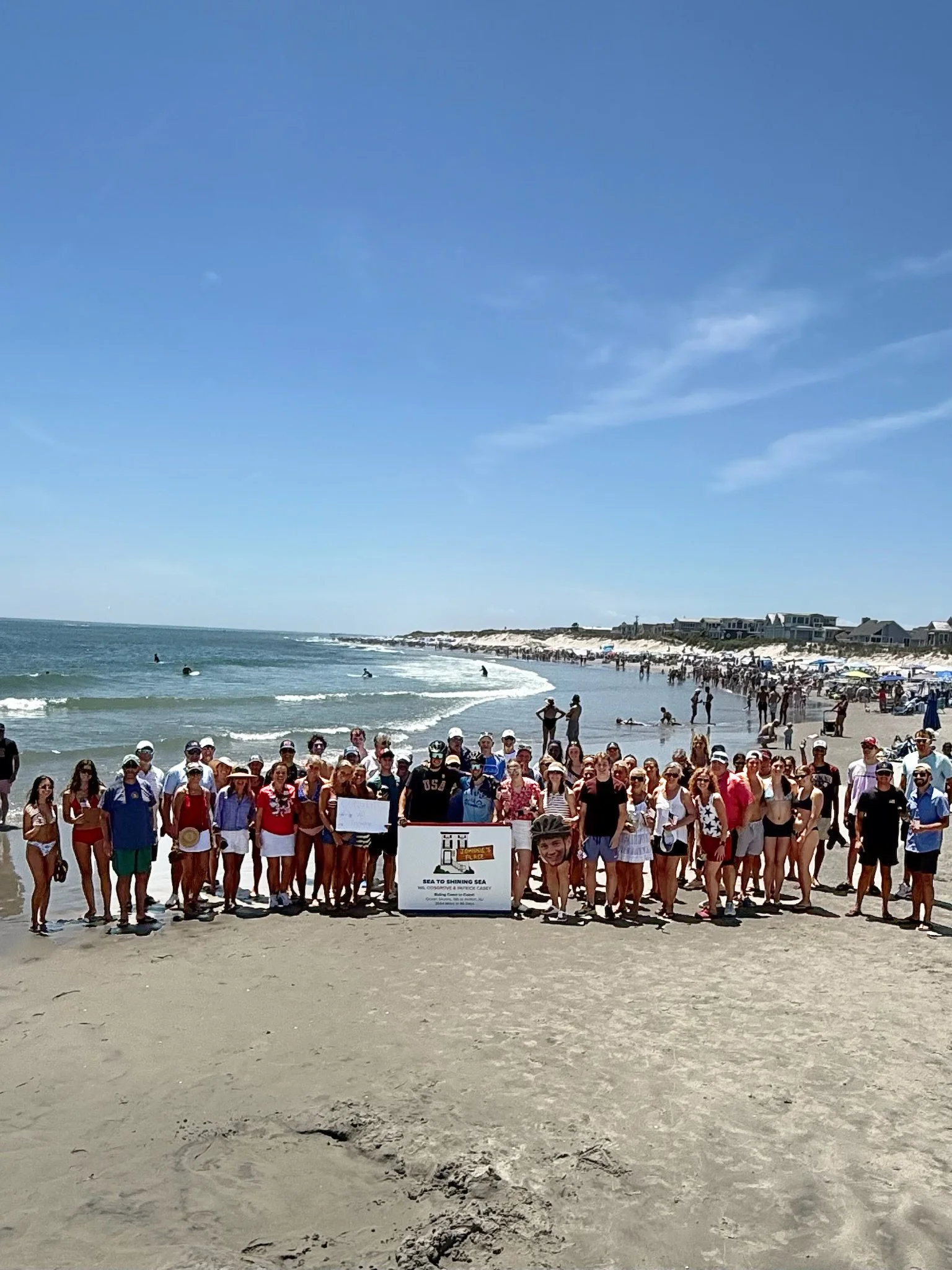
On their concluding ride, Cosgrove crafted a playlist of the dozens of songs that had gone up on the pair’s Instagram account during their ride. As the two of them closed in on the beach, several dozens of family members and friends, including Dinda, gathered to welcome them home.
Right when Cosgrove and Casey arrived, the final song of the playlist was playing. “It was picture-perfect,” Cosgrove says. “Everyone was there. The playlist finished. It could not have been a better ending.”
After an oceanside rendezvous, Casey and Cosgrove’s friends and family gathered for a large party at Casey’s home.
Then, Casey and Cosgrove realized they didn’t have to bike any further. “It was so weird,” Cosgrove says.
As Dinda continues to build Johnnie’s Place from the ground up, he finds motivation from the trip that Cosgrove and Casey went on.
“I watched these two guys go out on their own,” he says. “They were resourceful. Took a lot of grit, took a lot of hard work, and they did it step by step. It gave me some personal inspiration as I’m marching through this process to say, ‘All right, if these guys can do that, I can keep going.’”
For the pair of now-experienced bikers, what kept them going on their ride, and what they remember most fondly, was the people they met along the way: those they encountered on the dirt roads, in the small-town bars, and even in the Walmart parking lots.
“They really felt like close-knit neighbors,” Cosgrove says. “It was really heartwarming to have that kind of experience and to see a lot more unification and similarities rather than differences between people.”