The Wetlands Institute Reimagines Its Future
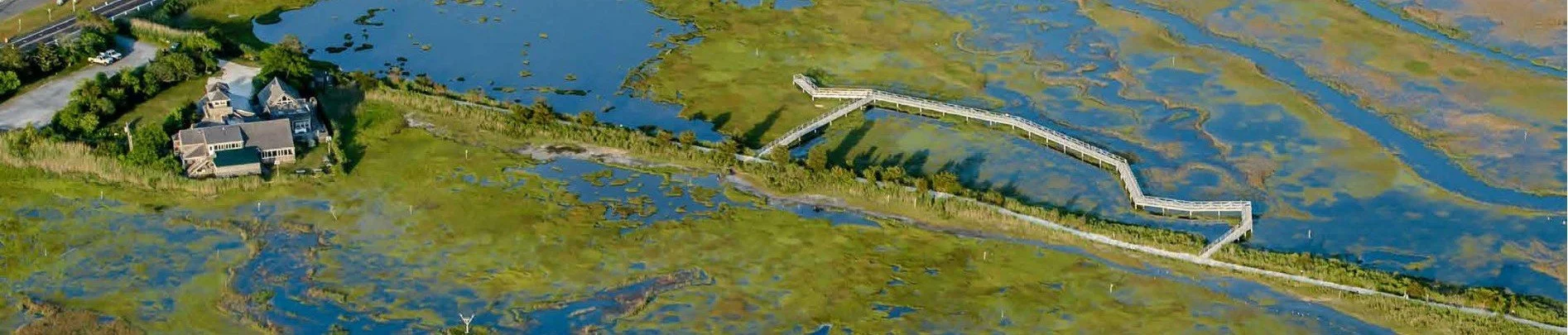
The Wetlands Institute Marsh Campus
For more than 50 years, The Wetlands Institute has served its mission to promote appreciation, understanding, and stewardship of our wetland and coastal ecosystems. As a nationally recognized coastal research and education facility, our team shapes how people explore and connect with these remarkable environments. Each year, thousands of visitors come through our doors, from longtime residents and vacationing families to international travelers drawn to the migration that makes Cape May County a global hotspot.
Through research, conservation and education, the connections people make here with the wetlands and wildlife can be life-changing and help engage tomorrow’s environmental stewards, from kindergartners releasing tiny turtles into the marsh for the first time to college students conducting hands-on coastal research through our internship programs.
Dr. Lenore Tedesco, Executive Director of the institute, has led the team’s work for more than 15 years. We have been reporting on planning and changes that are coming to the institute and how we are working to create a model for resilient and sustainable coastal development. Dr. Tedesco’s marsh mantra has always been, “Make no small plans.” The institute is seeing some of the next phases come to fruition.
Dr. Tedesco shares what’s happening at The Wetlands Institute this fall, why the Salt Marsh Trail work is so critical now, and what she envisions for the future of this place so many of us call home.
What’s happening at TWI? We had a phenomenal 2026 season. We saved more than 1,257 terrapins, hosted thousands of eager young minds in education programs, welcomed thousands of visitors who discovered their own conservation ethic while exploring the marsh, and worked with partners on marsh restoration and wetland health research, all while planning changes to our marsh campus.
We reported on the receipt of a Regional Greenhouse Gas Initiative grant from the New Jersey Department of Environmental Protection that is funding a project to revitalize the Salt Marsh Trail. This project is beginning this fall, so we are pausing our public programs on Sept. 8 so that we have time to move. We will reopen Nov. 7 with our standard fall/winter weekend schedule at a new, transitional location: the New Jersey Coastal Conservation Center (NJCCC), 600 N. Delsea Drive (Route 47) in Cape May Court House, the former home of NJ Audubon’s Cape May Bird Observatory Center for Research and Education. All staff are moving there so we can safely elevate the Salt Marsh Trail, revitalize the surrounding ecosystem, restore more marsh acreage, and create a reimagined marsh campus.
What programs will you offer at the NJCCC? Beginning Nov. 7, we will be open Saturdays and Sundays, 9:30am to 4:30pm, with seasonal science activities, our Marine Teaching and Touch Tank, Creature Feature and Craft, Seashell Sunday, and special Science Features. All programs offered at the NJCCC will be free to members, and admission for nonmembers will be $10 for ages 13 and up and $8 for ages 4-12.
What will the Salt Marsh Trail project include? We will raise the elevation of the Salt Marsh Trail by 2 to 3 feet. We’ll also widen the trail. This will help us better accommodate school groups and guided tours. We’ll replace the boathouse with a modest structure, and create new high marsh and transitional upland habitat specifically designed for diamondback terrapin nesting and coastal birds. We will replant the trail with native plants intentionally designed to maximize the benefit to the marsh ecosystem. When it is completed, we will have restored more than 5 acres of drowning marsh and created an important barrier to storm waves, conferring additional resilience to the institute campus.
What is the project timeline for the Salt Marsh Trail? Construction is expected to begin in October 2026 and continue through spring 2027, with a goal of completing the elevation work before sensitive wildlife return. Trailside areas will be planted in spring; other areas will need a season to settle before additional plantings occur. We will conduct research and monitoring throughout the project to evaluate the project’s effectiveness.
How will TWI programs continue during this time of transition? We will continue our research, conservation, and education work in a transitional space while we are away from our home. NJCCC is newly renovated and includes office space, education spaces, and our Tidepool Shop. The research and conservation teams will be unaffected in their work. We will continue to provide public programming and education programs from the NJCCC. Our education programs will be modified somewhat, and we will continue to work with partners for school field trips, home school, and scout programs. The NJCCC has trails and native gardens for exploration and overlooks a large marsh complex.
What will happen to the animals in the aquarium? We will move the aquarium animals to a temporary location at the Aquaculture Innovation Center, in partnership with Rutgers University. The center’s circulating seawater systems are uniquely capable of housing our animals that many of our education and visitor programs feature.
Will this impact the work done at Scotch Bonnet? No. Scotch Bonnet and the Salt Marsh Trail are the first two phases of our three-phase plan to reimagine our marsh campus. We’re continuing work that began three years ago, staying connected to our core mission: research informing best-practice conservation, which inspires thoughtful environmental education. This project is about more than a trail or a building. It is about creating a healthy, resilient marsh and a gateway to discovery through research, conservation, and education.
Why are you doing this? Our campus is experiencing more frequent and severe flooding as a result of higher sea levels. This is limiting access for our education programs and visitors, and it is damaging the delicate marsh environment. We’ve seen unprecedented growth in our research, education and visitor programs, but the age and size of our original building are holding us back. That led us to reimagine The Wetlands Institute with a state-of-the-art, purpose-built facility to support our work for the next 50 years, and a campus transformed into a living ecosystem.
What are your plans for your building and current marsh campus? We are beginning the first component of the project with the Salt Marsh Trail Revitalization project this fall while we continue to work on planning and fundraising for our Reimagining Campaign that will create a climate-resilient, sustainable multi-campus home. We have completed the Construction Document Phase, have submitted the requisite environmental permits to the various agencies, and have received the requisite state permits. We received zoning board approvals from the Middle Township Zoning Board. We continue to fundraise for the building and are working toward starting this phase in late fall of 2026.
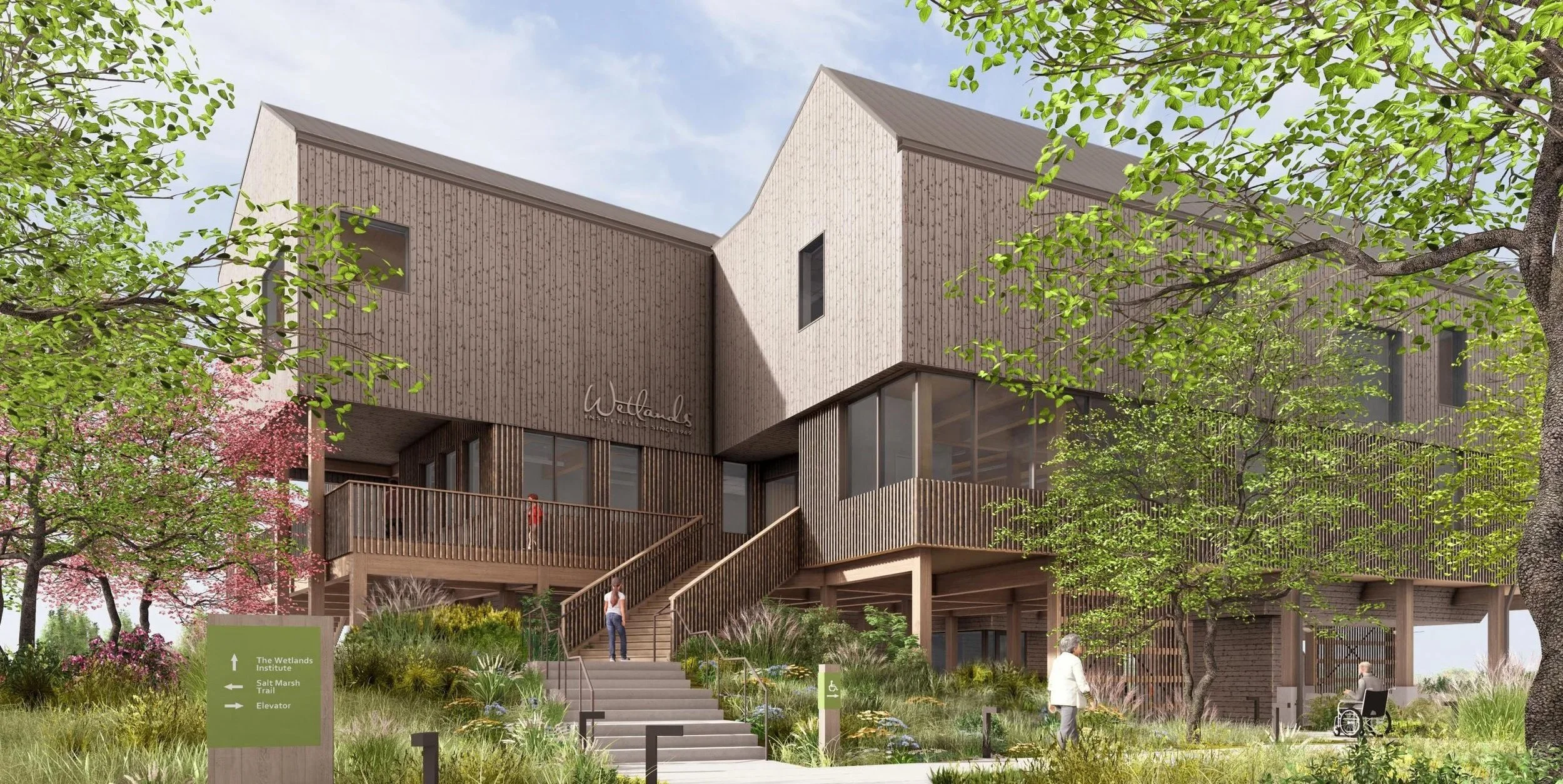
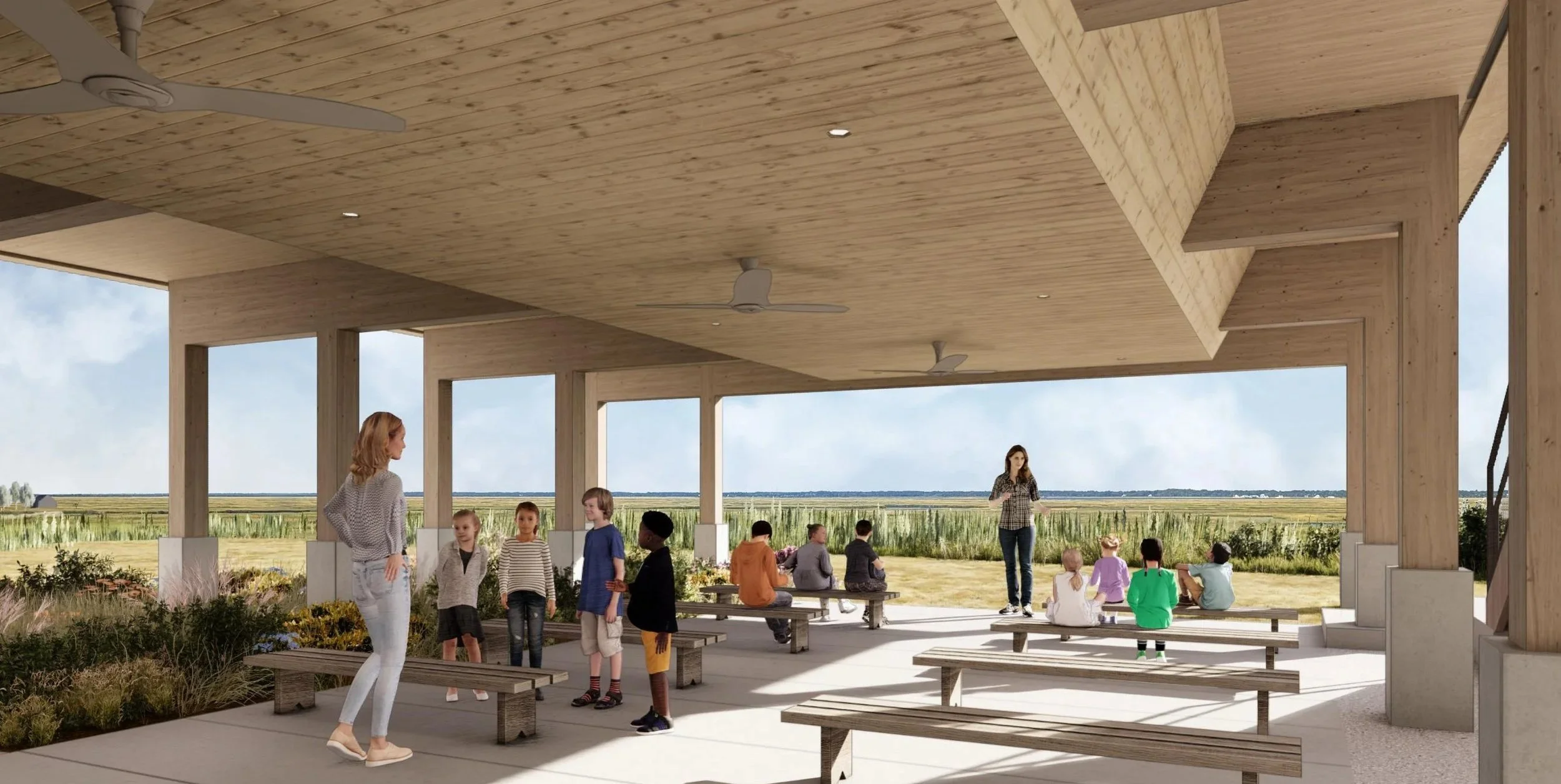

How will the new building be different? In addition to incorporating the latest in LEED sustainable and resilient building technologies, the new building will provide the additional space and resources to support our mission into the future:
Adding four dedicated classrooms (three outdoor, one indoor) where at present we have none.
A 50% increase in the aquarium with state-of-the-art life-support systems for enhanced animal care and all new exhibits.
Modernizing and more than doubling the lab space.
All spaces are ADA accessible.
How do you plan to protect wildlife during the construction phases? The institute’s marsh campus is an important place for wildlife and our planning has carefully considered the best ways to minimize impacts to wildlife while ultimately improving habitat. Construction on the site is timed for late fall after most of the wildlife leaves the area. Over the summer, we relocated terrapin nests from The Wetlands Institute’s property to a series of safe enclosures. This included constructing and installing a series of nest boxes to relocate terrapin nests. Each nest box has space to mimic conditions for eggs from about 50 terrapin nests to develop successfully. Our team and other researchers have used this method successfully, and we carefully planned it with other leading researchers.
What more do we need to know? What we are doing to improve the Salt Marsh Trail and potentially build a new structure on the property embodies a combination of vision and action for the future, to do better and to build resilience for The Wetlands Institute for generations to come. It will enhance our ability to serve our constituents, whether they are visitors connecting with the marsh; students exploring the wonders of these ecosystems; our scientists studying the dynamics of the marsh; or the plants and animals that depend on healthy marshes.
We are grateful for the community that has inspired us, joined us in conservation, participated in our education programs, and supported our research. The Wetlands Institute has never been about a building. It is about research and discovery. It is about connecting with nature and one another. As we embark on this work, we look forward to continuing our public programming. Follow, visit, and continue to support us as we tackle this innovative, ecosystem-based approach to reimagining the wetlands.
For information about exhibits and programming, visit wetlandsinstitute.org/visit-us/ or call 609-368-1211.