The Wildlife That Call The Tidal Marsh Home
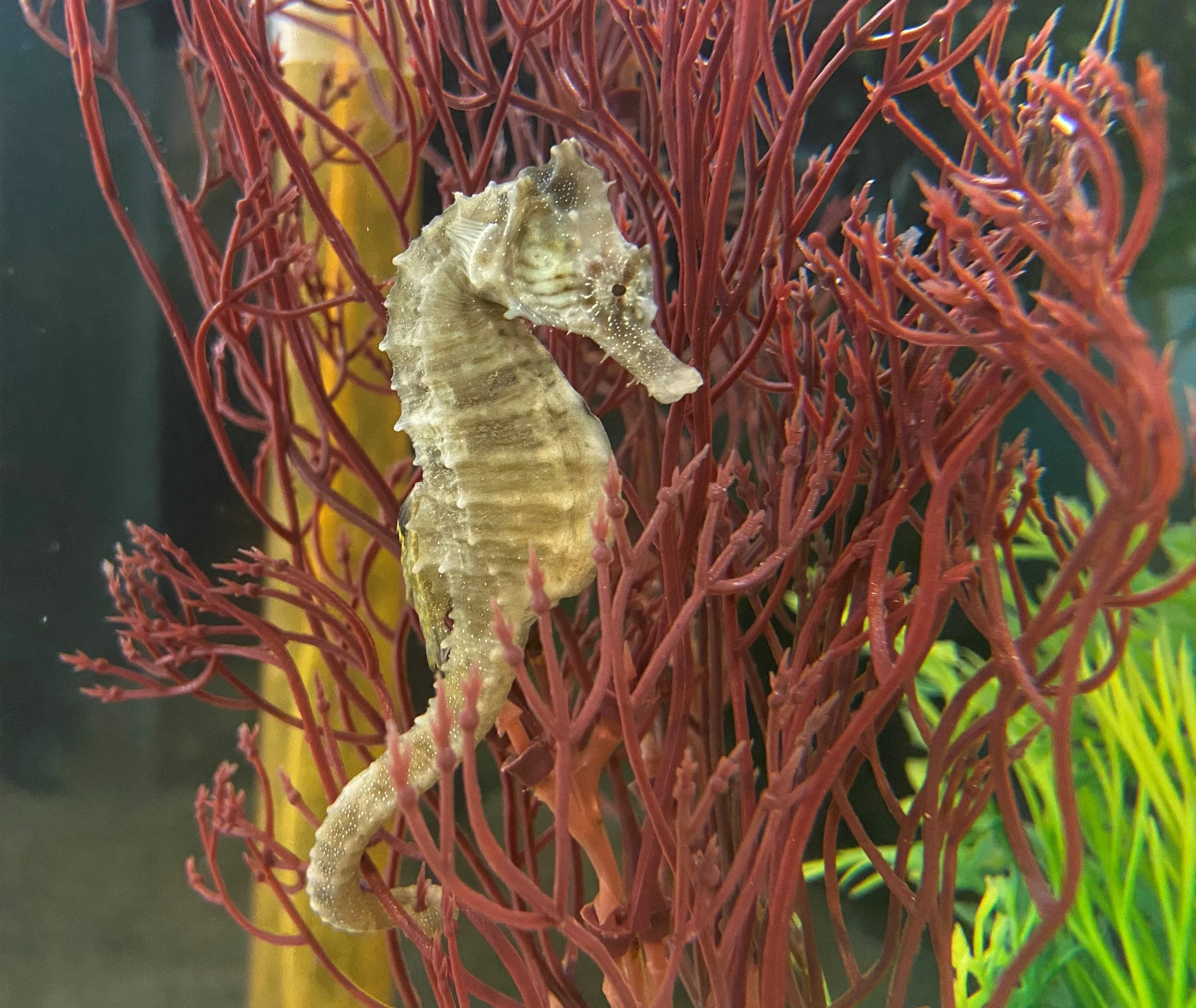
Lined seahorse using its prehensile tail to hold onto seaweed.
By Dr. Lenore Tedesco, Executive Director of The Wetlands Institute
Driving down the causeway onto Seven Mile Beach, the lush expanse of green meadows is a welcome sight. For many, the salty air mixed with a hint of low-tide mud smell harkens the arrival of the calming times that island life brings. If you have been here through the winter and into early spring, you have seen the marsh turn from a dull brown expanse to a sea of green.
When looking out across the green expanse of the salt marsh, it can be surprising to learn that salt marshes are some of the most productive and diverse habitats on Earth. In fact, the productivity of salt marshes is often compared to that of rainforests. They serve as critical nurseries, too, with more than 75% of commercial seafood and shellfish relying on the marsh for part of their lives. While it is hard to appreciate from the car window, it is teeming with hidden life, and there is so much to love and appreciate in the salt marsh.
The salt marsh is a watery world that forms between the mainland upland habitat, which includes forests and developments, and the intertidal and underwater zones of the bays. Think of it as zero elevation. The dominant factor that influences this wetland is the tides. Each day, the salt marsh experiences two high tides and two low tides. High tides flood the marsh channels and spill onto the marsh surface, bringing salt water to the plants and animals living there. About six hours after high tide, the water recedes, leaving many of those same organisms exposed to the elements. Plants and animals that live in this habitat must be able to withstand constant environmental change or move with the tides.
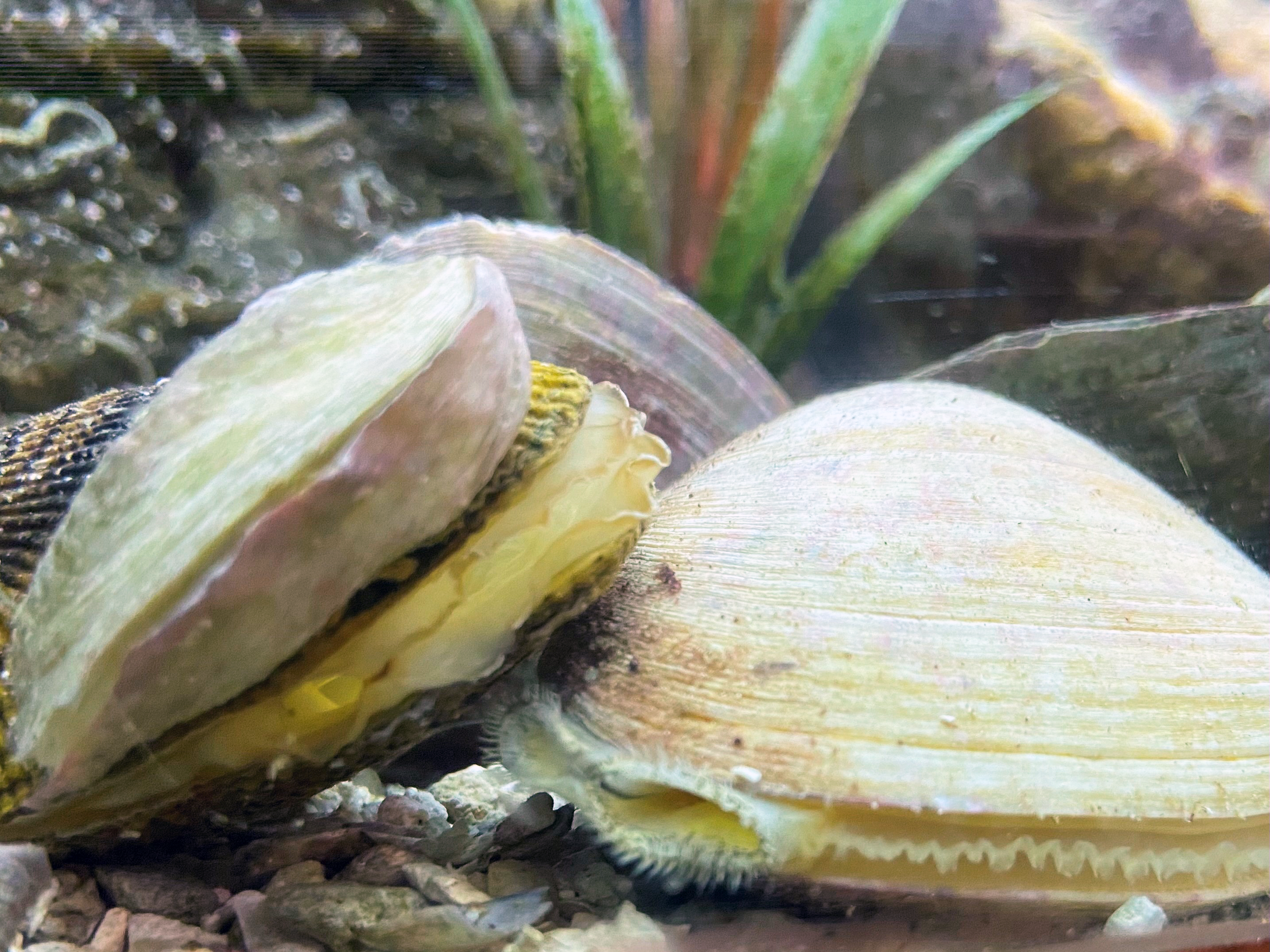
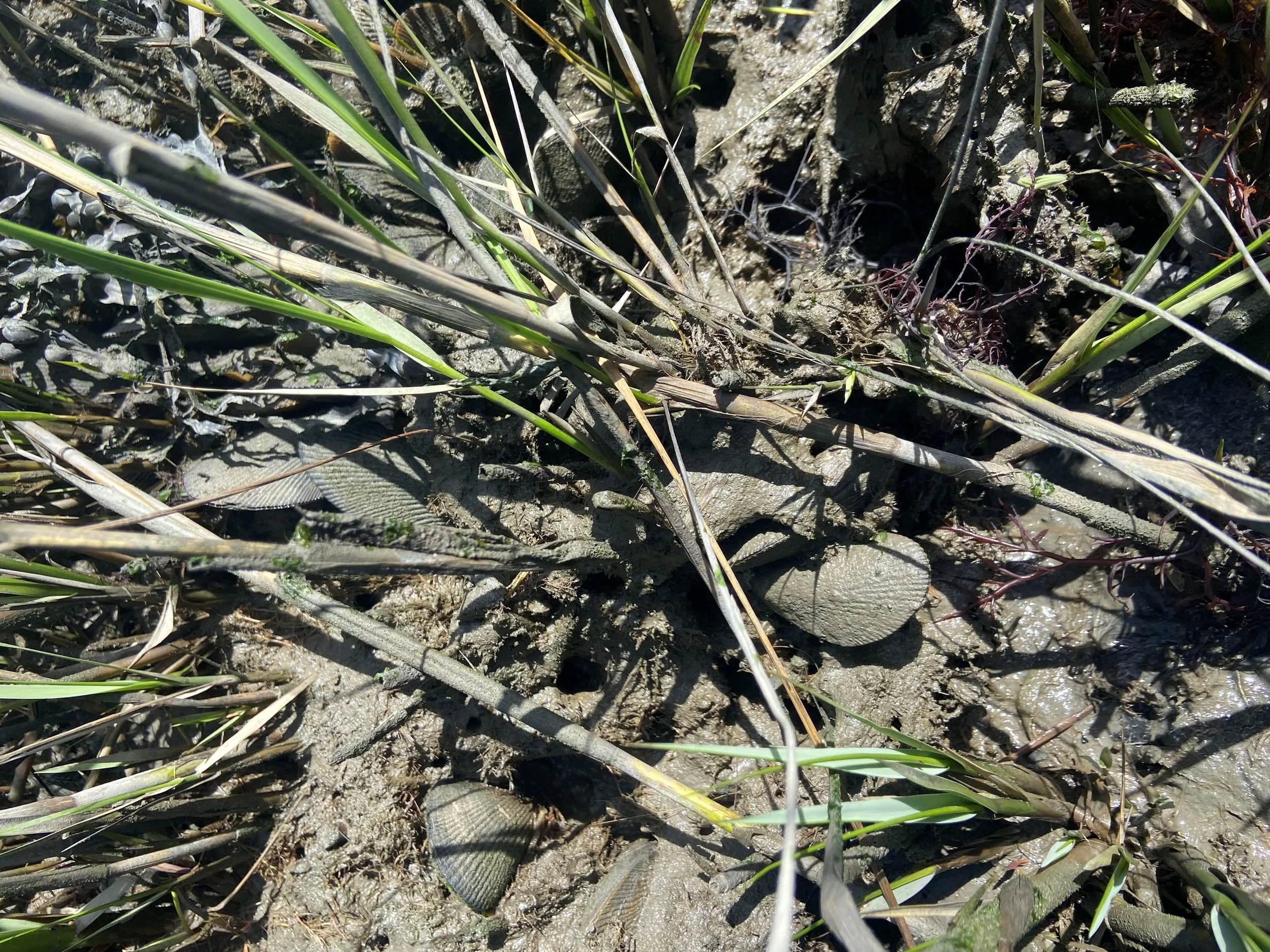
The animals that are fixed in their habitats are adapted to survive the changing water levels, and most take advantage of these changes to feed and reproduce. One type of animal uses the power of tides to its advantage when feeding. Bivalves, a type of mollusk that has two shells, take advantage of the flooding tides by filter feeding. By slightly opening their shells, bivalves use their siphon, which acts as a straw, to draw in water and filter out plankton and other organic material. At each high tide, bivalves are flooded with food and nutrients that sustain them. There are many types of bivalves in our salt marsh, but some of the most commonly seen are ribbed mussels, eastern oysters, and hard clams. All three make their home in a salt marsh but prefer different locations within it.
Ribbed mussels(Geukensia demissa) are found firmly attached to the base of salt marsh grass, where they use strong byssal threads to anchor themselves in place, where they will live out the rest of their lives. In contrast, hard clams(Mercenaria mercenaria) prefer to call mud flats home. In the soft mud, hard clams use their foot to orient themselves and move when submerged in water. But at low tide, they bury themselves to avoid predators and exposure to the elements. Eastern oysters (Crassostrea virginica) require a hard surface to grow on. As juveniles, oysters float as plankton until they land on a hard substrate and begin to grow into their adult form. They can often be seen growing on other bivalves, such as other oysters or mussels, and on rocks and pilings. Despite their differences, all three of these bivalves help maintain this ecosystem by filtering water and creating habitat for numerous other organisms. These filter feeders help keep bay waters clear, and studies have shown that an adult ribbed mussel is capable of filtering up to 15 gallons of bay water each day!
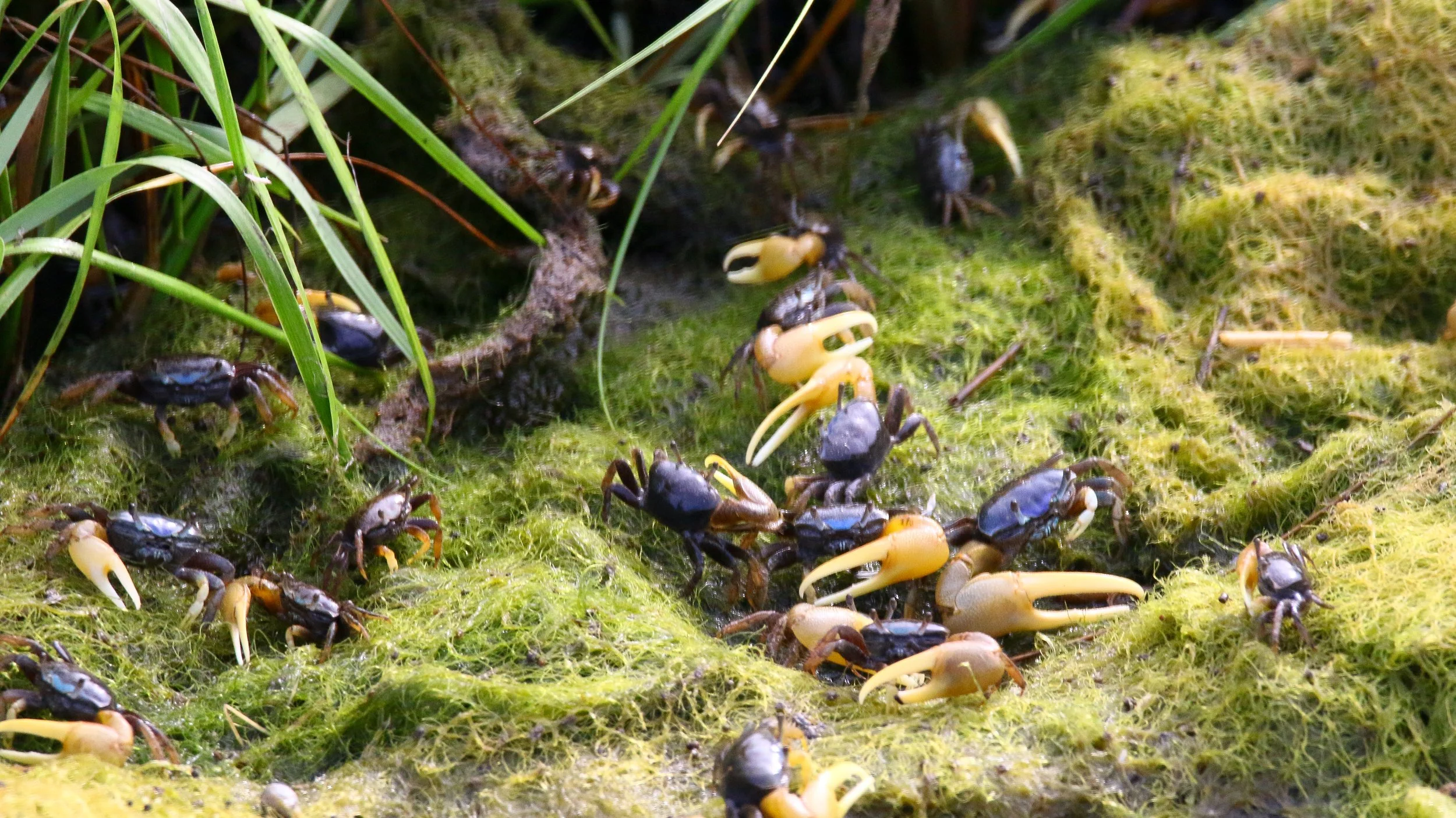
Another favorite inhabitant of the salt marsh is the fiddler crab. You have undoubtedly seen these small crustaceans along the mudflats and marsh grasses. They live in large groups and are actually quite social. They tunnel deep into the mud, creating a network of holes in the marsh that protect them from predators and keep them moist. The males have a large claw that they wave and use for display or defense, and a small claw that they use to feed. The females have two small claws. They feed on the surface of the mud flat and are detritivores, meaning they eat decaying organic material and algae. They are a favorite food of diamondback terrapins.
Darting in and out of the grass shoots and moving just below the surface are large numbers of fish that start their lives in the safety of the salt marsh. In the obscure network of tidal creeks and bivalve beds, animals use the habitat’s complexity to hide from predators that are unable to navigate and traverse these spaces.
One such fish is the Atlantic needlefish(Strongylura marina). Shooting just below the surface of the water is a thin, silvery fish with a long, pointed jaw. As adults, needlefish can grow up to 2 feet in length, but in the salt marsh, juveniles are usually only a few inches long. Juvenile needlefish are a quick snack for most predators, so they hide at the surface of shallow water where their thin silver body looks like a glimmer of sunshine on the water.
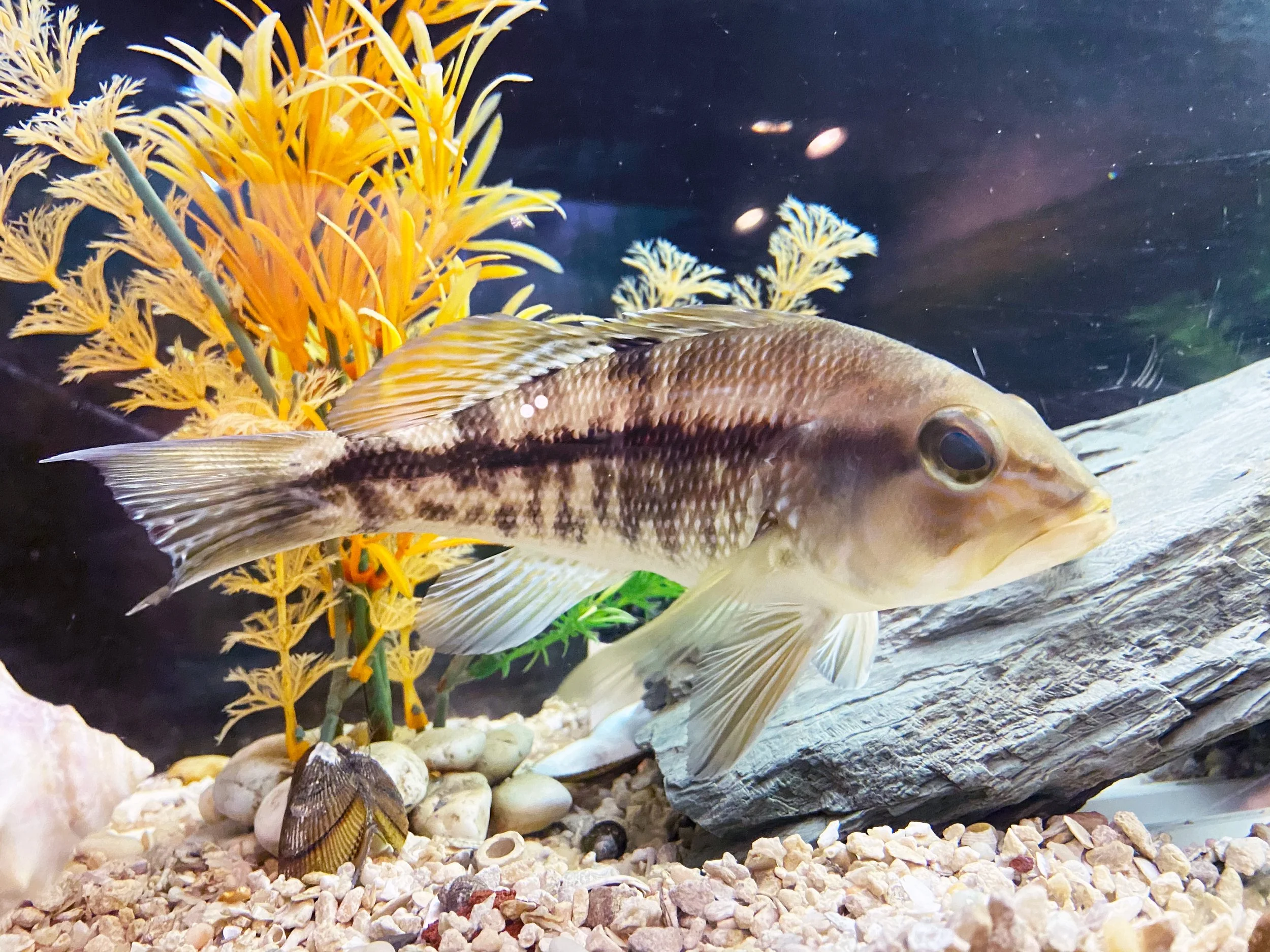
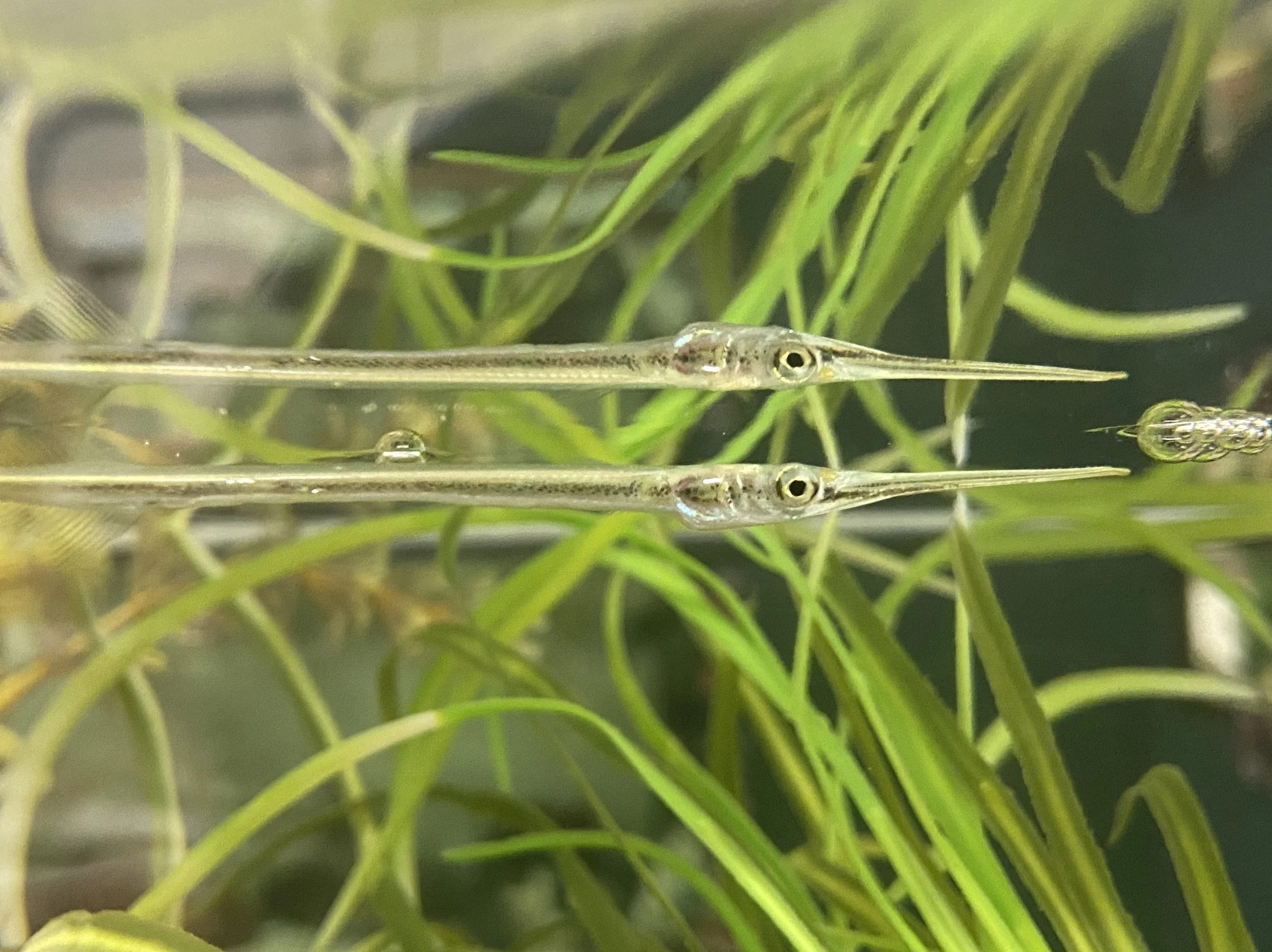
Swimming below the needlefish is another juvenile dodging predators. Black sea bass (Centropristis striata) are a very popular fish for recreational anglers, but before they end up on a fisherman’s line, they start their life in a salt marsh. Black sea bass lay eggs in estuarine habitat, where freshwater mixes with salty ocean water. Once hatched, the larval sea bass float until they begin to develop into their juvenile states. Juveniles exist in four color stages, becoming more brilliant and aggressive as they grow. After one to three years, the sea bass are ready to migrate offshore into deeper waters.
Living in slightly deeper waters and often tucked inside an oyster reef is an unassuming mottled fish called an oyster toadfish (Opsanus tau). These fish are bottom dwellers that hide among oyster reefs, wrecks, and other debris to escape predators. They also use their incredible ability to camouflage to ambush prey. These fish are often considered a nuisance fish by many fishermen, who nickname them oyster crackers for their strong bite.
Hiding nearby, tucked into a sea grass bed, are lined seahorses (Hippocampus erectus). Lined seahorses are the only species of seahorse that live in our area. They live their entire lives clinging to sea grasses, crab pots, ropes, and pilings. They camouflage so well into their environment that they have almost no predators, simply because they can’t find them! Seahorses mate for life and are often found in pairs. As poor swimmers, seahorses hold onto substrates and wait for food, such as small crustaceans, to come to them. These animals rely heavily on their habitat to provide food and safety.
Hopefully, this introduction to the life that is hiding among the marsh grasses helps you see more than the expanse of waving green grass. Knowing and understanding the value of this habitat to the organisms that call it home and the humans lucky enough to visit it is a great way to begin appreciating the salt marsh. If you want to explore more and see many of these animals up close, come visit us at The Wetlands Institute or take a guided walk on the Salt Marsh Trail.